
Red Cod
Hoka (also used for ling)
Pseudophycis bachus formerly Physiculus bachus, Lotella bacchusAlso known as Red codling, Akaroa cod
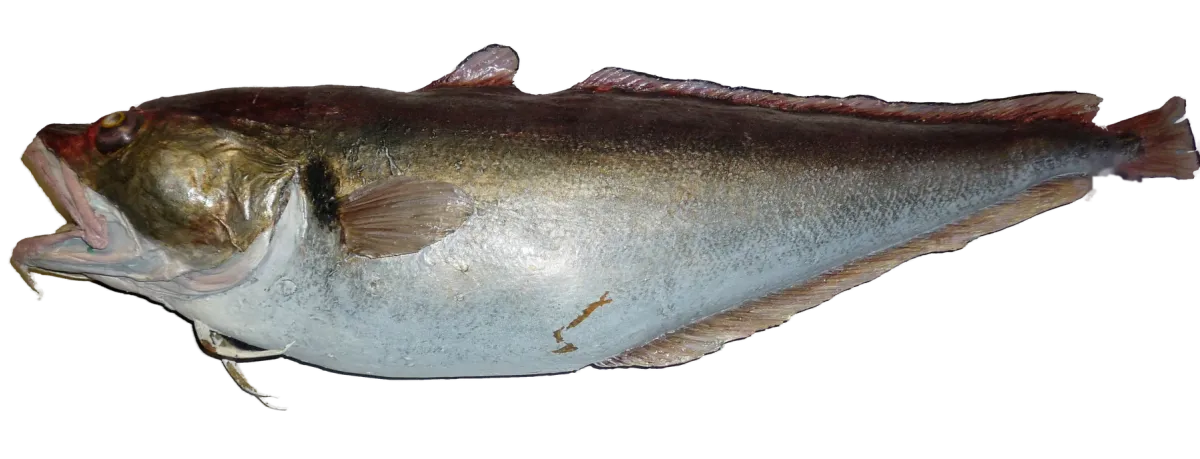
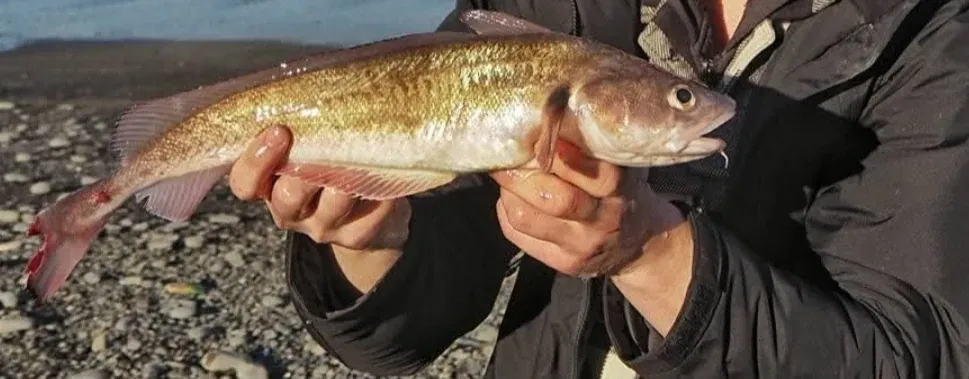
Red cod (hoka) is a soft-fleshed cod of sandy and muddy bottoms, most common around the South Island. Look for the chin barbel, the black spot at the base of the pectoral fin and the square-cut tail. It turns a deep wine red while fighting on the line and fades to greyish pink once dead. Found only in New Zealand, it is a common surf and boat catch in spring and summer.
How to identify red cod
- A fleshy barbel under the chin.
- A black spot at the top of the pectoral fin base that runs onto the body. This is the quickest check.
- Two soft dorsal fins with no spines, and a long anal fin.
- A square-cut tail with distinct corners in adults.
- Reddish brown above, silvery pink on the sides and pale below, with dark edges to the fins.
Red cod have a long, soft body with two dorsal fins and no spines, a long anal fin and a fleshy barbel under the chin, which they use to find prey buried in sand and mud. Fresh fish are reddish brown above, silvery pink on the sides and pale underneath. The scales are soft and come off easily, and the skin is slimy.
The surest mark is a black, half-moon spot at the top of the pectoral fin base that extends onto the side of the body. The dorsal fins have a fine black edge and the tail a broader, smudged one. Adults have a square-cut tail with distinct corners; young fish have a more rounded tail.
The colour changes fast. A red cod struggling on the hook darkens to a deep wine red, which is where the scientific name bachus (after Bacchus, the god of wine) comes from. Once the fish dies the colour fades to a greyish pink.
Often confused with
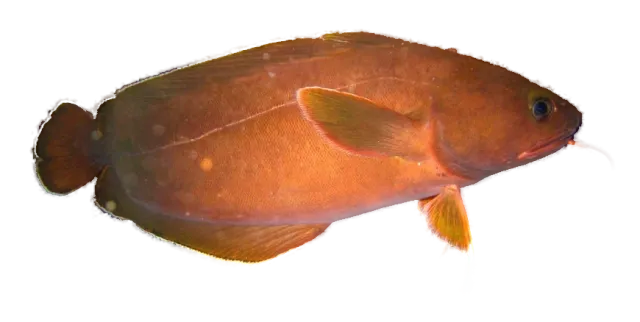
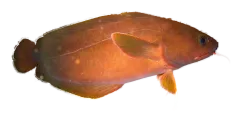 Rock CodLotella rhacinaRock cod are browner, with white edges to the dorsal, anal and tail fins and no black spot by the pectoral fin. They live in reef caves and crevices rather than over sand and mud.
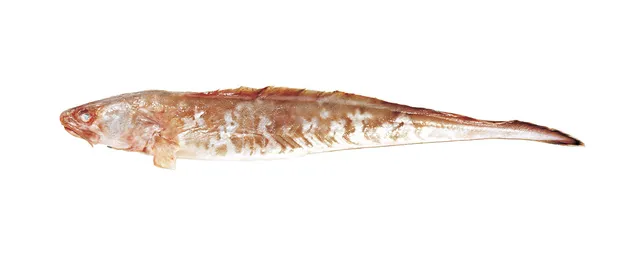
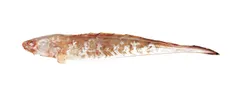 LingGenypterus blacodesLing have a long, eel-like body, with dorsal and anal fins that run into the tail, and orange-pink skin mottled with cream. Some anglers call red cod "ling", and the Māori name hoka is used for both.
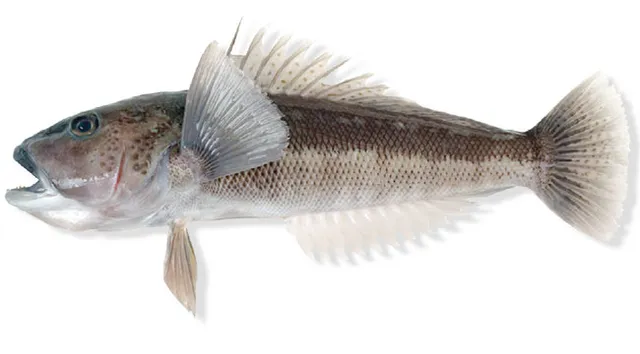
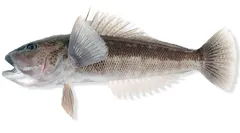 Blue CodParapercis coliasBlue cod are blue-grey to green, with no chin barbel, a single long dorsal fin with a few short spines, and much firmer flesh. They live on reef and broken ground.
- Southern bastard cod
Also called bastard red cod. It has a rounded tail with rounded corners and no distinct black spot at the pectoral fin base. It is usually darker and redder overall, and lives around rocky reefs.
- Northern bastard cod
A small cod, under about 25 cm, with a rounded tail and no pectoral spot. It is stouter and redder, and lives on reefs in the North Island.
Size and daily limits
Minimum size25 cmDaily limit5–10 a dayNo species limit in Auckland and Kermadec, Central, and Challenger.Limits for each area
| Area | Min. size | Daily limit |
|---|---|---|
| Auckland and Kermadec area | 25 cm | No species limit (combined 20 a day) |
| Central area | 25 cm | No species limit (combined 20 a day) |
| Challenger area | 25 cm | No species limit (combined 20 a day) |
| Kaikōura area | 25 cm | 10 |
| South-East area | 25 cm | 10 Closed (no take) in Lyttelton Harbour/Whakaraupō mātaitai. |
| Fiordland area (Fiordland Marine Area) | 25 cm | 5 Inside the Fiords: 2 per day. |
| Southland area | 25 cm | 10 |
Within each area's combined finfish daily limit (20 Auckland/Kermadec, Central, Challenger, Fiordland outside Fiords; 30 Kaikōura, South-East, Southland).
Checked 22 October 2026 · Source: MPI. Rules change, so check the NZ Fishing Rules app before you keep a fish.
Where it lives in New Zealand
Red cod are found only in New Zealand, around both main islands and out to the Chatham Islands. They live over soft sand and mud, and also over rocky ground and in bays and estuaries, from about 2 m down to 570 m. Most are found well offshore at 100 to 300 m, but they move inshore in spring and summer.
They are most common around the South Island. The main commercial fishery is in the Canterbury Bight and off Banks Peninsula, where feeding schools arrive around November and have usually moved to deeper water by about June. There is a smaller fishery off the West Coast of the South Island. Red cod feed mainly on small fish, squid and octopus, crabs and other crustaceans.
- Jan: good
- Feb: good
- Mar: good
- Apr: good
- May: good
- Jun: good
- Jul: quieter
- Aug: quieter
- Sep: quieter
- Oct: quieter
- Nov: good
- Dec: good
How to catch it
Red cod are caught from beaches, rocks and boats over sand and mud, especially around the South Island and the lower North Island in spring and summer. Fish a running or dropper rig on the bottom with small hooks around 2/0 to 4/0.
They are not fussy feeders. Canterbury surfcasters find mussel, jack mackerel, barracouta and mullet baits all work, and pilchard, squid and kahawai strips catch them too. Many anglers catch red cod while fishing for something else, so expect them as bycatch when you are after gurnard, blue cod or kahawai.
Eating
Red cod has soft, moist white flesh with a mild flavour and little oil. It flakes easily, so it is best fried, baked, steamed or smoked rather than barbecued, and it is a classic fish and chip fish. The soft flesh doesn't keep well, so bleed and ice it straight away and eat it fresh.
Red cod gets a bad rap, but bake a fresh fillet with onion, tomato, garlic and a squeeze of lemon and it's a decent feed. Just eat it the same day: the soft flesh doesn't keep.
Good to know
Red cod grow fast and live only a few years. They reach about 25 cm in their first year and mature at around 52 cm and 2–3 years old, and few fish in the commercial catch are older than six. Females grow faster and larger than males. In the Canterbury Bight they spawn from August to October, possibly in deep water.
Because the catch depends on just two or three year classes, numbers swing a lot from year to year. Red cod has been in the Quota Management System since 1986, and its catch limits can be raised during a season when a strong year class turns up. Recent years have been poor: the 2024 east coast South Island trawl survey and the 2023 west coast survey both found the lowest numbers in their series, and commercial landings in 2023–24 were 827 tonnes against a limit of 8,278 tonnes.
Recreational catches have fallen too. National surveys estimated that recreational fishers kept about 30,000 red cod in 2017–18, but only about 2,500 in 2022–23.
Questions
How do you tell red cod from blue cod?
Red cod are reddish pink with a chin barbel, a black spot at the base of the pectoral fin and two soft dorsal fins. Blue cod are blue-grey to green, have no barbel and have a single long dorsal fin. Red cod live mostly over sand and mud, blue cod on reef, and red cod flesh is much softer.
Is red cod good to eat?
It is a good fish and chip fish. The flesh is soft, white and mild, with little oil, so it suits frying, baking, steaming, fish cakes and smoking. It doesn't keep well, so bleed it, ice it and eat it fresh.
Why do red cod change colour?
Red cod darken to a deep wine red while struggling on the line, and the colour fades to greyish pink soon after death. The scientific name bachus, after Bacchus, the Roman god of wine, refers to that red colour.
Is red cod a real cod?
No. Red cod belong to the morid cod family (Moridae), not the true cods (Gadidae) of the North Atlantic. They aren't related to blue cod either, which belong to a different family altogether.
What is the Māori name for red cod?
Hoka. Te Aka Māori Dictionary also gives hoka for ling, so the same name covers both fish.
How much does a red cod weigh?
Using the Fisheries New Zealand length-to-weight formula, a 40 cm red cod weighs about 600 g, a 50 cm fish about 1.2 kg and a 60 cm fish about 2 kg.
Related species
 EndemicSaltwater
 Saltwater
 Saltwater
 Saltwater
More guides
All guides- ArticlesHow to fillet a fish: snapper, gurnard, kahawai and moreStep-by-step filleting for NZ fish, with photos: the basic method, skinning and pin bones, and what is different about snapper, gurnard, kahawai and blue cod.
- ArticlesBest time to fish in New ZealandWhen to catch snapper, kingfish, kahawai, tuna, trout and salmon in New Zealand, with a month-by-month calendar and what bites in each season.