
New Zealand's best-known saltwater fishing is in the warm north-east, where the Bay of Islands, Hauraki Gulf and Coromandel hold snapper and kingfish, with marlin and tuna in summer. Further south the catch shifts to blue cod and deep-reef fish. For trout, it's Taupō, the Rotorua lakes and South Island rivers; for sea-run salmon, Canterbury.
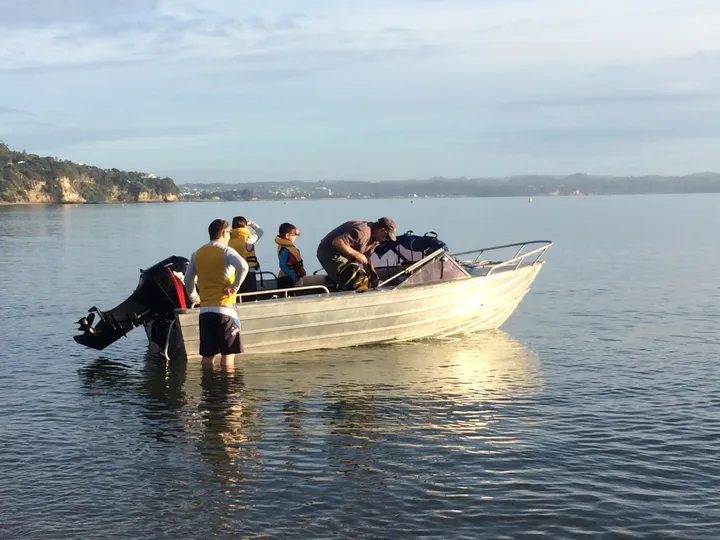 Place guideBoat ramps in New ZealandFind a public boat ramp anywhere in New Zealand on one map, from Northland to Southland, with directions and the ramps nearest you.
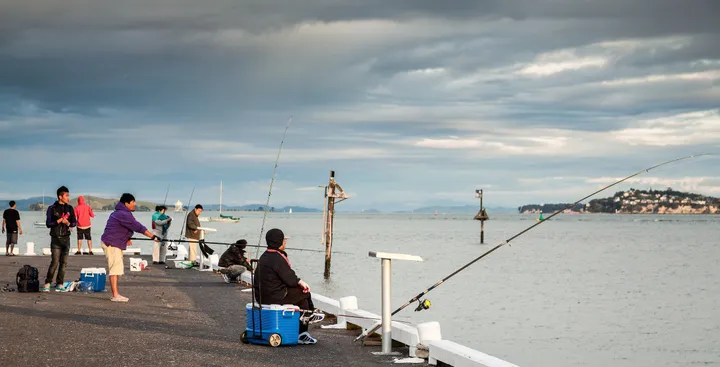 Place guideLand-based fishing spots in Auckland: wharves, rocks and beachesWhere to fish in Auckland without a boat: the main wharves, rocks and beaches by area, what you will catch, best tides, local rules and rock fishing safety.
Fishing areas on the map
14 areas
Saltwater
Bay of Islands and Northland
Snapper, kingfish, marlin, tuna
Spring to autumn; game fish in summer
Saltwater
Hauraki Gulf and Auckland
Snapper, kingfish, kahawai
Snapper from October; kingfish spring to autumn
Saltwater
Coromandel
Kingfish, snapper
Kingfish spring to autumn
Saltwater
Bay of Plenty and Whakaari
Snapper, kahawai, trevally, kingfish, deep-reef fish
All year; deep reefs best as it cools
Saltwater
Wellington and Kāpiti
Blue cod, snapper, kahawai, gurnard, bluenose
Lower blue cod limits on the west coast
Saltwater
Marlborough Sounds
Blue cod, kingfish, snapper
Blue cod closed for part of each year
Saltwater
Kaikōura
Blue cod, sea perch
Charters leave early, when the sea is calmer
Saltwater
Fiordland
Blue cod, hāpuku, bluefin tuna offshore
Strict local rules; no accumulation
Saltwater
Southland and Stewart Island
Foveaux Strait and Paterson Inlet
Paterson Inlet mātaitai has its own rules
Freshwater
Lake Taupō and the Tongariro River
Rainbow and brown trout
All year (DOC licence)
Freshwater
Rotorua lakes
Rainbow and brown trout
Lake Rotorua all year
Freshwater
Canterbury salmon rivers
Sea-run chinook salmon, trout
Salmon December to March
Freshwater
Southland and Otago
Brown trout; rainbow trout and salmon in the Otago lakes
Mataura October to April; parts all year
Freshwater
West Coast and Nelson Marlborough
Brown trout sight fishing; salmon at West Coast river mouths
West Coast salmon January to April
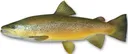
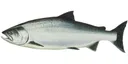
No area matches both filters. Try another fish or water type.
Saltwater fishing areas
Bay of Islands and Northland
The Bay of Islands is the centre of New Zealand big-game fishing. In summer, warm water brings striped, blue and black marlin, swordfish and tuna south from the tropics, and most game fishing is done by trolling lures or baits from charter or club launches. Game-fishing clubs aim to release at least half the fish caught, and tag-and-release is now common.
The bay is also an important snapper breeding ground. From Labour Weekend, snapper gather under baitfish schools, and later in summer the larger fish move out to around 60 m. Land-based anglers fish spots such as Tapeka Point in the evenings. Further north, North Cape, Spirits Bay and the Karikari Peninsula are known for kingfish, snapper and trevally.
From 1 April 2026, crayfish can’t be taken between Pārengarenga Harbour and Cape Rodney. See the Auckland and Kermadec rules.
Hauraki Gulf and Auckland
The Hauraki Gulf is the most important snapper breeding ground on the North Island’s east coast. Snapper move in to spawn from late September or early October, and through winter fishing is mainly along the coast around rocks and weed lines. Straylining with berley near reef and soft-baiting are the main methods. Kingfish are caught around pinnacles, wrecks and inner Gulf spots over summer and autumn.
The Hauraki Gulf / Tīkapa Moana Marine Protection Act 2025 created 12 High Protection Areas where no fishing is allowed, and 5 Seafloor Protection Areas where line fishing is still permitted. Long Bay-Okura, Tāwharanui and Cape Rodney-Okakari Point are marine reserves.
Coromandel
Kingfish are reliable from spring to autumn around Square Top Island and the Pinnacles, taken on live baits, jigs and topwater lures. Snapper are fished around Red Mercury Island, Mercury Bay and the Coromandel mussel farms. The top of the peninsula, from Fantail Bay to Port Jackson, is a well-known land-based area for kingfish and snapper, though some spots need a long walk and a climb.
Bay of Plenty and Whakaari / White Island
Surfcasters target snapper, trevally and kahawai in the surf gutters at beaches such as Bowentown and Pāpāmoa, and at river mouths, especially during whitebait runs. The offshore islands hold snapper, trevally, kahawai and reef fish all year. In 100 m or more of water, anglers catch bluenose, hāpuku, gemfish, trumpeter, tarakihi and blue cod. Te Paepae o Aotea (Volkner Rocks) and Tūhua (Mayor Island) are marine reserves.
Further east, the coast from Cape Runaway to Waihau Bay is noted for blue marlin, and Cape Runaway and Lottin Point for land-based kingfish and large snapper. The area is remote, with no mobile coverage.
Wellington and Kāpiti
Wellington Harbour holds snapper, gurnard, trevally and kahawai. Surfcasters fish Palliser Bay for snapper, blue moki and gurnard, and the south and east coasts (Makara, Tora) for blue cod. Deep water off the coast holds bluenose and hāpuku. Blue cod limits are lower from Taranaki to Titahi Bay; see the Central area rules. Kapiti and Taputeranga are marine reserves.
Marlborough Sounds
The Sounds are best known for blue cod, which are closed to fishing from 1 September to 10 January every year, with tight limits outside that (see the Challenger area rules). Around D’Urville Island and Stephens Passage, anglers jig for kingfish and snapper, but currents are strong and the tide range is over 4 m, so local knowledge and a suitable boat are important. Scallop fishing has been closed since 2018.
Kaikōura
Kaikōura has its own rules area, with lower blue cod limits in the taiāpure (see the Kaikōura rules). Charter boats usually head out early in the morning, when the sea is calmer, for blue cod and sea perch. The Hikurangi Marine Reserve and the Waiopuka (Wakatu Quay) reef area are closed to all fishing.
Fiordland
The Fiordland Marine Area has some of the strictest rules in the country. You may not hold more than one day’s catch, blue cod limits are lower inside the fiords, none may be taken in the Milford Sound closure area, and hāpuku can’t be taken in the Internal Waters (see the Fiordland rules). Bluefin tuna are caught off the Fiordland coast. There are ten marine reserves in the fiords.
Southland and Stewart Island
The Southland area covers Foveaux Strait and Stewart Island, including Paterson Inlet (Te Whaka ā Te Wera Mātaitai), which has its own rules (see the Southland rules). Ulva Island-Te Wharawhara is a marine reserve.
Freshwater fishing areas
Lake Taupō and the Tongariro River
The Taupō fishery is managed by DOC, not Fish & Game, and needs its own licence (1 July to 30 June). The lake has wild rainbow and brown trout and no closed season. Boat anglers jig, harl and troll, often following smelt 25 to 45 m down. From the shore, anglers fly fish river mouths or spin from beaches. The Tongariro River is famous for its winter and spring rainbow spawning runs. Most Taupō rivers are fly fishing only.
Rotorua lakes
Thirteen lakes hold four trout species. Lake Rotorua is open all year and has one of the highest catch rates in New Zealand. Tarawera, Okataina and Rotoiti regularly produce fish over 5 kg. Boats going into Lake Okataina must be washed at an approved station first, to stop the spread of freshwater gold clams.
Canterbury salmon rivers
The Rakaia, Waimakariri, Rangitata and Waitaki are New Zealand’s main sea-run chinook salmon fisheries. The Rakaia run starts in November, and its mouth fishes best from mid-January to mid-March. The Waimakariri’s run is later, best in February and March. You need a Sea-Run Salmon Licence as well as a Fish & Game licence, and season limits are very low; Fish & Game describes salmon numbers as critically low. Braided rivers can rise quickly after rain in the Alps, so check river flows first.
The Mackenzie Basin hydro canals are open all year and known for very large trout, with rainbows commonly 4 to 10 kg.
Southland and Otago
The Mataura is one of New Zealand’s best-known brown trout rivers, with afternoon mayfly hatches and fish commonly 1.5 to 2.5 kg. Below the Mataura Island Bridge it is open all year. In Otago, lakes Wānaka, Wakatipu, Hāwea and Dunstan hold rainbow and brown trout and chinook salmon, and the Clutha, Pomahaka and Taieri are productive trout rivers.
West Coast and Nelson Marlborough
Most of the West Coast is wilderness and public land, with brown trout in lakes, rivers and spring creeks, and salmon around most major river mouths from the Grey River south from January to April. The Arahura River is Māori freehold land, and fishing needs a permit. Nelson and Marlborough offer some of the most accessible sight fishing for brown trout in the country.
Types of fishing trip
- Land-based: rocks, wharves and surf beaches. Surfcasters cast baits into the waves; rock anglers fish wave-cut platforms at low tide, which can be very dangerous.
- Small boat and kayak: bottom fishing, jigging, soft baits and trolling around reefs and current lines. Everyone must wear a lifejacket on craft 6 m and under while underway.
- Charter boats: in the north, mostly game fish such as marlin, tuna and kingfish; in the south, blue cod, sea perch and trumpeter. Operators taking paying passengers fishing must be registered with MPI.
- Guided fly fishing: Nelson and Marlborough is home to many of the country’s sight-fishing guides, and guided trips run on the upper Tongariro.
Stay safe
- Since 9 October 2026, everyone on a recreational craft 6 m or under must wear a lifejacket while it is underway, including in kayaks and dinghies.
- Tell someone ashore where you’re going, or log a trip report with Coastguard. In an emergency dial 111 or use VHF channel 16.
- On rocks, wear a lifejacket, don’t fish alone, watch the sea for at least ten minutes before going out, and never turn your back on the waves.
- In rivers, wear a wading belt and take care at river mouths and crossings.
Before you go, check the size and bag limits for the area, and the best time to fish for your target species.
Questions
Where is the best fishing in New Zealand?
It depends on the fish. For snapper and kingfish, the Hauraki Gulf, Coromandel and Bay of Islands are the best-known areas. The Bay of Islands is the centre of big-game fishing. Blue cod are best in the Marlborough Sounds, Kaikōura and the south. For trout, Lake Taupō, the Rotorua lakes and Southland rivers such as the Mataura are the best known, and Canterbury rivers are the main sea-run salmon fishery.
Can you fish anywhere in New Zealand?
Most of the coast is open to recreational fishing, but marine reserves are no-take, and some areas such as the Hauraki Gulf High Protection Areas, mātaitai and parts of Fiordland have extra closures or lower limits. Freshwater fishing for trout and salmon needs a licence, and some rivers cross private or Māori land where access needs permission.
Do I need a lifejacket to fish from a kayak or small boat?
Yes. Since 9 October 2026, everyone on a recreational craft 6 metres or under must wear a lifejacket while it is underway. That includes kayaks, dinghies and paddleboards.
Is rock fishing dangerous in New Zealand?
It can be. Water Safety New Zealand says seven men drowned while land-based fishing in 2024, all without lifejackets and most of them alone. Wear a lifejacket, don't fish alone, and never turn your back on the sea.