
Snapper
Tāmure, Karatī (young snapper), Pepe tāmure (snapper fry)
Chrysophrys auratus formerly Pagrus auratusAlso known as New Zealand snapper, Australasian snapper, Pink snapper, pannie (a pan-sized snapper), moocher (a big snapper)
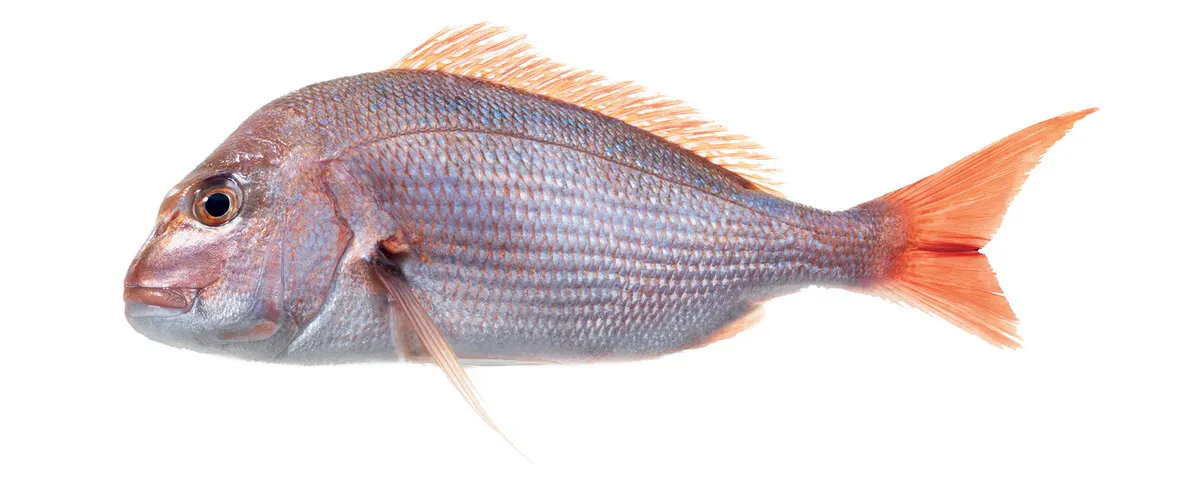
Snapper (tāmure) is New Zealand's most caught recreational fish. Look for a pink to copper body with bright blue spots on the upper sides and a steep, blunt head. Most common in northern waters at 15–60 m, it is excellent eating and can live for more than 60 years.
How to identify snapper
- Pink, copper or reddish back and upper sides, fading to silvery white on the belly.
- Many small, bright blue spots scattered over the upper half of the body. They are brightest on fresh fish and fade after death.
- A steep, blunt head. Large old fish often develop a hump on the forehead.
- One long dorsal fin, spiny at the front and soft at the back, and a forked tail.
- Strong jaws with pointed canine teeth at the front and rounded crushing teeth behind.
Snapper are deep-bodied fish with a steep, blunt head and a forked tail. The back and upper sides are pink, copper or reddish, fading to silvery white on the belly, and the upper half of the body is scattered with small bright blue spots. Fish from shallow reefs are often darker, close to a rusty red, while fish from sandy or muddy ground are paler.
The jaws are strong, with pointed canine teeth at the front and rounded crushing teeth behind, which snapper use to break open crabs and shellfish. Big old fish often grow a pronounced hump on the forehead.
Often confused with
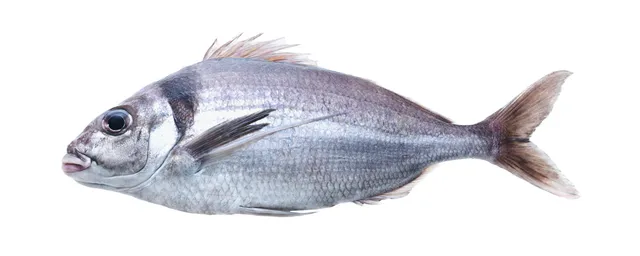
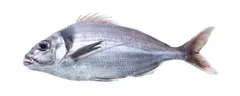 TarakihiNemadactylus macropterusTarakihi are silver with a distinct black band, or saddle, across the back behind the head, and have no blue spots.
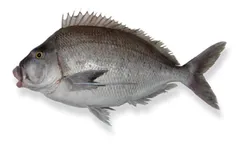 PōraeNemadactylus douglasiiPōrae have thick, rubbery lips, one long ray on each pectoral fin, and blue-grey to silvery colouring with no blue spots.
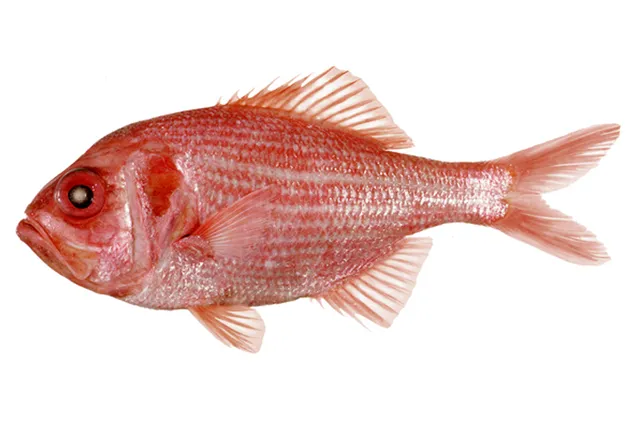
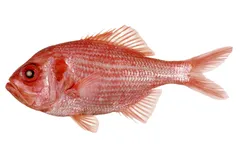 Golden SnapperCentroberyx affinisGolden snapper are a different family. They are bright orange-red all over, with very large eyes and a spiny head, and have no blue spots.
Size and daily limits
Minimum size25–30 cmNo minimum in Fiordland.Daily limit5–10 a dayNo species limit in Southland.Limits for each area
| Area | Min. size | Daily limit |
|---|---|---|
| Auckland and Kermadec area | 30 cm | 7 Auckland East (SNA1, North Cape to Cape Runaway, out to 200 nm): 7 per day, min 30 cm. Auckland West (North Cape to Tirua Point): 10 per day, min 27 cm. Kermadec Islands: 15 per day, min 27 cm. |
| Central area | 27 cm | 10 |
| Challenger area | 25 cm | 10 Marlborough Sounds area: 3 per day, min 25 cm (set net bans apply). Paringa, Popotai Taumaka/Open Bay Islands, Okahu/Jacksons Bay and Tauneke/Barn Bay Mātaitai Reserves: 5 per day, min 25 cm. |
| Kaikōura area | 25 cm | 10 |
| South-East area | 25 cm | 10 |
| Fiordland area (Fiordland Marine Area) | None | 5 5 per day both outside and inside the Fiords. |
| Southland area | 25 cm | No species limit (combined 30 a day) |
Within each area's combined finfish daily limit (20 Auckland/Kermadec, Central, Challenger, Fiordland outside Fiords; 30 Kaikōura, South-East, Southland).
Checked 22 October 2026 · Source: MPI. Rules change, so check the NZ Fishing Rules app before you keep a fish.
Where it lives in New Zealand
Snapper live from the shallows down to about 200 m, but they are most abundant at 15–60 m. They are the dominant fish of northern inshore waters, living over rocky reef as well as sand and mud bottoms, and are most common in the warmer waters of the North Island and the top of the South Island. The Hauraki Gulf holds the most fish.
Large schools gather before spawning, usually in November and December, and in some areas and years spawning carries on into January to March. Snapper then spread inshore to feed, which is why summer is the best time to catch them from the shore or in shallow water. In winter they move to deeper water and are more spread out.
Young snapper grow up in sheltered harbours and estuaries around the northern half of the North Island, then move out to more exposed coast as they grow.
- Jan: good
- Feb: good
- Mar: good
- Apr: good
- May: quieter
- Jun: quieter
- Jul: quieter
- Aug: quieter
- Sep: quieter
- Oct: good
- Nov: good
- Dec: good
How to catch it
Switch to circle hooks, and go up a bait size when the little ones are about. You'll lip-hook far more fish, and the ones you put back will actually survive.
Bait: snapper take most baits, but fresh beats frozen. Squid and pilchards are the standard, and fresh-caught kahawai, mackerel or mullet fillets are better still. Shellfish and crabs work well around reef. A berley pot or trail brings fish to you and keeps them there.
From a boat, anchor up-current of reef edges, channels or foul ground with a berley trail and fish lightly weighted baits that drift back towards the bottom. In shallow water, an unweighted or lightly weighted strayline is hard to beat. Drifting with soft baits on jig heads, bounced along the bottom, covers more ground and catches some of the biggest fish. Flasher rigs and slow-pitch jigs also work over deeper ground.
From the shore, wharves and rocks, use a running sinker rig or a two-hook ledger (paternoster) rig. Surfcasters do best at dawn and dusk and on a moving tide.
Expect to release a lot of fish. In a Ministry of Fisheries survey of more than 19,000 snapper caught by recreational boat fishers in the north in 2004–06, nearly 6 in 10 went back, most of them undersized. How they are hooked decides whether they live. In a NIWA trial in the Hauraki Gulf, 5–10% of lip-hooked snapper died after release, compared with 75–90% of gut-hooked fish. Circle hooks gut-hook far fewer fish than J or Kahle hooks, so use them where you can (around 4/0 to 6/0), and when small fish are about, switch to bigger baits or move. Handle fish you are releasing with wet hands, keep your fingers away from the eyes and gills, and get them back in the water quickly.
Eating
Snapper is one of New Zealand's best eating fish. The flesh is white to pale pink, firm but tender, with a mild, sweet flavour, and it turns white when cooked. Fish of 30–45 cm are the best size for the table.
Bleed and chill your catch straight away for the best flavour and texture. Snapper can be cooked whole, on the bone or as fillets, and suits pan-frying, baking, barbecuing, poaching and smoking. Very fresh fillets are excellent raw, as sashimi or in raw fish salad.
Since 2022, anglers in the Hauraki Gulf and Northland have reported snapper with soft, milky-white fillets. A Biosecurity New Zealand report linked it to chronic malnutrition rather than disease, and food safety tests found no reason the fish are unsafe to eat, though they are less pleasant. Anglers say affected fish tend to look skinny, with sunken "shoulders" just behind the eyes, and many release them.
Recipes
- Asian BBQ Snapper (Seafood New Zealand)
- Snapper with summer potato salad (Seafood New Zealand)
Good to know
Snapper is New Zealand's biggest recreational fishery. Recreational fishers kept an estimated 1,948,102 snapper in the year to September 2023, more than three times the number of the next most caught fish, kahawai. It is managed under the Quota Management System.
Snapper grow slowly and can live for 60 years or more. Growth is fast from November to May and slows or stops from June to September. They become adults at 3–4 years old and 20–28 cm long. All snapper go through a female phase as juveniles, and after that each fish is male or female for the rest of its life, giving a roughly even split of males and females.
Warm summers produce strong year classes of young snapper, and cold ones weak year classes, so catches often reflect water temperatures from several years earlier.
Questions
How many snapper can I take per day?
It depends on where you are fishing. The daily limit and minimum size are different in each MPI fishing area, and some parts of an area have their own limits. Check the table above, which shows the current limit for every area and when we last checked it against MPI.
How do you measure a snapper?
MPI measures finfish from the tip of the nose to the middle ray, or 'V', of the tail. Lay the fish flat on a measure to check. If it is under the minimum size for your area, release it straight away.
How much does a snapper weigh?
Using the Fisheries New Zealand length-to-weight formula for snapper, a 30 cm fish weighs about 0.6 kg, a 40 cm fish about 1.3 kg, a 50 cm fish about 2.5 kg, a 60 cm fish about 4.1 kg and a 70 cm fish about 6.4 kg. Individual fish vary with season and condition. The New Zealand all-tackle record is 17.2 kg, caught at Motiti Island in 1992.
How long do snapper live?
Snapper can live for 60 years or more. They grow slowly, and a fish of legal size is usually several years old. Big fish of 10 kg or more are likely to be decades old.
What do snapper eat?
Snapper eat crabs, shellfish, kina, worms and small fish, crushing hard shells with their back teeth. This is why fresh baits like crab, shellfish and fish fillets work so well.
Is snapper good to eat?
Yes. Snapper is one of New Zealand's best eating fish, with white, mild, sweet flesh that suits almost any cooking method. Bleed and chill it as soon as it is caught for the best results.
Related species
 Saltwater
 Saltwater
 Saltwater
 Saltwater
More guides
All guides- PlacesFishing charters in AucklandWell-reviewed Auckland fishing charters for snapper and kingfish, from $90 shared trips to private boats, with prices, seasons and what to check before you book.
- ArticlesFishing knots: how to tie the six knots NZ anglers useHow to tie the uni, snell, palomar, uni-to-uni, dropper loop and improved clinch knots, with step-by-step animated diagrams and when to use each one.
- ArticlesSurfcasting in NZ: gear, rigs, bait and how to read a beachHow to surfcast in NZ: the rod, reel and rig to start with, the best baits, how to read a beach for gutters and holes, and when the fish come in.