
Do you need a fishing licence in New Zealand?
You don't need a licence for recreational sea fishing in New Zealand, but size limits, daily limits and closed areas still apply. You do need a licence to fish for sports fish such as trout, salmon and perch: a Fish & Game licence for most of the country, or a separate DOC licence in the Taupō district.
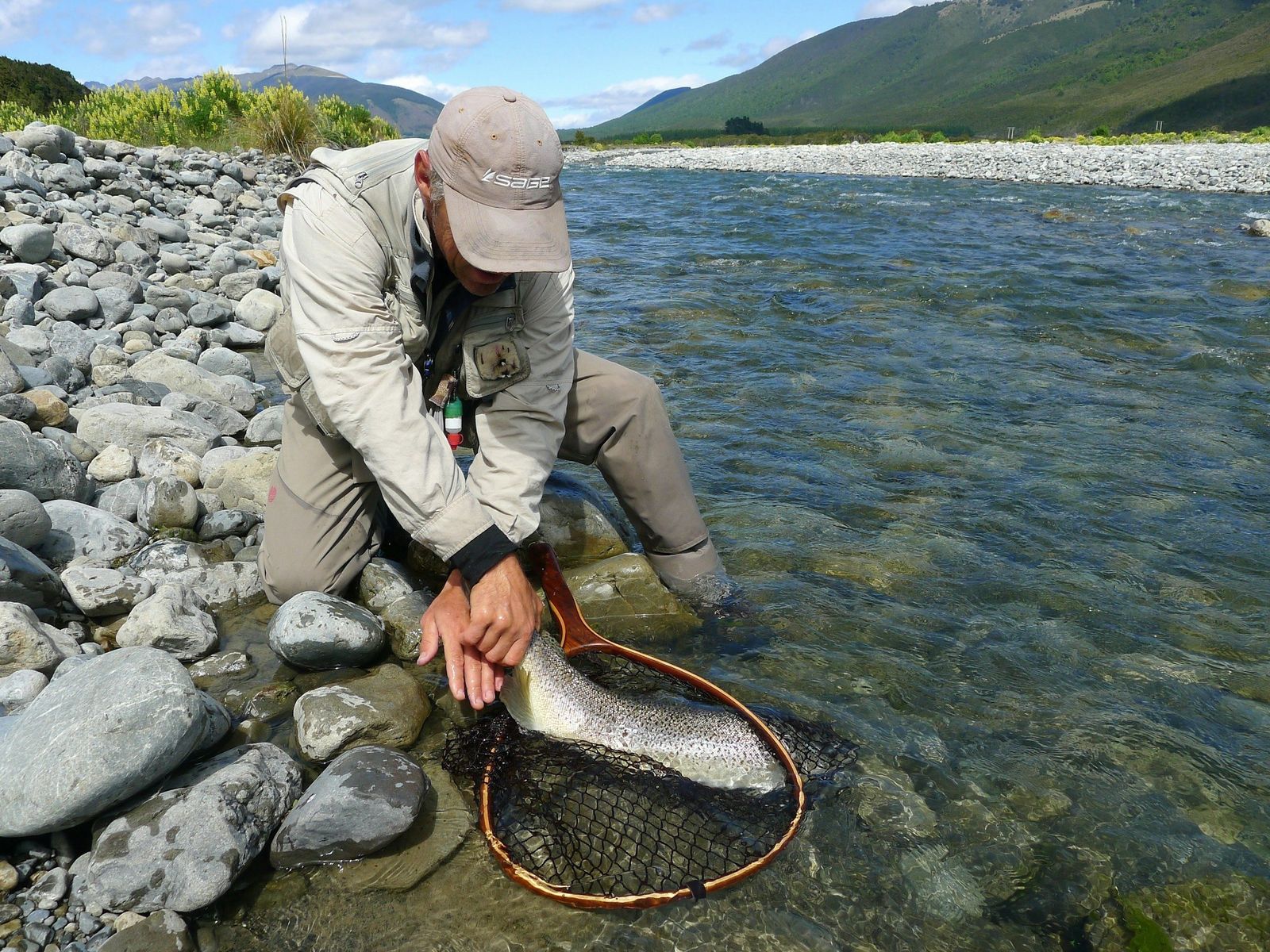
The short answer depends on where you fish and what you’re fishing for.
| Where and what | Licence needed? | Who issues it |
|---|---|---|
| Sea fishing (any species) | No | None. Fisheries rules still apply. |
| Trout, salmon, perch and other sports fish, most of NZ | Yes | Fish & Game New Zealand |
| Sports fish in the Taupō district | Yes, a separate one | Department of Conservation (DOC) |
| Whitebait | No | DOC sets the rules |
| Eels | No | MPI sets the daily limit |
| Shellfish and other kaimoana | No | MPI sets the limits |
Sea fishing: no licence, but rules apply
You don’t need a licence to fish recreationally in the sea around New Zealand. That covers fishing from a boat, the rocks, a wharf or a beach, and diving for fish and kaimoana.
No licence doesn’t mean no rules. Every area has minimum sizes, daily limits and sometimes closed seasons or closed areas, and they differ around the country. Marine reserves are closed to all fishing. You also can’t sell or trade anything you catch recreationally.
Check the limits for your area on our NZ fishing rules pages before you go.
Freshwater fishing: a Fish & Game licence
To fish for sports fish in fresh water, you need a licence from Fish & Game New Zealand. Sports fish are defined in the Freshwater Fisheries Regulations as:
- brown trout and rainbow trout
- brook trout (brook char) and lake trout (lake char)
- Atlantic, chinook (quinnat) and sockeye salmon
- perch
- tench
- rudd, in the Auckland/Waikato rudd area
The definition includes their hybrids, young and eggs. See our pages on brown trout and chinook salmon.
The 2026–27 fishing year runs from 1 October 2026 to 30 September 2027.
Licence types
The main licence classes for 2026–27, set by the Sports Fish Licences, Fees, and Forms Notice 2026, are:
- standard whole-season licence (adults and juniors; free for children)
- family whole-season licence (one adult resident or two adult partners, plus eligible family members named on the licence)
- loyal senior whole-season licence
- local area whole-season licence (one Fish & Game region only)
- standard day licence (free for children)
- short-break and long-break licences (adult residents)
- winter licence (adult residents)
A few regions also sell designated waters licences for specific back-country rivers, and controlled-period licences for a handful of rivers with booking systems. Canterbury’s sea-run salmon rivers need a sea-run salmon licence on top of a whole-season licence if you’re fishing for salmon.
For the notice, a child is under 12 and a junior is 12 to 17, both on 1 October 2026. Children still need a licence, but it’s free.
Where to buy
Buy online from Fish & Game New Zealand, which also lists current prices. Fees are set each year and generally went up for 2026–27.
River mouths
Fish & Game’s rules treat river mouths as fresh water, including the seashore within 500 metres of where the river meets the sea at low tide. Their definition of fishing covers anything that “may reasonably be expected” to catch sports fish. So if you’re fishing a river mouth for trout or salmon, or with gear that could reasonably catch them, you need a sports fish licence.
Taupō: a separate DOC licence
The Lake Taupō district is managed by DOC, not Fish & Game, and has its own licence. The district covers Lake Taupō and the rivers and streams flowing into it, including the Waikato River down to Huka Falls.
A Taupō licence doesn’t cover Fish & Game regions, and a Fish & Game licence doesn’t cover Taupō. If you fish both, you need both.
Taupō licences run from 1 July to 30 June. DOC sells 24-hour, week and whole-season licences, including family, senior and child options, through its online licence store. Lake Rotoaira now has its own separate licence. Using a Lake Taupō boat ramp needs a separate ramp permit from the Department of Internal Affairs.
What about eels, whitebait and shellfish?
None of these need a licence, but each has its own rules.
Whitebait
There is no whitebaiting licence. Whitebaiting is controlled by the Whitebait Fishing Regulations 2021, administered by DOC. They set the season, the hours you can fish, where you can fish (tidal waters only, and not in national parks or public reserves) and what gear you can use. See our whitebait season guide for the current dates and rules.
Eels
You don’t need a licence to catch eels (tuna). Eels are managed under the fisheries regulations, with a daily limit that sits outside the combined finfish limit. Check the current limit on our rules pages.
Shellfish and kaimoana
Pāua, crayfish, scallops, pipi, tuatua, cockles and other shellfish need no licence. Each has its own size limits, daily limits and closed seasons or areas, which vary around the country. See NZ fishing rules.
Visiting from overseas?
Sea fishing works the same for visitors as for residents: no licence, but the same rules.
For fresh water, non-residents can buy a Fish & Game standard whole-season licence or a standard day licence. The family, local area, short-break, long-break, winter and loyal senior licences are for residents only. For Fish & Game licences, a resident is a New Zealand citizen or someone who ordinarily lives in New Zealand.
DOC sells separate non-resident licences for the Taupō district. For DOC, a non-resident is anyone who isn’t a New Zealand citizen or permanent resident.
What to carry
- Your licence, if you’re fishing for sports fish. Fish & Game rangers can ask to see it.
- A way to measure fish, so you can check minimum sizes.
- The rules for the area. The rules pages work on your phone.
Questions
Do you need a fishing licence to fish in the sea in New Zealand?
No. Recreational sea fishing in New Zealand needs no licence. You must still follow the size limits, daily limits, closed seasons and closed areas for the area you fish, and you can't sell your catch.
Do children need a fishing licence in New Zealand?
For trout, salmon and other sports fish, yes, but it's free. Fish & Game issues free licences to resident children under 12, and juniors aged 12 to 17 pay a reduced fee. Children don't need a licence for sea fishing.
Is there a family fishing licence?
Yes. Fish & Game sells a family whole-season licence to one adult resident or two adult partners, and it covers eligible family members named on the licence. DOC also sells a family licence for the Taupō district.
Do I need a licence to fish at a river mouth?
Possibly. Under the Conservation Act, river mouths count as fresh water, including the seashore up to 500 metres from where the river meets the sea at low tide. If you're fishing for trout or salmon there, or with gear that could catch them, you need a sports fish licence.
Does my Fish & Game licence cover Lake Taupō?
No. The Taupō district has its own licence, sold by DOC. A Fish & Game licence doesn't cover it, and a Taupō licence doesn't cover Fish & Game regions.
Do I need a licence for eels or whitebait?
No licence, but both have their own rules. Eels have a daily limit under the fisheries regulations, and whitebaiting is controlled by DOC's Whitebait Fishing Regulations, with a set season, hours and gear rules.
Sources (12)
- New Zealand Gazette, Anglers Notice for Fish and Game Regions 2026 (2026-sl4317)
- Govt.nz, Fishing
- MPI, Fishing rules (no licence needed for sea fishing)
- Freshwater Fisheries Regulations 1983, Schedule 1 (sports fish)
- Conservation Act 1987, section 2 (definition of freshwater)
- Sports Fish Licences, Fees, and Forms Notice 2026
- DOC, Sports Fish Licences, Fees, and Forms Notice 2026
- DOC, Buy a Taupō fishing licence online
- DOC, Taupō fishing licence options
- DOC, Whitebait fishing regulations
- Fisheries (Amateur Fishing) Regulations 2013, regulation 11 (daily limit for eels) and 17B
- Fish & Game New Zealand, Fishing licence information