
NZ whitebait season 2026: dates and rules
Whitebaiting in New Zealand is controlled by the Whitebait Fishing Regulations 2021. There is one season for the mainland, West Coast included, and a separate season for the Chatham Islands. You can only fish in tidal water, during set hours, with one net, and the West Coast has extra rules for screens and stands. The current dates and gear limits are in the table below, checked against DOC and the regulations.
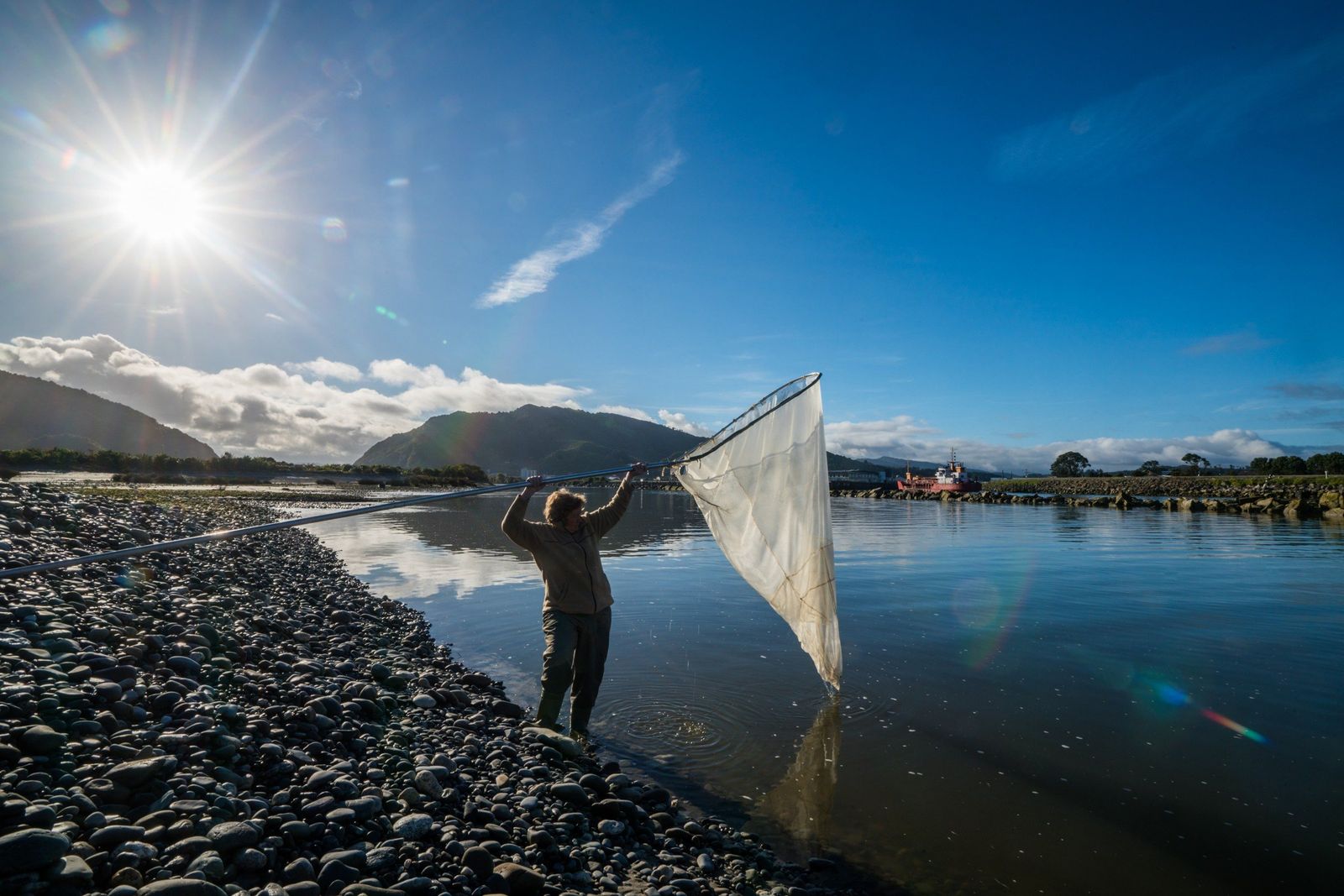
Whitebaiting is managed by DOC, not Fisheries New Zealand. The rules come from one set of regulations, the Whitebait Fishing Regulations 2021, made under the Conservation Act. They set when you can fish, where, and what gear you can use. They don’t require a licence or limit how much you take.
The rules exist because whitebait is the young of native fish that are in trouble. Most of the catch is īnanga, and the rest is kōaro and three kōkopu species. In the latest national assessment, all five are classed as Threatened or At Risk. See our whitebait species page for how to tell them apart.
Season dates and gear rules
The table below comes straight from our rules data, which we check against the regulations and DOC’s regulations page. The checked date is shown with it. The same dates apply every year unless the regulations change.
A few things help when reading it. The mainland season covers all of New Zealand except the Chatham Islands, so the West Coast and Stewart Island share it. The Chatham Islands season runs over the summer and crosses New Year. Fishing hours shift when daylight saving starts partway through the season, so check which hours apply on the day.
Gear rules apply everywhere unless they are marked West Coast. “Gear” means everything you use to fish: nets, screens, stakes, ropes and spotter boards. A licensed stand doesn’t count as gear, which is why some limits are different when you fish from one.
| Area | Season opens | Season closes |
|---|---|---|
| Most of New Zealand All of mainland New Zealand and Stewart Island, including the West Coast. You also can't possess whitebait taken from these waters outside the season. | 1 September | 30 October |
| West Coast of the South Island Same season as the rest of New Zealand since 2022. Extra gear and stand rules apply (see rules marked West Coast). | 1 September | 30 October |
| Chatham Islands Runs from 1 December to the last day of February the following year (29 February in a leap year). | 1 December | 28 February |
Gear and fishing rules
- Hours
- Fish only between 5 am and 8 pm, or between 6 am and 9 pm during New Zealand daylight time.
- Removing gear
- Take all your gear out of the water when you finish fishing, and in any case by 8 pm (9 pm during daylight time). DOC also says gear must come out whenever you move more than 10 m from your net.
- Number of nets
- Use only one whitebait net at a time, and stay within 10 m of it.
- Net size
- A whitebait net can be no more than 3.5 m long overall, with a mouth no more than 4.5 m around the inside of the frame. Framing material can be no more than 120 mm wide.
- Drag netsAll areas except the West Coast
- Drag net netting can be no more than 3.5 m long and 1 m high, must lie flat with no pockets, bags, funnels or traps, and the whole drag net can be no more than 6 m long laid out.
- Drag netsWest Coast
- Drag nets are banned. You can't use, set or possess one in or beside any river, stream, estuary or channel on the West Coast.
- Total gear length
- All your fishing gear together can be no more than 6 m long, including when you fish from a stand. Gear includes nets, screens, stakes, ropes and spotter boards.
- Width of the waterway
- Your gear, alone or together with gear already set by others, can't take up more than a quarter of the width of the river, stream, estuary or channel at that place and time.
- Screens
- Screens are the only thing you can use to steer whitebait into a net. They can total no more than 3 m unless you fish from a licensed stand, and one net can't be placed to divert whitebait into another.
- ScreensWest Coast
- Screens must be set from the water's edge and only on the bank side of the net, never on the side furthest from the bank. From a stand, screens can't extend beyond its outer edges.
- Spacing between set gear
- Fixed (set) gear must be at least 20 m from any other fixed gear already set, except when fishing from a licensed stand. There is no minimum distance between scoop or drag nets.
- Distance from structures
- Don't fish within 20 m of a confluence, culvert, floodgate, groyne, outfall structure, tide gate or weir, or any unlawful diversion.
- Stands
- Only one whitebait net can be used from a licensed stand at a time, by anyone. Stands are licensed under the Resource Management Act by regional councils.
- StandsWest Coast
- Don't fish from an unlicensed structure. A net used from a licensed stand must be in a straight line from its upstream or downstream edge.
- Distance from standsWest Coast (Schedule 3 rivers)
- On the 21 rivers listed in Schedule 3, don't fish within 40 m of a licensed stand someone else is already fishing from, on either bank. On the Mokihinui River this doesn't apply if you are fishing from another licensed stand.
- Bycatch
- Return any other fish species to the water straight away, taking care that they survive. Don't dump them on shore.
- Riverbed and banks
- Don't alter the bed or banks of the waterway or build any diversion.
- Unlawful nets
- Don't have whitebait in your possession together with a net you aren't allowed to use, even if it isn't being fished.
- Licence and catch limit
- The regulations don't require a licence and set no daily catch limit. DOC says they don't prohibit selling your catch.
- Penalties
- Most breaches carry a $400 infringement fee or a court fine of up to $800. Prosecution can bring a fine of up to $5,000, and DOC can seize gear.
Where you can't whitebait
- Non-tidal water: you can only fish where the water level rises and falls with the tide. Where DOC has placed a back-peg, don't fish upstream of it.
- Whitebait refuges listed in Schedule 2: all rivers and streams in Fiordland from Yates Point to the Waitutu River, rivers in and leaving Abel Tasman National Park from Taupō Point to Tinline Stream, and named rivers, creeks and lagoons on the West Coast. You can't possess whitebait or gear in a refuge.
- National parks and public reserves under the Reserves Act 1977, anywhere in New Zealand.
- From a bridge.
- From a boat or any other vessel, including rafts. People with a disability who can't fish any other way can apply to DOC for an exemption.
Checked 23 October 2026 · Source: Whitebait Fishing Regulations 2021 (LI 2021/180), as at 23 December 2023. Check DOC's whitebaiting page before you go.
Where you can’t whitebait
You can only fish where the water level rises and falls with the tide. On some rivers DOC has put in back-pegs to mark the upstream limit, and it is illegal to fish above them. Where there is no back-peg, the tidal limit is the boundary.
Whitebait refuges are closed to fishing altogether, and you can’t even have whitebait or gear in them. They cover the rivers and streams of Fiordland, the rivers in and around Abel Tasman National Park, and a list of rivers, creeks and lagoons on the West Coast. DOC publishes maps of the Abel Tasman and Fiordland refuges. DOC also says whitebaiting isn’t allowed in any national park or public reserve.
Some fishing spots are ruled out by how you would fish them. You can’t fish from a bridge or a boat, and you can’t fish right next to a weir, culvert, floodgate, tide gate, groyne or the meeting point of two waterways. You also can’t alter the riverbed or banks, or build anything to steer fish into your net.
Local rāhui can close a river too. These are customary decisions by iwi or hapū. In August 2026, Ngāi Tūāhuriri placed a rāhui over its customary whitebait season in its Canterbury takiwā until further notice. DOC’s release didn’t say the general season was affected, but respect any rāhui signs you see.
The West Coast
Until 2021 the West Coast of the South Island had its own regulations and its own, shorter season. It now shares the national season, but the old West Coast rules on screens, stands and drag nets were carried into the 2021 regulations. Many West Coast rivers are fished from licensed stands, so the stand rules matter more there than anywhere else. The West Coast also has most of the named whitebait refuges.
The regulations define the West Coast as everything from Heaphy Bluff in the north to Puysegur Point in the south.
Customary fishing
The Whitebait Fishing Regulations 2021 don’t apply to Māori fishing rights exercised by tangata whenua. DOC says those rights are founded on tikanga, vary between iwi, hapū and whānau, and are managed by the local rūnanga, iwi or hapū. Customary fishing can happen outside the regulated season and with different gear. The regulations also allow whitebaiting for a hui or tangi outside the West Coast, if a council or committee representing the Māori community notifies a warranted officer first.
If a DOC ranger finds people fishing outside the rules and they can’t show they are fishing under a Māori fishing right, the ranger can take compliance action.
What changed and why
The Whitebait Fishing Regulations 2021 replaced the national and West Coast regulations from 1994. DOC phased the changes in over three seasons:
- 2021: fishing limited to tidal water, new refuges in and near Abel Tasman and southern Fiordland, screens made the only lawful way to divert whitebait, set gear spaced apart, one net per stand, and no fishing close to structures.
- 2022: one shorter national season, the same for the West Coast and the rest of the mainland. The Chatham Islands kept their own season.
- 2023: the overall gear length limit extended to the West Coast, including gear used from stands.
DOC’s reasons were to ease pressure on the fish and make the fishery fairer. The shorter season was meant to reduce fishing pressure on the most threatened whitebait species during their peak migration. The refuges protect rivers with high-quality adult habitat, because healthy sites can support more whitebait.
The exact dates of each change are in the change log under the rules table. No changes to the regulations were found when we checked on 23 October 2026.
Fishing is only part of the problem. The 2023 threat assessment lists barriers like culverts and floodgates, drainage, and sediment smothering spawning grounds as major pressures on īnanga.
For other species’ limits, see NZ fishing rules.
Questions
When does whitebait season start in 2026?
The season opening and closing dates are set in the Whitebait Fishing Regulations 2021 and are the same every year. See the season dates table above for the mainland, West Coast and Chatham Islands dates, checked against DOC.
Is the West Coast whitebait season different?
Not any more. Since 2022 the West Coast has had the same season as the rest of mainland New Zealand. It does still have extra rules. Drag nets are banned, screens must be set from the water's edge on the bank side of the net, and there are rules about fishing from and near stands.
Do you need a licence to go whitebaiting in NZ?
No. The Whitebait Fishing Regulations 2021 don't require a licence and don't set a daily catch limit. You still have to follow the season, hours, gear and location rules in the tables above.
Can you sell whitebait you catch?
Yes. DOC says the regulations don't prohibit whitebaiters from selling their catch, and DOC doesn't regulate the sale of whitebait.
Can I whitebait from a boat or a bridge?
No. The regulations ban fishing for whitebait from any vessel and from any bridge. People with a disability who can't fish any other way can apply to DOC for an exemption to fish from a vessel.
What happens if I break the whitebait rules?
DOC rangers patrol during the season. Breaches can lead to an infringement notice, seizure of your gear or prosecution. The penalties are listed in the rules table above.
Sources (10)
- Whitebait Fishing Regulations 2021 (LI 2021/180), as at 23 December 2023
- DOC, Whitebait fishing regulations
- DOC, Whitebaiting
- DOC, New regulations on stream for whitebait season (media release, 6 August 2021)
- DOC, Māori fishing rights and whitebaiting
- DOC, Ngāi Tūāhuriri places rāhui over customary whitebait season until further notice (media release, 17 August 2026)
- DOC, Be an informed whitebaiter
- DOC, Response to OIA request OIAD-5025 (14 April 2025), on the sale of whitebait
- Dunn, N.R. et al. 2025, Conservation status of New Zealand freshwater fishes, 2023. New Zealand Threat Classification Series 46, DOC
- NIWA (Earth Sciences New Zealand), Taonga Species Series, Īnanga (27 May 2024)