
Fish weight calculator
Measure your fish, pick the species and see its weight, with no scales and less time out of the water. The calculator uses the length–weight formulas Fisheries New Zealand uses to turn boat ramp measurements into catch weights. A 50 cm snapper averages about 2.5 kg; a 100 cm kingfish about 12 kg.
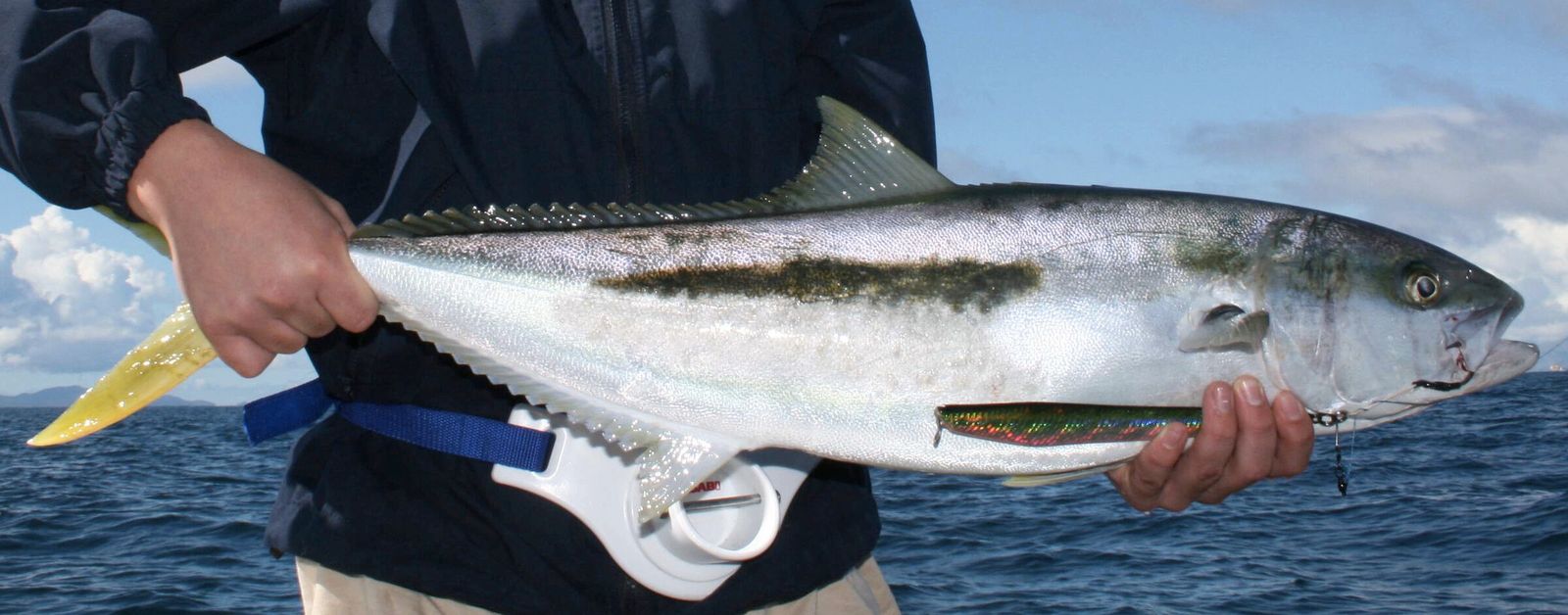
A ruler is quicker than scales, and it’s kinder to a fish you’re letting go. NIWA’s snapper handling research found that how you handle a fish affects whether it survives release, so the less time it spends out of the water, the better. Measure it, put it back, and work out the weight later.
How the calculator works
Every species has a formula, weight = a × lengthb, fitted to fish that scientists have measured and weighed. Fisheries New Zealand uses these formulas to turn the lengths its boat ramp surveys record into the weight of the recreational catch. Most of ours come from its stock assessment reports and trawl surveys. Each species shows its source under the calculator.
A few species have no good New Zealand formula, so they’re not in the calculator yet. Yellowfin tuna uses a formula for the whole western and central Pacific stock, not NZ fish alone.
How to measure a fish
Lay the fish flat on a ruler or measuring board, mouth closed, with the tip of its snout at zero.
- Fork length: to the fork in the middle of the tail. Used for snapper, kingfish, kahawai, trevally, tarakihi and most fish with a forked tail.
- Total length: to the tip of the tail. Used for blue cod, John Dory, flounder, ling and rig.
- Crayfish: tail width in millimetres, in a straight line between the tips of the two large spines on the second segment of the tail. It’s also how MPI sets the legal size for crayfish.
- Pāua: shell length in millimetres, in a straight line across the flat face of the shell, not over its curve.
For whether a fish is legal to keep, measure it the way the fishing rules for your area say, and check the size limit there. This calculator doesn’t decide legal size.
Weights at common sizes
| Species | Length and average weight | |||
|---|---|---|---|---|
| Snapper | 30 cm 600 g | 40 cm 1.3 kg | 50 cm 2.5 kg | 70 cm 6.4 kg |
| Kingfish | 75 cm 5.5 kg | 90 cm 9.1 kg | 100 cm 12 kg | 120 cm 20 kg |
| Kahawai | 40 cm 1.0 kg | 45 cm 1.4 kg | 50 cm 1.9 kg | 60 cm 3.2 kg |
| Gurnard | 30 cm 280 g | 35 cm 440 g | 40 cm 650 g | 45 cm 920 g |
| Tarakihi | 25 cm 280 g | 30 cm 480 g | 35 cm 760 g | 45 cm 1.6 kg |
| Blue cod | 30 cm 380 g | 35 cm 610 g | 40 cm 930 g | 50 cm 1.9 kg |
| Trevally | 30 cm 530 g | 40 cm 1.2 kg | 50 cm 2.3 kg | 60 cm 3.9 kg |
| John Dory | 30 cm 430 g | 35 cm 710 g | 40 cm 1.1 kg | 50 cm 2.3 kg |
| Hāpuku | 60 cm 3.1 kg | 80 cm 7.4 kg | 100 cm 14 kg | 120 cm 25 kg |
Questions
How much does a 50 cm snapper weigh?
About 2.5 kg, using the Fisheries New Zealand length–weight formula for snapper. A 30 cm snapper averages about 0.6 kg, a 40 cm fish 1.3 kg, a 60 cm fish 4.1 kg and a 70 cm fish 6.4 kg. Individual fish can be noticeably heavier or lighter, depending on the season and their condition.
How do you weigh a fish without scales?
Measure it and use a length–weight formula, like this calculator does. Lay the fish flat on a ruler or measuring board, read the length, and pick the species. It's quicker than weighing, and a fish you're releasing spends less time out of the water.
What's the difference between fork length and total length?
Fork length is from the tip of the snout to the fork (the V) in the middle of the tail. Total length is from the snout to the tip of the tail. Fish with forked tails, like snapper and kingfish, are usually measured to the fork; the calculator tells you which length each species' formula uses.
How accurate is a weight from length?
It's an average for fish of that length. The formulas are fitted to many measured and weighed fish, so they're good for a typical fish, but any one fish can be heavier or lighter. Fish carrying roe, or in poor condition after spawning, differ most.
Sources (5)
- Fisheries New Zealand, Fisheries Assessment Plenary, May 2026 (Volume 3)
- Fisheries New Zealand, mean weight estimates for recreational fisheries in 2022–23 (FAR 2024/28)
- Fisheries New Zealand, Fisheries Assessment Plenary, November 2025
- MPI, Rock lobster (crayfish) rules and guidelines
- NIWA, New research indicates careful fish handling helps support sustainable fisheries (14 December 2022)