
Rock Cod
Lotella rhacina formerly Gadus rhacinus, Lotella callariasAlso known as Largetooth beardie, Beardie
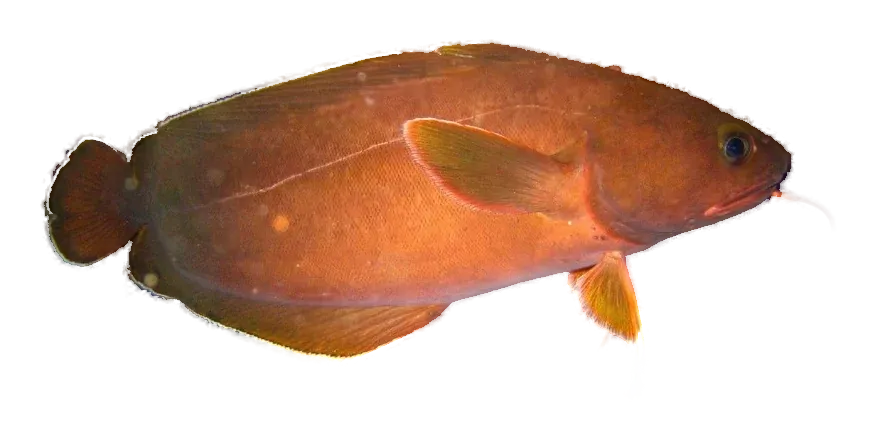
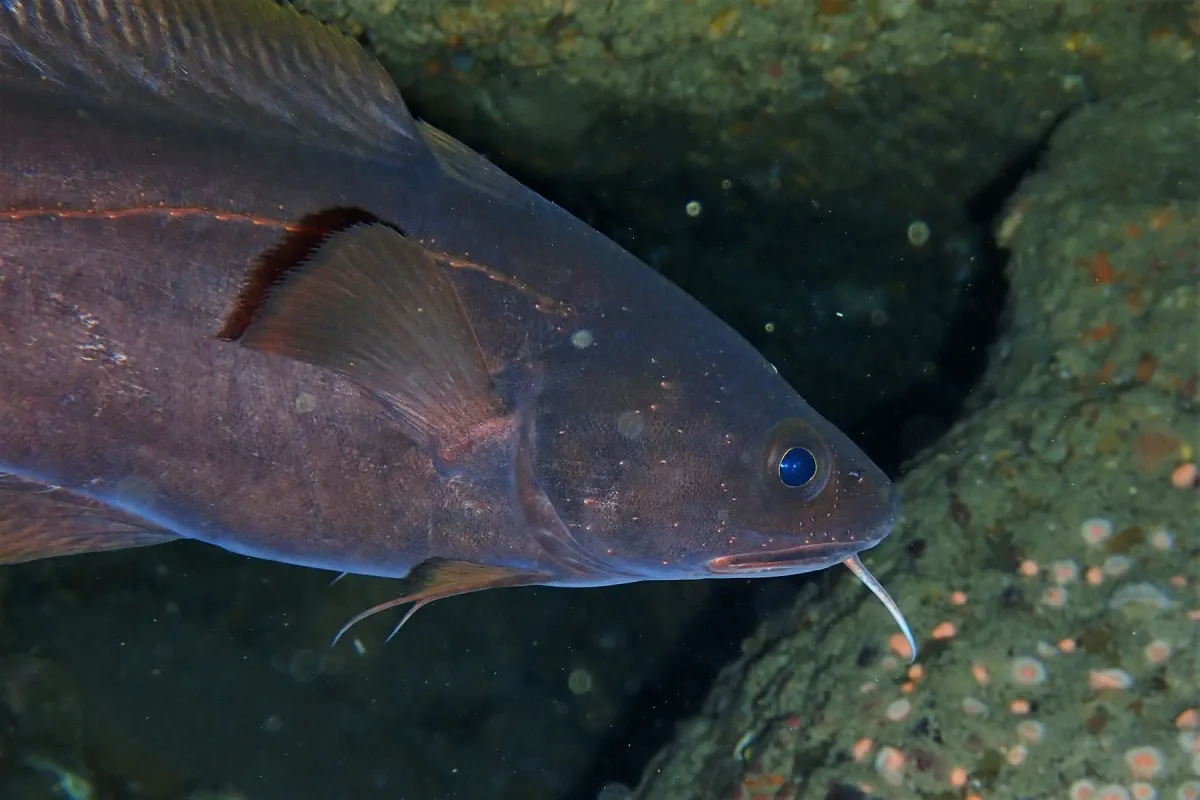
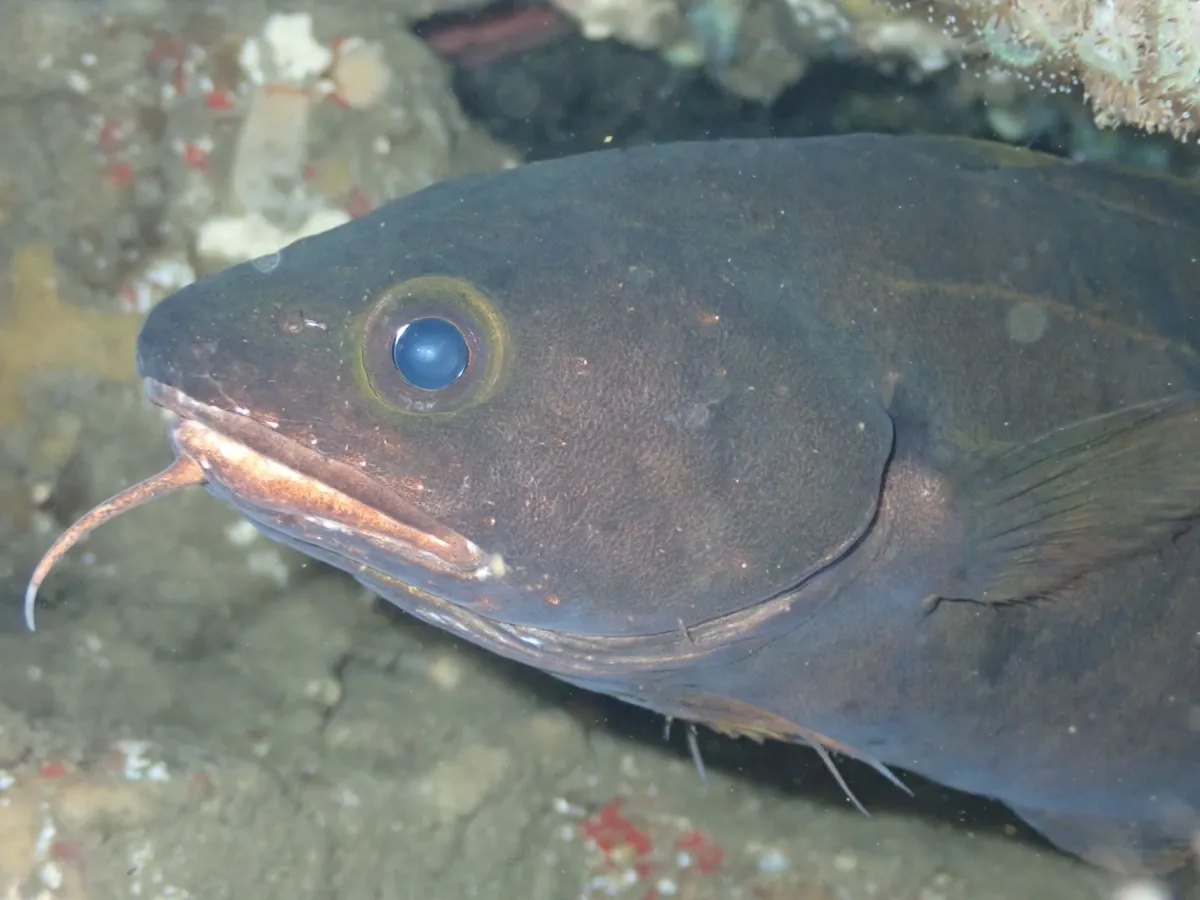
Rock cod (Lotella rhacina) is a brown, soft-bodied reef cod with a pale chin barbel, white edges to its fins and a row of large, sharp teeth. It hides in caves and crevices by day and comes out to feed at night, so most are seen by divers or caught by accident on night baits near reef. It is not the same fish as blue cod or red cod, although both have been called rock cod.
How to identify rock cod
- Chocolate brown to reddish or greyish brown, with a pale chin barbel.
- Narrow white edges on the dorsal, anal and tail fins.
- A short first dorsal fin followed by a long second dorsal fin, and a long anal fin.
- No black spot at the base of the pectoral fin, which red cod have.
- An outer row of large, sharp, widely spaced teeth in the jaws.
Rock cod are soft, robust fish that taper gradually to a rounded tail. They are pale to dark chocolate brown, sometimes yellowish, reddish or greyish brown, with a pale line along the side and narrow white edges on the dorsal, anal and tail fins. A prominent pale barbel hangs from the chin.
There are two dorsal fins: a short first one, closely followed by a long second one. The anal fin is also long, and the tail is separate from both. The scales are small. The jaws carry an outer row of large, sharp, widely spaced teeth, which gives the fish its Australian name, largetooth beardie.
Often confused with
 Red CodPseudophycis bachusRed cod have a black spot at the base of the pectoral fin, a square-cut tail and dark fin edges, and are pinkish rather than brown. They live over sand and mud rather than in reef caves.
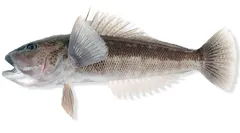 Blue CodParapercis coliasBlue cod are blue-grey to green, with no chin barbel and a single long dorsal fin with a few short spines. "Rock cod" is also an old name for blue cod.
- Southern bastard cod
The closest match, also brown to reddish with a chin barbel, a rounded tail and no pectoral spot. Its fins have thin dark edges, not white, and its scales are bigger (13 to 16 rows between the first dorsal fin and the lateral line, against 21 to 30 in rock cod).
- Spotted black grouper
A large, heavy-bodied grouper of northern reefs with a big mouth and no chin barbel. It is dark grey to black, often with five slanting dark bars and a black saddle on the tail base, and sometimes a few small pale spots. Its Australian name is black rockcod. It is fully protected in New Zealand, so it must be released.
Size and daily limits
Daily limitNo species limitCounts towards the combined finfish limit (20–30 a day). A shared limit applies in Fiordland.Limits for each area
| Area | Min. size | Daily limit |
|---|---|---|
| Auckland and Kermadec area | None | No species limit (combined 20 a day) |
| Central area | None | No species limit (combined 20 a day) |
| Challenger area | None | No species limit (combined 20 a day) |
| Kaikōura area | None | No species limit (combined 30 a day) |
| South-East area | None | No species limit (combined 30 a day) |
| Fiordland area (Fiordland Marine Area) | None | Varies, see note No species limit: counts towards Fiordland's 'any other finfish' limit of 10 a day, or 4 inside the Fiords. |
| Southland area | None | No species limit (combined 30 a day) |
Not named on any regional page; combined finfish limit only.
Checked 22 October 2026 · Source: MPI. Rules change, so check the NZ Fishing Rules app before you keep a fish.
Where it lives in New Zealand
Rock cod live on rocky reefs in bays, harbours and along exposed coasts, from about 2 m down to 90 m. They are nocturnal, sheltering in caves, crevices and under ledges by day and coming out at night to feed. Snorkellers and divers often see them hanging back in the mouth of a small cave.
They are found in New Zealand and southern Australia. New Zealand records run from the Kermadec Islands through Northland, the Hauraki Gulf, Wellington and Kaikōura to Banks Peninsula, and most come from Northland and Auckland. Their southern limit in New Zealand is not well documented.
How to catch it
Few anglers target rock cod. Most are caught by accident at night on baits fished on the bottom close to reef, from wharves, rocks and boats. Because they live in holes and crevices, a hooked rock cod will try to dive back into cover, so fish close to the reef with enough pressure to turn it.
Eating
Little has been published on rock cod as food, and few anglers keep them. A 19th-century Victorian account called it "moderately good for the table, but not in much request".
Good to know
Rock cod belong to the morid cods (Moridae), the same family as red cod, and are not true cods. They are not in the Quota Management System, and little is known about their growth, age or breeding.
The name "rock cod" is used loosely. Blue cod was called rock cod in early New Zealand records, Te Aka Māori Dictionary still glosses several blue cod names as "rock cod", and "red rock cod" is a scorpionfish. Some anglers also call hiwihiwi (kelpfish) and southern bastard cod "rock cod". Southern bastard cod has dark fin edges where rock cod has white ones. In Australia, rock cod and beardie can mean this fish or the southern bastard cod, and "rockcod" is also a name for groupers.
Questions
What is a rock cod in New Zealand?
In New Zealand, rock cod is Lotella rhacina, a brown reef cod in the morid cod family with a pale chin barbel and white-edged fins. It grows to at least 50 cm, with Australian records up to 66 cm, and lives in caves and crevices on rocky reefs. The name has also been used for blue cod.
Is rock cod the same as blue cod?
No. Blue cod (Parapercis colias) belongs to a different family. It is blue-grey to green with no chin barbel and a single long dorsal fin. Blue cod were sometimes called rock cod in the past, which is where the confusion comes from.
How do you tell rock cod from red cod?
Check the pectoral fin. Red cod have a black spot at its base, while rock cod don't. Rock cod are browner, with white edges to the fins, and live in reef caves rather than over sand and mud.
When are rock cod most active?
At night. Rock cod shelter in caves and crevices during the day and come out after dark to feed, so most are caught by anglers fishing reefs and wharves at night.
Related species
 EndemicSaltwater
 EndemicSaltwater
 Saltwater
 Saltwater
More guides
All guides- ArticlesHow to fillet a fish: snapper, gurnard, kahawai and moreStep-by-step filleting for NZ fish, with photos: the basic method, skinning and pin bones, and what is different about snapper, gurnard, kahawai and blue cod.
- ArticlesBest time to fish in New ZealandWhen to catch snapper, kingfish, kahawai, tuna, trout and salmon in New Zealand, with a month-by-month calendar and what bites in each season.