Cockles
Tuangi (also hūwai, tuaki or huangi depending on iwi dialect (NIWA))
Austrovenus stutchburyiAlso known as New Zealand cockle
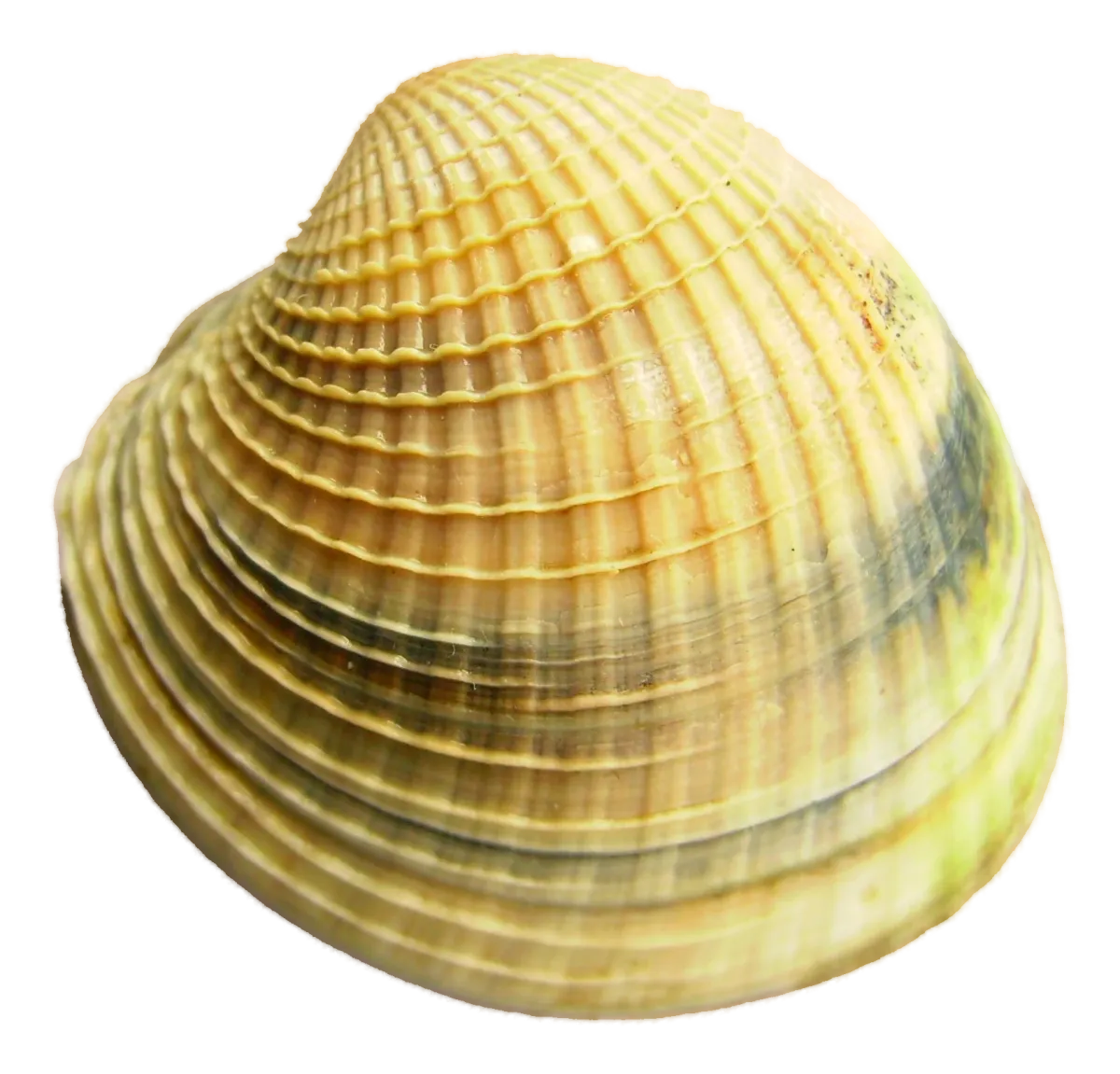
Cockles (tuangi) are round, ribbed shellfish that live just under the surface of sheltered mudflats and sandflats in harbours and estuaries. Found only in New Zealand, they are one of the country's most gathered beach shellfish.
How to identify cockles
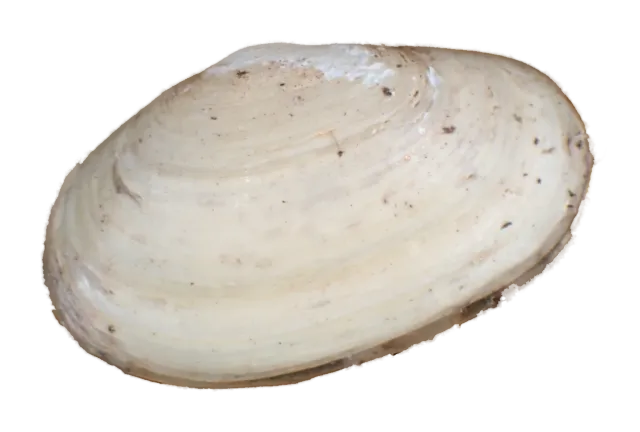
- A round, plump shell with fine ribs radiating from the hinge, light grey outside.
- Usually 25–35 mm across where they are gathered; most grow to no more than about 50 mm.
- Lives 2 to 4 cm under the surface of sheltered mud and sandflats, often near pipi beds but on muddier ground.
Cockles are easy to tell from the other beach shellfish. Pipi, tuatua and toheroa belong to the surf clam family and have smooth, wedge-shaped shells with no ribs. The cockle, or tuangi, belongs to a different family: its shell is round and plump with fine ribs radiating from the hinge, and it is light grey on the outside.
Size and daily limits
| Area | Min. size | Daily limit |
|---|---|---|
| Auckland and Kermadec area | None | 50 The page's table has a separate, lower 'Auckland Coromandel area' daily limit: 50 per day. Elsewhere in the area: 150 per day. No minimum size. Cockles closed at Umupuia Beach and Te Mātā and Waipatukahu (from 7 Aug 2026, 2 years), Whangateau Harbour, Ngunguru Estuary and Rehuotane Ki Tai. No shellfish gathering at Cheltenham Beach, Eastern Beach, Cockle Bay and Karekare Beach. Closures listed on the page include: Ōmaha Bay, Kawau Bay and Whangaparāoa Peninsula rock pools out to 200 m (all invertebrates except kina, from 12 Mar 2026 for 2 years); Marsden Bank and Mair Bank (all shellfish, 29 Jun 2026 to 28 Jun 2028); Rehuotane Ki Tai (Tutukaka Harbour, Ngunguru Bay and rivers). |
| Central area | None | 150 No minimum size. Western Taranaki temporary closure: no shellfish (rock lobster excepted). |
| Challenger area | None | 150 No minimum size. Makaawhio mātaitai: 20 per day at Okāhu, Paringa, Mahitahi/Bruce Bay, Manakaiaua/Hunts Beach and Okarito Lagoon; no take at the other reserves. |
| Kaikōura area | None | 50 No minimum size. |
| South-East area | None | 150 No minimum size in general. East Otago Taiāpure: 50 per day. Akaroa Taiāpure: 20 per day. Lyttelton Harbour/Whakaraupō and Extension mātaitai: 15 per day, min 40 mm (measured at the greatest diameter of the shell); closed at Walkers Beach (Ōtamahua/Quail Island) and Rec Bay; Rāpaki: no take. |
| Fiordland area (Fiordland Marine Area) | None | 20 No minimum size. No accumulation beyond one day's limit. |
| Southland area | None | 150 No minimum size. |
Separate shellfish limit; does not count toward the finfish limit.
Checked 22 October 2026 · Source: MPI. Rules change, so check the NZ Fishing Rules app before you keep a fish.
Where it lives in New Zealand
Cockles live in the sheltered intertidal mud and sandflats of harbours and estuaries, usually 2 to 4 cm below the surface, often near pipi beds but on muddier ground. They do best where the sediment holds little mud, and they decline as estuaries silt up. They are found throughout New Zealand, including Stewart Island, the Chathams and the subantarctic islands.
Cockles can be gathered year round. Low spring tides give the best access, and summer holidays are the busiest time on the beds.
Many popular beds, especially around Auckland and Northland, are closed or have lower limits. Fisheries New Zealand has monitored cockle and pipi beds on northern beaches since the 1990s because they are close to towns and easily overfished. The latest survey, for 2025–26, found cockles at 10 of 11 sites, with numbers varying widely from beach to beach.
- Jan: good
- Feb: good
- Mar: good
- Apr: good
- May: good
- Jun: good
- Jul: good
- Aug: good
- Sep: good
- Oct: good
- Nov: good
- Dec: good
How to gather it
Cockles are gathered by hand. Wait for a low tide and work the exposed flats, feeling just under the surface with your fingers or a small hand rake.
There is no minimum size for cockles in most areas, but take only the bigger ones and leave the small ones to breed: cockles grow slowly, so they are the next few years' harvest. Count as you go: shellfish count towards your limit once they are in your bag, and see the limits by area below.
Respect rāhui and mātaitai. A rāhui is a customary ban on gathering, put in place by tangata whenua so a bed can recover or after a drowning; most people will respect a rāhui if they know about it. Some rāhui are also backed by an MPI temporary closure, and several current cockle closures began that way. Mātaitai reserves are managed by tangata whenua, and their bylaws can set lower limits or ban taking some species. Both are listed with the limits below, and MPI publishes the rules and maps for each customary management area.
Eating
Cockles are sweet and tender. Most gatherers leave them in a bucket of clean seawater for a few hours so they spit out their sand before cooking.
Steam them open in a covered pot with a little water or white wine, then eat them as they are, toss them through pasta, or chop the meat for fritters. Don't overcook them, or the meat turns rubbery.
Before you eat anything you have gathered, check MPI's shellfish biotoxin alerts for that stretch of coast. Cockles are filter feeders, so they take up whatever is in the water, including algal toxins and sewage. Cooking does not destroy biotoxins. Stay away from beds near stormwater drains and sewage outfalls, and after heavy rain, when runoff carries contaminants into harbours. Commercial shellfish areas are closed after rain for the same reason. Your regional council's water-quality reports, such as LAWA's Can I swim here? or Auckland's Safeswim, show where water quality is poor.
Symptoms of shellfish poisoning usually start between 10 minutes and 3 hours after eating, and include tingling around the mouth and in the fingers and toes, dizziness and difficulty breathing or swallowing. If you feel unwell after eating shellfish, call Healthline on 0800 611 116 or get medical help straight away, and keep any leftovers for testing.
Good to know
Cockles have been a staple food since the first people arrived. Middens around the coast are full of their shells, and Māori dried the cooked flesh so it could be carried home from distant beds.
Gathering has fallen sharply. MPI's national panel survey estimated that recreational fishers took about 85,000 cockles in 2022–23, against about 340,000 in 2017–18. The survey's authors put part of the fall down to closures and rāhui, and the shellfish estimates are uncertain because relatively few households gather them.
Cockles have separate sexes and spawn in spring and summer. They mature at about 18 mm and grow slowly, taking three to four years to reach gathering size of about 28 to 30 mm, and can live up to 25 years. On many northern beds, cockles of 30 mm or more are now uncommon. Birds, crabs, whelks, stingrays and flounder eat them, and silt and heatwaves have caused mass die-offs, including in Whangateau Harbour.
Questions
How many cockles can I take?
It depends on where you are. The daily limit is lower in the Auckland Coromandel area and in some mātaitai and taiāpure, and many beaches are closed. See the limits by area and the closures below, checked against MPI.
What's the difference between cockles and pipi?
Cockles are round and ribbed with a grey shell, and live in sheltered mud and sandflats. Pipi are smooth, oval and unribbed, in cleaner, current-swept sand near harbour mouths. See <a href="/pipi/">pipi</a>.
Is there a minimum size for cockles?
In most areas there is no minimum size, but some mātaitai set one. Check the details for your area in the limits table below, and take only larger shellfish whatever the rules.
Are cockles safe to eat?
That depends on the water they came from. Check MPI's shellfish biotoxin alerts before you gather, avoid beds near stormwater and sewage outfalls, and don't gather after heavy rain. Cooking does not destroy biotoxins.
How do you clean cockles before cooking?
Leave them in a bucket of clean seawater for a few hours so they spit out their sand, then rinse and steam them open.