Pipi
Paphies australis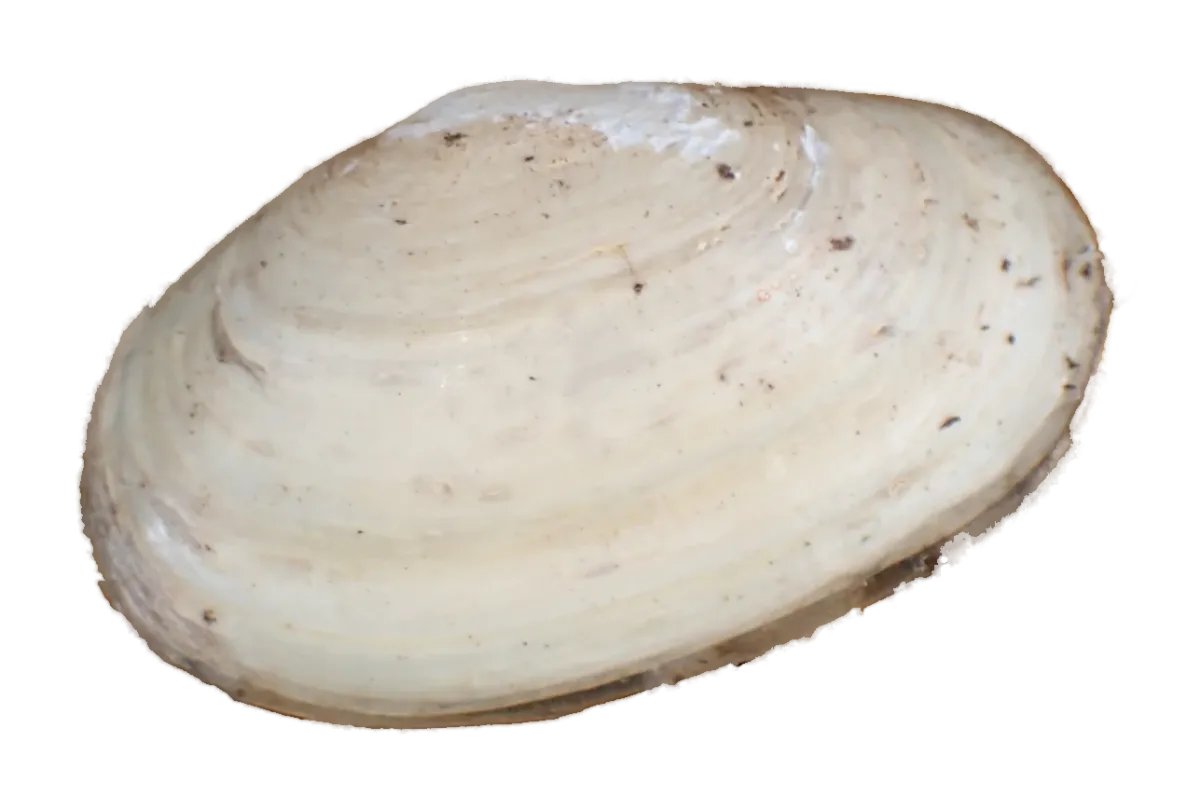
Pipi are smooth, oval shellfish that live in sandy banks near harbour and estuary mouths, where strong currents keep the sand clean. With tuatua and cockles, they are among New Zealand's most gathered beach shellfish, dug by hand at low tide.
How to identify pipi
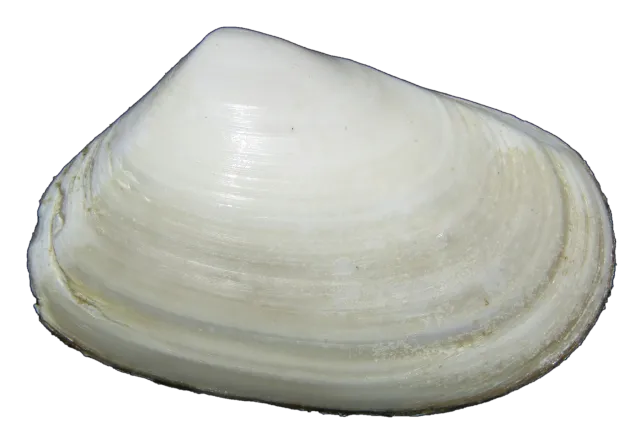
- A smooth, evenly oval shell with no ribs, usually 50–65 mm long when fully grown.
- The hinge (where the two halves join) sits near the middle of the top edge.
- Lives in sandy banks near harbour and estuary mouths with a strong current, not on open surf beaches.
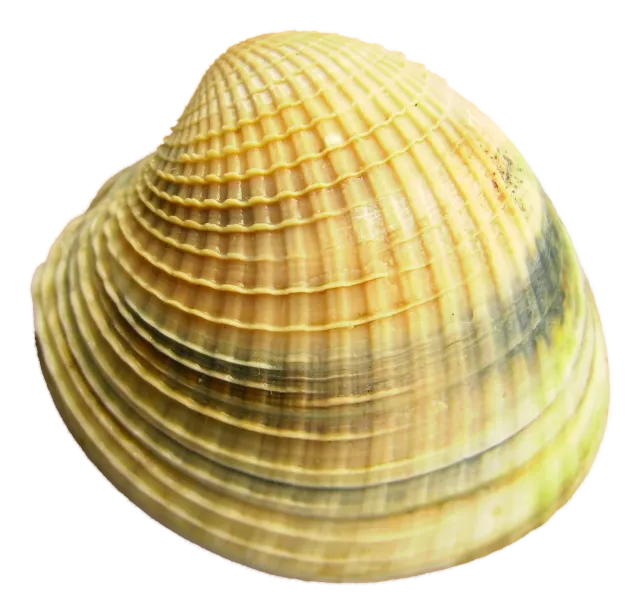
Pipi belong to the surf clam family, along with tuatua and toheroa. All have smooth, wedge-shaped shells with no ribs, which is the quickest way to tell them from a cockle, whose shell is round and plump with fine ribs radiating from the hinge.
To separate pipi from tuatua, look at the shape and the hinge. A pipi shell is more evenly oval, and the hinge (the point where the two halves join) sits near the middle of the top edge. Tuatua are larger and more triangular, with the hinge more sharply angled. Where you find them also helps: pipi live in sandy banks near harbour and estuary mouths with a strong current, while tuatua live on open ocean beaches with surf.
Often confused with
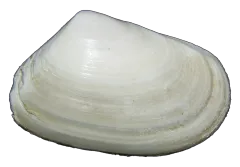 TuatuaPaphies subtriangulataTuatua are bigger and more triangular, with a sharply angled hinge, and live on open surf beaches. Pipi are more evenly oval, with the hinge near the middle, and live in harbour and estuary channels.
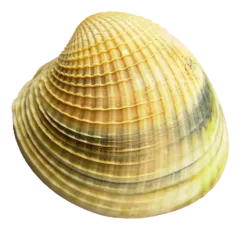 CocklesAustrovenus stutchburyiCockles are round and plump with fine ribs and a grey shell, and live in sheltered mud and sandflats. Pipi are smooth, oval and unribbed, in cleaner, current-swept sand.
Size and daily limits
Daily limitVaries by areaLimits for each area
| Area | Min. size | Daily limit |
|---|---|---|
| Auckland and Kermadec | None | Varies by sub-areaDetails150 per day generally; 50 per day in the Auckland Coromandel area. No minimum size. Closures: Marsden and Mair Banks (s11, since 1 Oct 2014), Whangateau Harbour, Ngunguru Estuary, Te Mātā and Waipatukahu (to 6 Aug 2028), Rehuotane Ki Tai (to 25 Jun 2028), Ōmaha Bay/Kawau Bay/Whangaparāoa rock pools (to 11 Mar 2028), Cheltenham Beach, Eastern Beach, Cockle Bay and Karekare Beach (no shellfish). See closures. |
| Central | None | 150DetailsNo minimum size. Closed in Western Taranaki (to 15 Dec 2026), Tangoiro/Waihirere and Motuoroi (to 25 Jul 2027) and Te Ohooho o Parapara. |
| Challenger | None | 150DetailsNo minimum size. Makaawhio mātaitai: 20 at Okāhu, Paringa, Mahitahi, Manakaiaua and Ōkārito; no take at Okuru, Popotai Taumaka, Tauneke and Tauparikaka. |
| Kaikōura | None | 150DetailsNo minimum size. |
| South-East | None | 150DetailsNo minimum size generally. Lyttelton Harbour/Whakaraupō and Extension mātaitai: 15 per day, min 40 mm (measured at the greatest diameter of the shell); Rāpaki mātaitai no take. |
| Fiordland | None | 20DetailsNo minimum size. Same inside and outside the Fiords. |
| Southland | None | 150DetailsNo minimum size. |
Own daily limit; not part of the "all others" shellfish limit.
Closures in force (18)
Auckland and Kermadec5 closures
- Until 6 August 2028
Te Mātā and Waipatukahu (Ōtaki Creek to Diehard/Onepoto Stream, out 1 nm): cockles, mussels, oysters, pipi. From 7 Aug 2026.
- No end date
Marsden Bank and Mair Bank: pipi closed under s11 since 1 Oct 2014 (Notice MPI 380).
- Until 11 March 2028
Ōmaha Bay, Kawau Bay and Whangaparāoa Peninsula: all invertebrates and seaweed in rock pools and out to 200 m offshore, from 12 Mar 2026. Kina excluded (normal limits apply); spiny rock lobster and scallops already closed.
- Until 25 June 2028
Rehuotane Ki Tai (Tutukaka Harbour, Ngunguru Bay, Ngunguru and Horahora Rivers): no taking cockle, crab, garfish, mussel, octopus, pāua, pipi, packhorse rock lobster, rock oyster, sea cucumber, sea horse, sea snail, starfish, tuatua; nets prohibited in harbour/rivers. From 26 Jun 2026.
- No end date
Standing shellfish restrictions (restricted areas list, no end date shown): Cheltenham Beach, Eastern Beach and Karekare Beach no shellfish gathering; Cockle Bay no taking of shellfish; Whangateau Harbour no cockles or pipi; Ngunguru Estuary no pipi and/or cockles; Te Puna mātaitai no green-lipped, blue or black mussels; Maunganui Bay (Deep Water Cove) no taking of any species except kina.
Central6 closures
- Until 15 December 2026
Western Taranaki (Tapuae Stream to Taungatara Stream, out 1 nm): all shellfish except rock lobster, seaweed (except beach-cast), sea anemones, stingrays and two conger eel species. From 16 Dec 2024.
- Until 25 July 2027
Tangoiro/Waihirere (Tairāwhiti, near Māwhai Point): all shellfish (incl. rock lobster) and finfish. From 26 Jul 2025.
- Until 25 July 2027
Motuoroi (Anaura Bay, Tairāwhiti): all shellfish (incl. rock lobster) and finfish. From 26 Jul 2025.
- Until 7 August 2027
Te Ohooho o Parapara rāhui: small box approx. 6 km north-east of the Port of Napier; any fish, aquatic life or seaweed. From 8 Aug 2025.
- No end date
Toka Tāmure mātaitai reserve (Māhia Peninsula) bylaws (MPI 599, 2016): no taking of pāua, mussels, pipi, tuatua, cockles, surf clams, deepwater clams, packhorse rock lobster, sea cucumber, karengo or beach-cast seaweed. Kina closed 1 Mar to 31 Jul; 25 per day 1 Aug to end of Feb. Spiny rock lobster 3 per day; no loops for rock lobster. No UBA for taking fish, shellfish or seaweed.
- No end date
Horokaka mātaitai reserve (Māhia Peninsula) bylaws (MPI 919, 2018): no taking of pāua, mussels, pipi, tuatua, cockles, surf clams, deepwater clams, packhorse rock lobster, sea cucumber, karengo or beach-cast seaweed. Spiny rock lobster closed 1 May to 30 Sep, 3 per day 1 Oct to 30 Apr; no loops. Kina closed 1 Apr to 30 Sep, 25 per day 1 Oct to 31 Mar. No UBA for taking fish, shellfish or seaweed.
Kaikōura1 closure
- No end date
Oaro-Haumuri Taiāpure: closed to seaweed and shellfish except scampi, rock lobster, octopus and kina (pāua open in season at 2 per day).
Challenger1 closure
- No end date
Makaawhio (West Coast) mātaitai reserves bylaws: pāua no take at Okāhu, Okuru, Popotai Taumaka, Mahitahi and Ōkārito; rock lobster no take at Ōkārito, Manakaiaua, Mahitahi, Tauparikaka and Okuru, max tail width 70 mm and vessel limit 18 elsewhere; mussels no take at Ōkārito; reduced limits (20) or no take for mussels, cockles, pipi and tuatua; any shellfish not listed prohibited.
South-East2 closures
- No end date
Lyttelton Harbour/Whakaraupō and Extension mātaitai: pāua closed at Gollans Bay, north-east Ōtamahua/Quail Island and Livingstone Bay to Godley Head; cockles closed at Walkers Beach (Quail Island) and Rec Bay; no shellfish from whata kaimoana (aquaculture structures); unlisted shellfish prohibited. Rāpaki mātaitai: all shellfish prohibited.
- No end date
Tuhawaiki (south of Timaru) and Te Ahi Tarakihi (north of Timaru) mātaitai reserves: all shellfish other than pāua, kina and kūtai (mussels) prohibited. Limits: pāua 3 (black-foot and yellow-foot), kina 20, kūtai 50 per person per day (MPI 973, in force 24 Jun 2019). Rock lobster treated as shellfish under the Fisheries Act definition (inferred, medium-high confidence). Waitarakao mātaitai (same notice) has no shellfish bylaws.
Southland3 closures
- No end date
Pikomamaku (Womens Island) mātaitai reserve, North Tītī Islands: all fishing prohibited (fish, aquatic life, seaweed).
- No end date
Horomamae mātaitai reserve (waters north and north-east of Horomamae/Owen Island, east Stewart Island): all fish, aquatic life and seaweed closed 1 Jun to 31 Mar (open 1 Apr to 31 May only) (MPI 35, 2012).
- No end date
Kaihuka mātaitai reserve (waters around Kaihuka Island, Breaksea Islands group, east Stewart Island): all fish, aquatic life and seaweed closed 1 Jun to 31 Mar (open 1 Apr to 31 May only) (MPI 37, 2012).
Marine reserves and protected areas: no take57 areas
Poor Knights Islands Marine Reserve (Poor Knights Islands, about 22 km off the east coast of Northland (boats launch from Tutukaka); covers the sea 800 m out from all islands, islets, rocks and stacks). Marine reserve, no take: No fishing of any kind, from a boat or from shore; no taking or disturbing any marine life, including shellfish and seaweeds; no taking any part of the sea floor, including rocks and shells; no feeding fish.
Whangārei Harbour Marine Reserve (Two sites in Whangārei Harbour, Northland: Motukaroro (Passage) Island at Reotahi, and the Waikaraka mudflats and mangroves off Whangārei Heads Road). Marine reserve, no take: Don't take, disturb, kill or damage anything within the reserve.
Cape Rodney-Okakari Point Marine Reserve (Goat Island) (Cape Rodney to Okakari Point near Leigh, north of Warkworth, Auckland; waters 800 m from shore including Te Hāwere-a-Maki/Goat Island (pre-extension description)). Marine reserve, no take: Don't take, disturb, kill or damage anything within the reserve. Extended (Cape Rodney–Okakari Point Extension Marine Reserve) under the Hauraki Gulf / Tīkapa Moana Marine Protection Act 2025 from 25 Oct 2025; the old 800 m boundary no longer marks the edge, check the DOC map.
Tāwharanui Marine Reserve (Northern coast of the Tāwharanui Peninsula (Tāwharanui Regional Park), Rodney, about 90 km north of Auckland). Marine reserve, no take: Don't take, disturb, kill or damage anything within the reserve; no fishing; taking fossils prohibited.
Long Bay-Okura Marine Reserve (Long Bay to the Okura estuary, North Shore, about 20 km north of Auckland CBD). Marine reserve, no take: Don't take, disturb, kill or damage anything within the reserve.
Te Matuku Marine Reserve (Te Matuku Bay, far south-east corner of Waiheke Island, Hauraki Gulf, extending into Tāmaki Strait). Marine reserve, no take: Fishing, collecting, or disturbing marine organisms and resources are prohibited. Don't take, disturb, kill or damage anything within the reserve.
Mōtū Manawa-Pollen Island Marine Reserve (Inner Waitematā Harbour around Pollen and Traherne Islands, between Rosebank Peninsula and Waterview/Pt Chevalier, Auckland). Marine reserve, no take: Do not take or kill fish, crustaceans, shellfish, seaweed, shells, rocks or any other marine life; don't take, disturb, kill or damage anything within the reserve.
Te Whanganui-o-Hei/Cathedral Cove Marine Reserve (Cathedral Cove to Hahei, Mercury Bay, Coromandel). Marine reserve, no take: No fishing of any kind, from a boat or from shore; no taking or disturbing any marine life, including shellfish and seaweeds; no taking any part of the sea floor, including rocks and shells; no feeding fish. No discharge of waste/ballast/sewage. Extended (Te Whanganui-o-Hei / Cathedral Cove Extension Marine Reserve, Areas A and B) under the Hauraki Gulf / Tīkapa Moana Marine Protection Act 2025 from 25 Oct 2025; check the DOC map.
Tūhua (Mayor Island) Marine Reserve (Northern coast of Tūhua/Mayor Island, Bay of Plenty, from high-tide mark to 1 nm offshore between Turanginui Point and Tumutu Point). Marine reserve, no take: Don't take, disturb, kill or damage anything within the reserve. Reserve covers the northern coast only; elsewhere around the island normal rules apply, with set nets and long lines banned within 1 nm.
Te Paepae o Aotea (Volkner Rocks) Marine Reserve (Volkner Rocks, 5 km north-west of Whakaari/White Island and 55 km north of Whakatāne, Bay of Plenty). Marine reserve, no take: Fishing is not permitted. Don't take, disturb, kill or damage anything within the reserve.
Te Tapuwae o Rongokako Marine Reserve (Pouawa coast, about 16 km north of Gisborne, East Coast (access from SH35 at Pouawa)). Marine reserve, no take: Don't take, disturb, kill or damage anything within the reserve.
Te Angiangi Marine Reserve (Central Hawke's Bay coast between Aramoana and Blackhead, about 30 min from Waipukurau/Waipawa). Marine reserve, no take: No fishing, seaweed or shellfish gathering. All plant and animal life, alive or dead, totally protected; reefs and sea floor protected, nothing may be removed. Illegal to discharge firearms or harmful substances, or release non-native species; also an offence to pollute, litter, or erect a structure.
Parininihi Marine Reserve (North Taranaki coast at the Whitecliffs/Parininihi, north of Urenui (road access via Pukearuhe Road), including Pariokariwa reef). Marine reserve, no take: Illegal to take anything, including fish, shellfish, lobster, rocks, shells, driftwood or any other natural feature, plant or animal; don't take, disturb, kill or damage anything. Areas either side were left out of the reserve so customary and recreational fishing continue there.
Tapuae Marine Reserve (Taranaki coast just south-west of New Plymouth, adjoining Ngā Motu/Sugar Loaf Islands Marine Protected Area). Marine reserve, no take: No-take: no fishing of any kind, no shellfish gathering, no removal of rocks, shells, driftwood or plants; don't take, disturb, kill or damage anything. Adjoins the Ngā Motu/Sugar Loaf Islands Marine Protected Area, where some fishing is allowed (not a marine reserve).
Kapiti Marine Reserve (Between Kapiti Island and Paraparaumu/Waikanae beaches, Kapiti Coast, about 30 km from Wellington (two areas: inner/eastern and outer/western of the island)). Marine reserve, no take: Fishing within the marine reserve is not permitted. Don't take, disturb, kill or damage anything within the reserve.
Taputeranga Marine Reserve (Wellington south coast around Island Bay and Owhiro Bay, about 6 km from the city centre). Marine reserve, no take: Fishing and the removal or disturbance of any living or non-living marine resource is prohibited (except permitted monitoring/research).
Westhaven (Te Tai Tapu) Marine Reserve (Tidal sandflats and channels at the southern end of Whanganui Inlet, western Golden Bay; inlet entrance 19 km SW of Farewell Spit). Marine reserve, no take: Fishing and shooting are not permitted in the marine reserve. Don't take, disturb, kill or damage anything within the reserve.
Kahurangi Marine Reserve (Far NW South Island (West Coast region), 16 km of coast from Wekakura Point to Crayfish Point, about 5 km offshore; southern half reachable from the Heaphy Track). Marine reserve, no take: Don't take, disturb, kill or damage anything within the reserve - it's illegal.
Tonga Island Marine Reserve (Abel Tasman National Park coast, Nelson/Tasman, surrounding Tonga Island). Marine reserve, no take: Don't take, disturb, kill or damage anything within the reserve.
Horoirangi Marine Reserve (North of Nelson on the eastern side of Tasman Bay/Te Tai-o-Aorere, Glenduan to near Cable Bay (Ataata Point)). Marine reserve, no take: Don't take, disturb, kill or damage anything within the reserve - it's illegal. Fishing is not permitted within the reserve.
Long Island - Kokomohua Marine Reserve (Entrance to Queen Charlotte Sound, Marlborough Sounds, about 35 km from Picton; boat access only). Marine reserve, no take: Taking, disturbing, killing or damaging anything within the reserve is illegal.
Punakaiki Marine Reserve (West Coast, edge of Paparoa National Park, around Dolomite Point (Pancake Rocks), Perpendicular Point to near Maher Swamp, out to 2 nautical miles). Marine reserve, no take: Don't take, disturb, kill or damage anything within the reserve - it's illegal. Exception: eeling, whitebaiting and recreational fishing at river mouths allowed in two defined areas (not shellfish gathering on the reef).
Waiau Glacier Coast Marine Reserve (South Westland, about 11 km from Kohuamarua Bluff (near Ōkārito) south to Omoeroa Bluff, about 4 km offshore, incl. a short way up the Waiho River). Marine reserve, no take: Don't take, disturb, kill or damage anything within the reserve - it's illegal.
Tauparikākā Marine Reserve (Ship Creek visitor site, about 20 min drive north of Haast, South Westland). Marine reserve, no take: Don't take, disturb, kill or damage anything within the reserve.
Hautai Marine Reserve (Remote South Westland coast, from just south of Longridge Point about 6 km south to the Hacket River mouth, >1 km offshore; halfway between Jackson Bay and Milford Sound, 60 km from any road). Marine reserve, no take: Don't take, disturb, kill or damage anything within the reserve.
Hikurangi Marine Reserve (About 10 km south of Kaikōura near Goose Bay, extending offshore over the Kaikōura Canyon). Marine reserve, no take: No-take area: you may not remove or disturb any marine life, or take any other material, including shells from the beach, water or seabed.
Pōhatu Marine Reserve (Flea Bay, south-east (outer) coast of Banks Peninsula, Canterbury; 4WD-only land access). Marine reserve, no take: It is not permitted to take any animal or natural item from the reserve (fish, shellfish, shells, seaweed, rocks, driftwood).
Akaroa Marine Reserve (Mouth of Akaroa Harbour, Banks Peninsula, Canterbury; boat or kayak access). Marine reserve, no take: You are not permitted to take any animals or natural items from the reserve (fish, shellfish, shells, seaweed, rocks, driftwood).
Waitaki Marine Reserve (North Otago coast south of the Waitaki River; foreshore access limited (much via private land)). Marine reserve, no take: 'No take' area: all fishing (commercial, recreational, customary), taking or killing marine life, removing or disturbing marine life or materials, feeding fish, discarding fish waste. In force 1 Jul 2026 (Te Au Roa o Te Rakihouia network). Only exception is Ngāi Tahu Whānui wānaka (incl. wānaka hī ika with limited take); fish caught outside may be carried through.
Papanui Marine Reserve (Entirely offshore off the Otago Peninsula/Dunedin coast; boat access only). Marine reserve, no take: 'No take' area: all fishing (commercial, recreational, customary), taking or killing marine life, removing or disturbing marine life or materials, feeding fish, discarding fish waste. In force 1 Jul 2026 (Te Au Roa o Te Rakihouia network). Only exception is Ngāi Tahu Whānui wānaka (incl. wānaka hī ika with limited take); fish caught outside may be carried through.
Ōrau Marine Reserve (Dunedin coast, Harakeke Point to St Clair; accessible from Otago Peninsula beaches (Sandfly Bay to St Clair)). Marine reserve, no take: 'No take' area: all fishing (commercial, recreational, customary), taking or killing marine life, removing or disturbing marine life or materials, feeding fish, discarding fish waste. In force 1 Jul 2026 (Te Au Roa o Te Rakihouia network). Only exception is Ngāi Tahu Whānui wānaka (incl. wānaka hī ika with limited take); fish caught outside may be carried through.
Ōkaihae Marine Reserve (Around Ōkaihae/Green Island, offshore island (nature reserve) on the Otago coast south of Dunedin; boat access only). Marine reserve, no take: 'No take' area: all fishing (commercial, recreational, customary), taking or killing marine life, removing or disturbing marine life or materials, feeding fish, discarding fish waste. Landing on Ōkaihae (Green Island) without DOC permission prohibited. In force 1 Jul 2026 (Te Au Roa o Te Rakihouia network). Only exception is Ngāi Tahu Whānui wānaka (incl. wānaka hī ika with limited take); fish caught outside may be carried through.
Hākinikini Marine Reserve (Remote southern Otago coast; limited road access, walk in via Akatore Creek at low tide). Marine reserve, no take: 'No take' area: all fishing (commercial, recreational, customary), taking or killing marine life, removing or disturbing marine life or materials, feeding fish, discarding fish waste. In force 1 Jul 2026 (Te Au Roa o Te Rakihouia network). Only exception is Ngāi Tahu Whānui wānaka (incl. wānaka hī ika with limited take); fish caught outside may be carried through.
Ulva Island-Te Wharawhara Marine Reserve (Outer Paterson Inlet/Whaka ā Te Wera, east coast of Stewart Island/Rakiura, around Ulva Island). Marine reserve, no take: Fishing, or taking or disturbing anything that occurs naturally in the reserve; feeding fish; discharging pollutants or ballast water; introducing living organisms. Surrounded by Te Whaka a Te Wera (Paterson Inlet) mātaitai reserve, which has its own bylaws.
Piopiotahi (Milford Sound) Marine Reserve (Northern side of Milford Sound/Piopiotahi from the head of the sound to Dale Point). Marine reserve, no take: All marine life is totally protected. No fishing, netting, taking, or killing of marine life. No polluting, disturbance or damage. No removal of any natural thing from the marine reserve.
Te Hapua (Sutherland Sound) Marine Reserve (Sutherland Sound, northern Fiordland (shallow-sill entrance)). Marine reserve, no take: All marine life is totally protected. No fishing, netting, taking, or killing of marine life. No polluting, disturbance or damage. No removal of any natural thing from the marine reserve.
Hawea (Clio Rocks) Marine Reserve (Inner Bligh Sound/Hāwea, northern Fiordland). Marine reserve, no take: All marine life is totally protected. No fishing, netting, taking, or killing of marine life. No polluting, disturbance or damage. No removal of any natural thing from the marine reserve.
Kahukura (Gold Arm) Marine Reserve (Gold Arm, Charles Sound/Taiporoporo). Marine reserve, no take: All marine life is totally protected. No fishing, netting, taking, or killing of marine life. No polluting, disturbance or damage. No removal of any natural thing from the marine reserve.
Kutu Parera (Gaer Arm) Marine Reserve (Gaer Arm, Bradshaw Sound (Doubtful Sound complex), incl. Camelot River entrance estuary). Marine reserve, no take: All marine life is totally protected. No fishing, netting, taking, or killing of marine life. No polluting, disturbance or damage. No removal of any natural thing from the marine reserve.
Te Awaatu Channel (The Gut) Marine Reserve (The Gut channel, Doubtful Sound/Patea, near Secretary Island). Marine reserve, no take: All marine life is totally protected. No fishing, netting, taking, or killing of marine life. No polluting, disturbance or damage. No removal of any natural thing from the marine reserve.
Taipari Roa (Elizabeth Island) Marine Reserve (Around Elizabeth Island, inner Doubtful Sound/Patea). Marine reserve, no take: All marine life is totally protected. No fishing, netting, taking, or killing of marine life. No polluting, disturbance or damage. No removal of any natural thing from the marine reserve.
Moana Uta (Wet Jacket Arm) Marine Reserve (Entire length of Wet Jacket Arm, Dusky Sound/Tamatea complex). Marine reserve, no take: All marine life is totally protected. No fishing, netting, taking, or killing of marine life. No polluting, disturbance or damage. No removal of any natural thing from the marine reserve.
Taumoana (Five Fingers Peninsula) Marine Reserve (Beside Five Fingers Peninsula at the entrance to Tamatea/Dusky Sound (wave-exposed coast)). Marine reserve, no take: All marine life is totally protected. No fishing, netting, taking, or killing of marine life. No polluting, disturbance or damage. No removal of any natural thing from the marine reserve.
Te Tapuwae o Hua (Long Sound) Marine Reserve (Long Sound, Preservation Inlet, southern Fiordland). Marine reserve, no take: All marine life is totally protected. No fishing, netting, taking, or killing of marine life. No polluting, disturbance or damage. No removal of any natural thing from the marine reserve.
Aldermen Islands / Te Ruamahua (north) High Protection Area (waters around the northern Aldermen Islands, off Tairua, east Coromandel; boundary per SO plan in the Act, see DOC map). Hauraki Gulf / Tīkapa Moana Marine Protection Act 2025, in force 25 Oct 2025: no recreational or commercial fishing, including rock lobster and all other shellfish. Customary fishing allowed only with written authorisation from a tangata kaitiaki for a customary purpose (e.g. hui, tangi).
Aldermen Islands / Te Ruamahua (south) High Protection Area (waters around the southern Aldermen Islands, off Tairua, east Coromandel; boundary per SO plan in the Act, see DOC map). Hauraki Gulf / Tīkapa Moana Marine Protection Act 2025, in force 25 Oct 2025: no recreational or commercial fishing, including rock lobster and all other shellfish. Customary fishing allowed only with written authorisation from a tangata kaitiaki for a customary purpose (e.g. hui, tangi).
Cape Colville High Protection Area (off Cape Colville, northern tip of the Coromandel Peninsula (inside the Cape Colville SPA); boundary per SO plan in the Act, see DOC map). Hauraki Gulf / Tīkapa Moana Marine Protection Act 2025, in force 25 Oct 2025: no recreational or commercial fishing, including rock lobster and all other shellfish. Customary fishing allowed only with written authorisation from a tangata kaitiaki for a customary purpose (e.g. hui, tangi).
Kawau Bay High Protection Area (Kawau Bay, north of Auckland (inside the Kawau Bay SPA); boundary per SO plan in the Act, see DOC map). Hauraki Gulf / Tīkapa Moana Marine Protection Act 2025, in force 25 Oct 2025: no recreational or commercial fishing, including rock lobster and all other shellfish. Customary fishing allowed only with written authorisation from a tangata kaitiaki for a customary purpose (e.g. hui, tangi). Limited commercial ring-netting (kahawai, grey mullet, trevally, 1 Mar to 31 Aug, authorised existing operators only) is the only fishing exception; it does not apply to recreational fishers.
Mokohīnau Islands High Protection Area (around the Mokohīnau Islands, outer Hauraki Gulf; boundary per SO plan in the Act, see DOC map). Hauraki Gulf / Tīkapa Moana Marine Protection Act 2025, in force 25 Oct 2025: no recreational or commercial fishing, including rock lobster and all other shellfish. Customary fishing allowed only with written authorisation from a tangata kaitiaki for a customary purpose (e.g. hui, tangi).
Motukawao Islands High Protection Area (around the Motukawao Islands, western Coromandel coast; boundary per SO plan in the Act, see DOC map). Hauraki Gulf / Tīkapa Moana Marine Protection Act 2025, in force 25 Oct 2025: no recreational or commercial fishing, including rock lobster and all other shellfish. Customary fishing allowed only with written authorisation from a tangata kaitiaki for a customary purpose (e.g. hui, tangi).
Pakatoa and Tarahiki / Shag Island High Protection Area (around Pakatoa and Tarahiki/Shag Islands, east of Waiheke Island; boundary per SO plan in the Act, see DOC map). Hauraki Gulf / Tīkapa Moana Marine Protection Act 2025, in force 25 Oct 2025: no recreational or commercial fishing, including rock lobster and all other shellfish. Customary fishing allowed only with written authorisation from a tangata kaitiaki for a customary purpose (e.g. hui, tangi).
Rangitoto and Motutapu High Protection Area (around Rangitoto and Motutapu Islands, inner Hauraki Gulf; boundary per SO plan in the Act, see DOC map). Hauraki Gulf / Tīkapa Moana Marine Protection Act 2025, in force 25 Oct 2025: no recreational or commercial fishing, including rock lobster and all other shellfish. Customary fishing allowed only with written authorisation from a tangata kaitiaki for a customary purpose (e.g. hui, tangi). Limited commercial ring-netting (kahawai, grey mullet, trevally, 1 Mar to 31 Aug, authorised existing operators only) is the only fishing exception; it does not apply to recreational fishers.
Slipper Island / Whakahau High Protection Area (around Slipper Island/Whakahau, off Tairua-Pāuanui, east Coromandel; boundary per SO plan in the Act, see DOC map). Hauraki Gulf / Tīkapa Moana Marine Protection Act 2025, in force 25 Oct 2025: no recreational or commercial fishing, including rock lobster and all other shellfish. Customary fishing allowed only with written authorisation from a tangata kaitiaki for a customary purpose (e.g. hui, tangi).
Te Hauturu-o-Toi / Little Barrier Island High Protection Area (around Te Hauturu-o-Toi/Little Barrier Island, outer Hauraki Gulf; boundary per SO plan in the Act, see DOC map). Hauraki Gulf / Tīkapa Moana Marine Protection Act 2025, in force 25 Oct 2025: no recreational or commercial fishing, including rock lobster and all other shellfish. Customary fishing allowed only with written authorisation from a tangata kaitiaki for a customary purpose (e.g. hui, tangi).
The Noises High Protection Area (around The Noises islands, north-east of Rangitoto/Motutapu; boundary per SO plan in the Act, see DOC map). Hauraki Gulf / Tīkapa Moana Marine Protection Act 2025, in force 25 Oct 2025: no recreational or commercial fishing, including rock lobster and all other shellfish. Customary fishing allowed only with written authorisation from a tangata kaitiaki for a customary purpose (e.g. hui, tangi).
Tiritiri Matangi High Protection Area (around Tiritiri Matangi Island, off Whangaparāoa Peninsula (inside the Tiritiri Matangi SPA); boundary per SO plan in the Act, see DOC map). Hauraki Gulf / Tīkapa Moana Marine Protection Act 2025, in force 25 Oct 2025: no recreational or commercial fishing, including rock lobster and all other shellfish. Customary fishing allowed only with written authorisation from a tangata kaitiaki for a customary purpose (e.g. hui, tangi).
Kermadec Islands Marine Reserve (Rangitāhua): all waters around the islands and rocks out to 12 nautical miles. Marine reserve, no take of any marine life. Visits need a DOC permit.
Before you gather
- Check the MPI shellfish biotoxin alerts for the beach you're going to. Toxins can't be cooked out.
- Check for rāhui, mātaitai and other customary management areas, which can have their own limits or closures.
- Check you're not in a marine reserve. Taking anything from one is illegal.
- Seen someone taking too much or undersize shellfish? Call MPI on 0800 4 POACHER (0800 47 62 24). Calls are confidential.
Checked 23 October 2026 · Source: MPI. Rules and closures change, so check the NZ Fishing Rules app before you gather.
Where it lives in New Zealand
Pipi live in sheltered beaches, bays and estuaries, especially in coarse shell sand at harbour mouths where waves and currents keep the silt out. They are found from the intertidal down to at least 7 m in fast-flowing harbour channels, and can be very dense, at more than 1,000 per square metre in places. They occur right around New Zealand, including the Chatham and Auckland Islands.
Pipi can be gathered year round. Low spring tides give the best access, and summer holidays are the busiest time on the beds.
Many popular beds, especially around Auckland and Northland, are closed or have lower limits. Fisheries New Zealand has monitored pipi and cockle beds on northern beaches since the 1990s because they are close to towns and easily overfished. The latest survey, for 2025–26, found pipi at eight of 11 sites, with numbers varying widely from beach to beach.
- Jan: good
- Feb: good
- Mar: good
- Apr: good
- May: good
- Jun: good
- Jul: good
- Aug: good
- Sep: good
- Oct: good
- Nov: good
- Dec: good
How to gather it
Pipi are gathered by hand. Wait for a low tide and work the exposed banks or the shallow edge of the channel, feeling just under the surface with your fingers or a small hand rake.
There is no minimum size for pipi in most areas, but take only the bigger ones and leave the small ones to breed: they are the next few years' harvest. The traditional pipi basket was woven loosely so that the small ones fell back onto the bed when it was swirled in the water. Count as you go: shellfish count towards your limit once they are in your bag, and see the limits by area below.
Respect rāhui and mātaitai. A rāhui is a customary ban on gathering, put in place by tangata whenua so a bed can recover or after a drowning; most people will respect a rāhui if they know about it. Some rāhui are also backed by an MPI temporary closure, and several current pipi closures began that way. Mātaitai reserves are managed by tangata whenua, and their bylaws can set lower limits or ban taking some species. Both are listed with the limits below, and MPI publishes the rules and maps for each customary management area.
Eating
Pipi are sweet and tender. Most gatherers leave them in a bucket of clean seawater for a few hours so they spit out their sand before cooking.
Steam them open in a covered pot with a little water or white wine, then eat them as they are, toss them through pasta, or chop the meat for fritters or chowder. Don't overcook them, or the meat turns rubbery.
Before you eat anything you have gathered, check MPI's shellfish biotoxin alerts for that stretch of coast. Pipi are filter feeders, so they take up whatever is in the water, including algal toxins and sewage. Cooking does not destroy biotoxins. Stay away from beds near stormwater drains and sewage outfalls, and after heavy rain, when runoff carries contaminants into harbours. Commercial shellfish areas are closed after rain for the same reason. Your regional council's water-quality reports, such as LAWA's Can I swim here? or Auckland's Safeswim, show where water quality is poor.
Symptoms of shellfish poisoning usually start between 10 minutes and 3 hours after eating, and include tingling around the mouth and in the fingers and toes, dizziness and difficulty breathing or swallowing. If you feel unwell after eating shellfish, call Healthline on 0800 611 116 or get medical help straight away, and keep any leftovers for testing.
Good to know
Pipi have been a staple food since the first people arrived. Middens around the coast are full of their shells, and Māori dried the cooked flesh so it could be carried home from distant beds.
Gathering has fallen sharply. MPI's national panel survey estimated that recreational fishers took about 203,000 pipi in 2022–23, against about 648,000 in 2017–18. The survey's authors put part of the fall down to closures and rāhui, and the shellfish estimates are uncertain because relatively few households gather them.
Pipi spawn into the water, and their larvae drift for two to three weeks before settling. They grow fastest in spring and summer, reaching about 30 mm in 16 to 17 months and 50 mm in about three years. After that they grow very slowly, and probably live no more than 10 years. Gatherers favour bigger pipi, over about 60 mm, but surveys of northern beaches find that pipi of 50 mm or more are now scarce or absent at most sites.
Questions
How many pipi can I take?
It depends on where you are. The daily limit is lower in the Auckland Coromandel area and in some mātaitai and taiāpure, and many beaches are closed. See the limits by area and the closures below, checked against MPI.
What's the difference between pipi and tuatua?
Tuatua are bigger and more triangular, with a sharply angled hinge, and live on open surf beaches. Pipi have a smoother, more oval shell with the hinge near the middle, and live in sandy harbour and estuary channels. See <a href="/tuatua/">tuatua</a>.
Is there a minimum size for pipi?
In most areas there is no minimum size, but some mātaitai set one. Check the details for your area in the limits table below, and take only larger shellfish whatever the rules.
Are pipi safe to eat?
That depends on the water they came from. Check MPI's shellfish biotoxin alerts before you gather, avoid beds near stormwater and sewage outfalls, and don't gather after heavy rain. Cooking does not destroy biotoxins.
How do you clean pipi before cooking?
Leave them in a bucket of clean seawater for a few hours so they spit out their sand, then rinse and steam them open.