
Fishing line: mono, braid or fluorocarbon?
Mono stretches, is cheap and forgives mistakes, so it's the easy start for bait fishing and surfcasting. Braid has no stretch and is much thinner for its strength, so you feel every bite and cast further, but it needs a leader. Fluorocarbon is mostly used as that leader: it's hard to see underwater and stands up to rough ground.
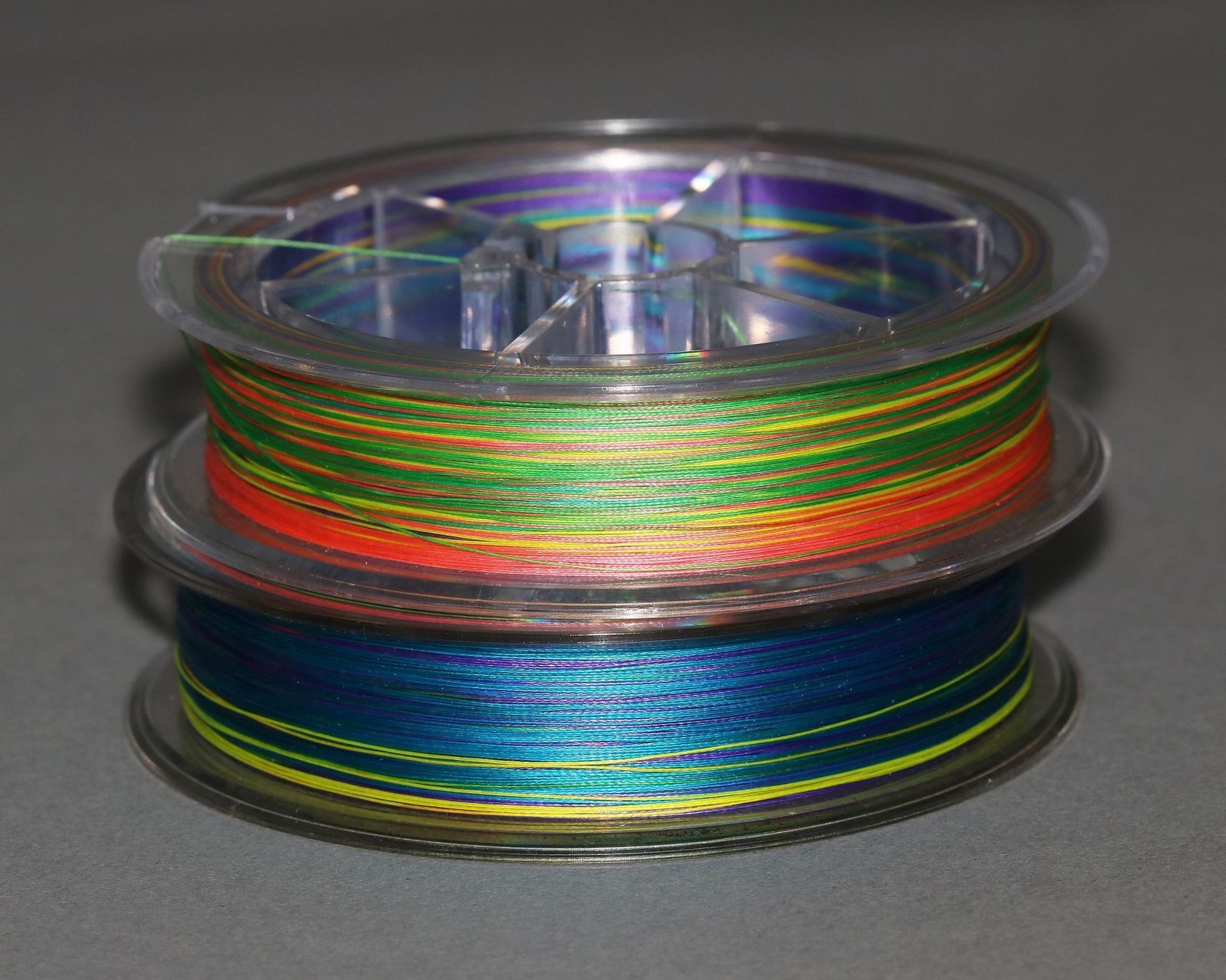
There are three kinds of fishing line, and most New Zealand anglers use at least two of them. Which goes on your reel depends on how you fish, not on which is “best”.
Mono, braid and fluorocarbon compared
| Mono | Braid | Fluorocarbon | |
|---|---|---|---|
| Stretch | A lot. Cushions strikes and lunges | None. You feel every bite | Little |
| Thickness for its strength | Thickest | Thinnest: 30 lb braid is about the diameter of 12 lb mono | Between the two |
| Rough ground | Fair | Poor. Cuts on rock, shell and chipped guides | Good |
| Seen by fish | Clear options available | Easy to see | Hardest to see |
| Knots | Easy, and they hold well | Harder; needs the right knots | Stiff and harder to cinch tight |
| Cost | Cheapest | More | Most |
| Best used as | Mainline for bait fishing and surfcasting | Mainline for soft baiting, deep water and long casts | Leader |
Monofilament
Mono is a single strand of nylon. It stretches a lot under load, which cushions a fish’s lunge, keeps knots tight and forgives a hard strike or a tight drag. That makes it the easiest line to learn on, and it’s the cheapest.
The stretch has a cost: in deep water or at long range, you feel bites less and the hook sets less firmly. Mono is also thicker for its strength, so a reel holds less of it and it catches more current.
Mono is the usual choice for bait fishing and surfcasting, and for shock leaders and traces.
Braid
Braid is woven from fine, very strong fibres. It has no stretch, so you feel small bites and the bottom clearly, even in deep water. It’s much thinner than mono of the same strength: Okuma’s guide puts 30 lb braid at roughly the diameter of 12 lb mono. Thin line casts further and sinks a soft bait or jig with less drag.
Braid needs a leader. It’s easy for fish to see, and it cuts quickly on rock, shell and reef, or on a chipped rod guide. Knots in braid slip unless you use ones made for it.
Braid is the standard mainline for soft baiting, slow jigging and deep-water fishing.
Fluorocarbon
Fluorocarbon looks like mono but is denser and harder, so it’s hard to see underwater and stands up well to rubbing on rough ground. It’s stiffer, holds coils from the spool, and is harder to knot tightly.
Most NZ anglers use it as a leader rather than a mainline: a metre or two tied to braid for soft baiting, or as the trace on a bait rig in clear water or over reef.
What line weight to use
These are the weights NZ anglers most often mention in forum threads, for each kind of fishing. Go lighter in open, sandy water and heavier over reef, kelp and mussel lines.
| Fishing | Mainline | Leader |
|---|---|---|
| Soft baiting for snapper | 6 to 15 lb braid (10 lb most often) | 15 to 30 lb fluorocarbon, 1 to 3 m |
| Bait fishing for snapper, boat or shore | 15 to 30 lb mono, or braid of a similar diameter | 30 to 60 lb |
| Surfcasting | 15 to 30 lb mono (20 lb most often) | Shock leader of about 60 lb |
| Rocks and reef for big snapper | 20 to 30 lb braid | 40 to 60 lb |
| Kingfish | 30 to 80 lb braid | 60 to 100 lb or more |
See our rigs guide for the traces and hooks that go on the end, and the soft bait guide and surfcasting guide for those methods.
Joining braid to a leader
The FG knot is the favourite braid-to-leader knot. It’s slim and strong and runs through the rod guides smoothly. It takes practice, and it’s fiddly on a rock ledge in the wind, so many anglers tie leaders at home or carry a knot-tying tool.
Quicker alternatives are the double uni (a uni knot in each line, pulled together) and the Albright. With a uni knot in braid, use plenty of turns, 10 or more, so it doesn’t slip.
See our knots guide for how to tie them.
Spool up for the ground you fish, not the fish you hope to catch. Light braid is great until you’re dragging it over a reef. A decent leader is the cheapest insurance you’ll ever tie on.
Looking after your line
- Rinse your reel in fresh water after every trip, and let it dry before you put it away.
- Replace mono at least once a season, or sooner if it’s kinked, faded or nicked. Sunlight and salt weaken it.
- Cut back the end. After a snag or a big fish, cut off the last metre or two and retie.
- Braid lasts longer. Many anglers reverse it on the spool when the working end gets fuzzy, so the unused line is at the top.
- Take old line home. Discarded line tangles birds and fish. Put it in a bin or a line recycling tube at the ramp.
Questions
Is braid or mono better for fishing in NZ?
Neither is better everywhere. Braid suits soft baiting and deep water, where you need to feel the bite. Mono suits bait fishing, surfcasting and beginners, because its stretch absorbs lunges and it's cheap and easy to knot. Many NZ anglers run braid with a mono or fluorocarbon leader to get some of both.
What line weight do I need for snapper?
For soft baiting, NZ anglers mostly use 6 to 15 lb braid with a 15 to 30 lb fluorocarbon leader. For bait fishing from a boat or the shore, 15 to 30 lb mono, or braid of a similar diameter, with a 30 to 60 lb leader is typical. Go heavier over reef and kelp.
Do I need a leader on braid?
Yes. Braid is easy for fish to see and cuts easily on rocks, shell and reef. A leader of mono or fluorocarbon, from about 1 to 3 m long, gives you abrasion resistance and some stretch near the fish.
What knot joins braid to a leader?
The FG knot is the favourite for a slim, strong join that runs through the guides. Some anglers find it slow to tie on the rocks and use a double uni or an Albright instead.
Is fluorocarbon worth the extra cost?
As a leader, many anglers think so, for its abrasion resistance and low visibility. As a mainline it's expensive and stiff. Some anglers aren't convinced fish can tell it from mono.