
Marlin
Takeketonga (striped marlin; Te Aka gives taketonga for black marlin)
Kajikia audax, Makaira nigricans, Istiompax indica formerly Tetrapturus audaxAlso known as Striped marlin, Blue marlin, Black marlin, Billfish
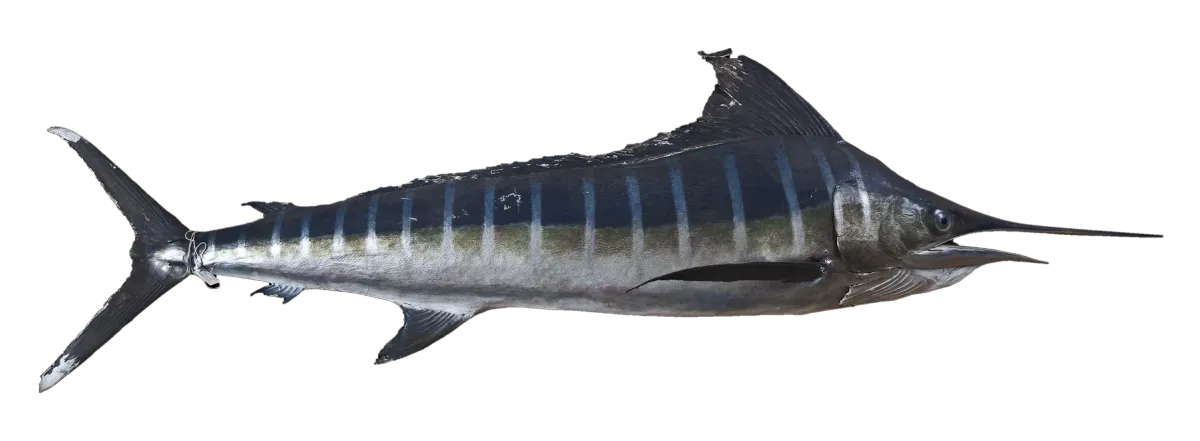
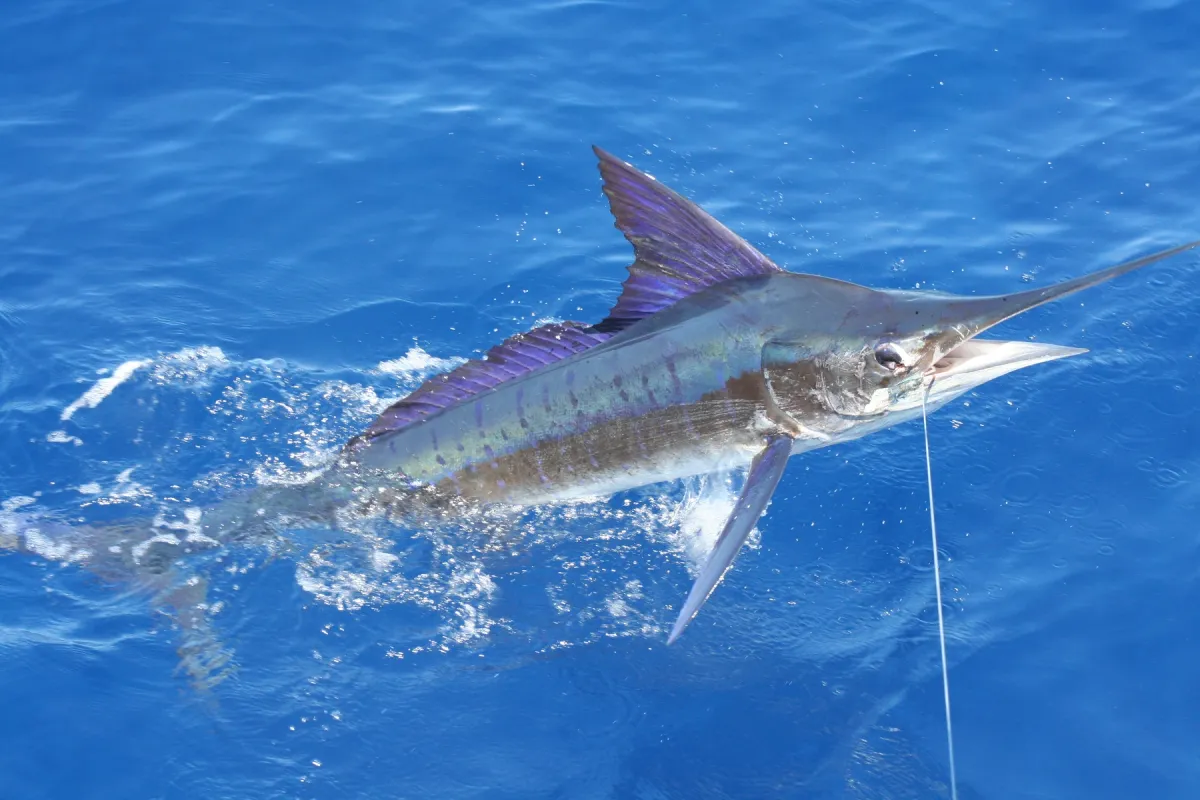
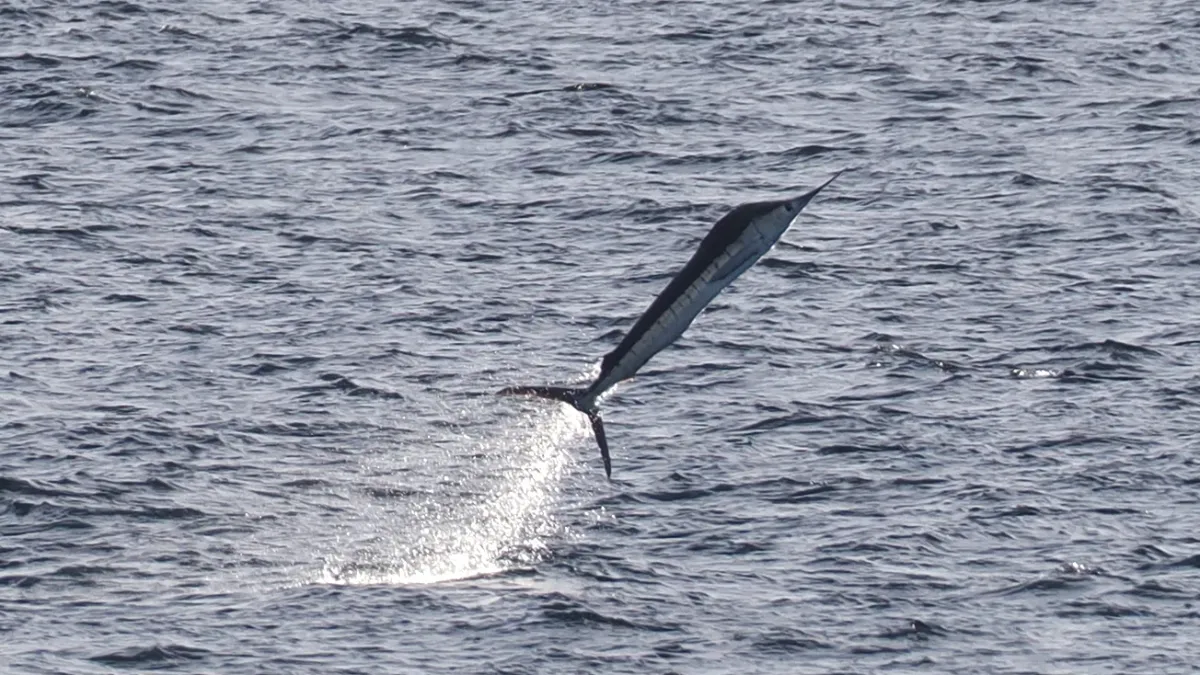
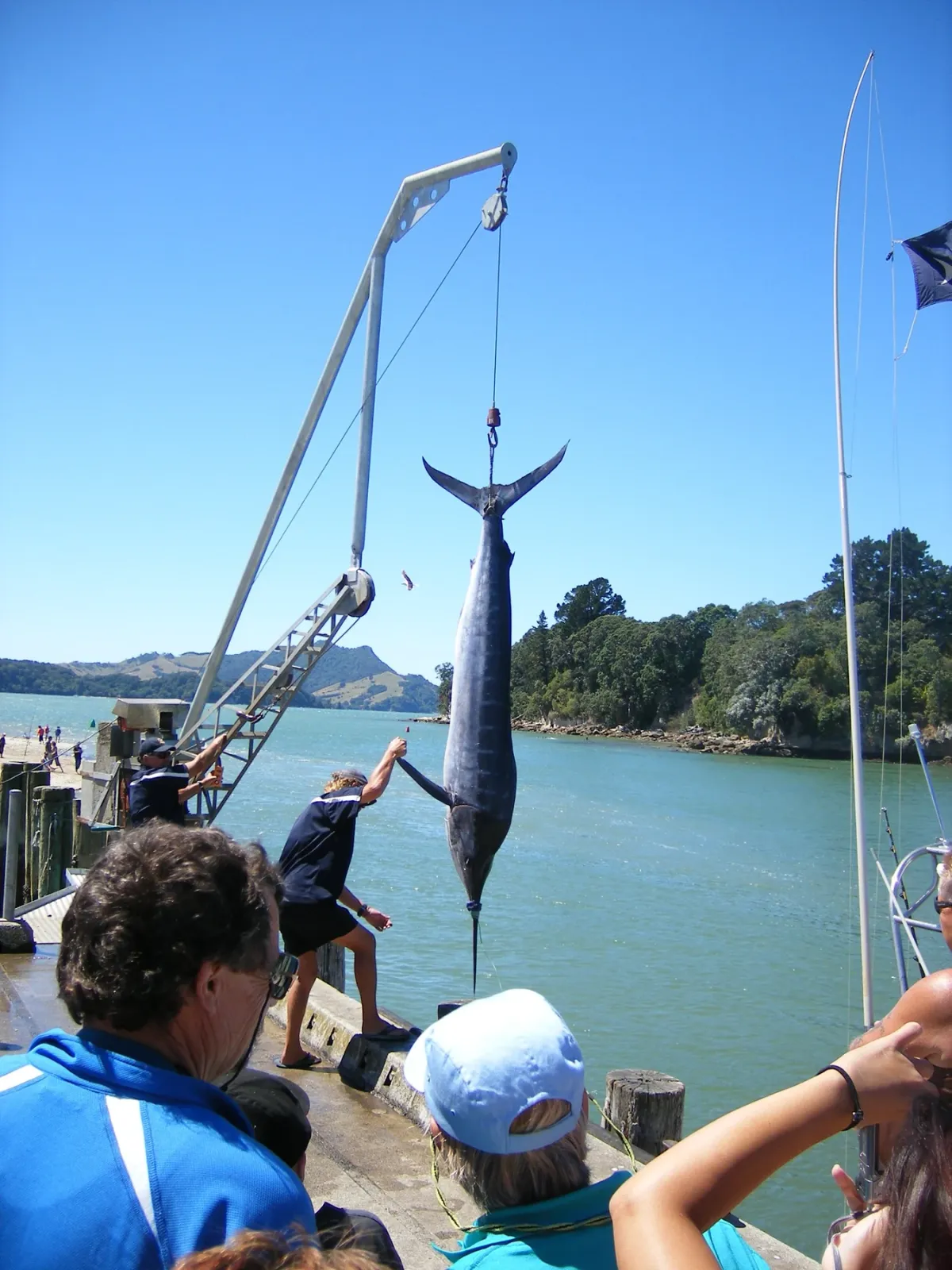
Striped marlin (takeketonga) are New Zealand's main billfish, caught by trolling lures and live baits off Northland, the Bay of Plenty and in some years the west coast, mostly from January to May. Blue and black marlin turn up in smaller numbers. Marlin are a recreational-only fishery: commercial fishers have had to release them since 1991, and most anglers now tag and release theirs.
How to identify marlin
- A long, round bill and a slab-sided body with a deeply forked tail.
- Striped marlin: a pointed first dorsal fin about as tall as the body is deep, or taller.
- Striped marlin: around 15 rows of pale blue stripes that stay visible after death.
- Black marlin: rigid pectoral fins that won't fold against the body (in fish over about 20 kg).
- Blue marlin: heavier and rounder, with a lower dorsal fin, about two-thirds of body depth.
All three marlins have a long, round bill, a dark blue back and silvery belly, and a deeply forked tail with two keels on each side of the tail base. Telling them apart takes a few features together; no single one is reliable on its own.
Striped marlin are the slimmest, with a slab-sided body and the most slender bill. The first dorsal fin is pointed and about as tall as the body is deep, or taller, which is the most obvious difference from the other two. They have about 15 rows of pale cobalt stripes that stay visible after death. The pectoral fins fold flat against the body.
Blue marlin are heavier for their length, with a rounder body and a stouter bill. The first dorsal fin is lower, about two-thirds of the body depth. Their pectoral fins also fold flat.
Black marlin have the stoutest bill and a heavy body at the shoulders. The best feature is the pectoral fins, which are rigid and can't be folded against the body in fish over about 20 kg. The first dorsal fin is low, about half the body depth, and stripes are faint or missing and fade after death. Te Aka gives the Māori name taketonga for black marlin.
Often confused with
- Shortbill spearfish
A much smaller billfish, usually 19 to 30 kg in NZ catches, with a very short bill and a long, fairly even first dorsal fin.
- Broadbill swordfish
A flat, sword-like bill rather than a round one, a tall rigid dorsal fin, no pelvic fins and a single keel on each side of the tail.
Size and daily limits
Daily limit1 a dayNo species limit in Auckland and Kermadec, Central, and Challenger.Limits for each area
| Area | Min. size | Daily limit |
|---|---|---|
| Auckland and Kermadec area | None | No species limit (combined 20 a day) Marlin is not named on the Auckland and Kermadec page. It falls under 'All other finfish' (no minimum size; set net and drag net mesh 100 mm) and counts toward the combined limit of 20 finfish per day. |
| Central area | None | No species limit (combined 20 a day) Marlin is not named on the Central page. It falls under 'All other finfish' (no minimum size; set net mesh 100 mm) and counts toward the combined limit of 20 finfish per day. |
| Challenger area | None | No species limit (combined 20 a day) Marlin is not named on the Challenger page. It falls under 'All other finfish' (no minimum size; set net mesh 100 mm) and counts toward the combined limit of 20 finfish per day. |
| Kaikōura area | None | 1 Table 1 lists 'Marlin' with a daily limit of 1 and no minimum length. It is listed separately from the '1 game shark total' group. Kaikōura catch also counts toward the South-East combined limit. |
| South-East area | None | 1 Table 1: 'Marlin', daily limit 1, no minimum length, min set net mesh 100 mm. |
| Fiordland area (Fiordland Marine Area) | None | 1 1 per day both outside and inside the Fiords (single merged cell in Table 1, same as the game sharks). |
| Southland area | None | 1 Table 1: 'Marlin', daily limit 1, no minimum length, min set net mesh 100 mm. |
Within each area's combined finfish daily limit. MPI uses the single name 'Marlin' and does not split striped, blue and black marlin, so the limit covers all marlin species together. No area sets a minimum size. Commercial fishers must return all marlin to the sea, alive or dead (Fisheries (Commercial Fishing) Regulations 2001, reg 30, in force since 1991); a 2025 proposal to let commercial fishers land dead marlin was rejected on 20 March 2026. Recreational catch cannot be sold.
Checked 22 October 2026 · Source: MPI. Rules change, so check the NZ Fishing Rules app before you keep a fish.
Where it lives in New Zealand
Northern New Zealand is one of the few places in the world where striped marlin are the main gamefish target. They live in warm surface water, mostly above the thermocline, and are usually caught in blue water over about 80 m deep, though they move closer in where bait schools gather. Most commercial bycatch is in water of 20 °C or warmer.
The core areas are East Northland, including the Bay of Islands, Whangaroa, Tutukākā and the Poor Knights, the Three Kings and the Far North, and the Bay of Plenty out to Mayor Island and East Cape. West coast catches vary from almost nothing to very high from year to year. In 2023–24 fish were caught as far south as Hawke Bay, the Wairarapa and even the east coast of the South Island, and in 2024–25 the best fishing was off Kawhia and New Plymouth while the traditional northern and eastern grounds had their worst season in years.
Striped marlin spawn in the Coral Sea between Australia and New Caledonia in late spring and come south to feed. They've been caught here in every month, but numbers peak from January to March, a few stay into May and June, and the biggest fish are often caught in April and May. They feed mainly on saury and arrow squid, then jack mackerel.
Blue marlin are found off the Three Kings, North Cape, Northland and East Cape, and anglers also report them off the west coast and in the Bay of Plenty, in numbers that swing a lot: over 200 were landed or tagged in some recent seasons, but only 13 in 2024–25. Small numbers of black marlin reach northern coastal waters in midsummer.
- Jan: good
- Feb: good
- Mar: good
- Apr: good
- May: good
- Jun: quieter
- Jul: quieter
- Aug: quieter
- Sep: quieter
- Oct: quieter
- Nov: quieter
- Dec: quieter
How to catch it
You don't need a flash setup for your first striped marlin. A well-serviced 24 kg outfit, fresh line and sharp hooks will land the average fish. Spend the money on fuel and time on the water instead.
Most New Zealand marlin are caught by trolling lures. A typical spread is three to five skirted lures run at different distances behind the boat, from the corners and the outriggers. NZ retailer guidance is lures of about 7 to 12 inches for striped marlin, trolled at about 6 to 7 knots. Pakula, Black Magic, Zuker, Williamson and Kilwell all make lures sold here. Many anglers find marlin by finding the bait: skipjack schools, birds and work-ups.
In warm seasons, mahi mahi are a regular bycatch when trolling for marlin. They gather around floating logs, weed lines and buoys, so it pays to troll past any debris you see offshore.
Live baiting is the other main method. A small kahawai, skipjack or kōheru, bridled and slow-trolled near bait schools or a feature, is hard for a marlin to ignore. Light-tackle specialists also switch bait: hookless teasers raise the fish, then a bait is dropped back to it.
Marlin are fished on line classes of 15, 24 and 37 kg (24 and 37 kg are the common all-round outfits), with record hunters going down to 6 and 8 kg. A trailer boat with a solid hull, a VHF and a careful eye on the forecast is the minimum; it's offshore fishing. Most game fishing clubs run weigh stations, where non-members can also weigh a fish and arrange for it to be processed and smoked. Many clubs, and the NZ Sport Fishing Council since 1988, set a voluntary minimum weight of 90 kg for a striped marlin brought in.
Most marlin are now tagged and released: 81% of the recreational striped marlin catch in 2024, and 76% of the 4,424 fish reported by clubs from 2022–23 to 2024–25. The NZ Gamefish Tagging Programme's guidance is to tag the fish in the water, in the shoulder below the dorsal fin, with the boat moving ahead at about 4 knots so the fish comes alongside rather than under the boat. Remove the hook from a jaw-hooked fish, or cut the trace as short as you can if it's deep-hooked, and release it straight away. Satellite tagging found over 90% of released striped marlin survived.
Eating
Striped marlin has firm, well-flavoured flesh. Smoking is the New Zealand tradition, and club weigh stations can often arrange it for you. It's also good fresh, cooked quickly like tuna, or in a curry.
Like other large predatory fish, marlin can carry high levels of mercury. MPI lists striped marlin among the fish that pregnant women and people planning a pregnancy should limit.
Good to know
Marlin are a recreational-only fishery in New Zealand. Regulations stopped commercial vessels keeping billfish caught in the Auckland Fisheries Management Area from 1988, and in 1991 the ban was extended to all New Zealand fisheries waters: commercial fishers must release any striped, blue or black marlin, though broadbill swordfish may be kept. The Minister reaffirmed the ban in 2013. All marlin are managed outside the Quota Management System, under the National Fisheries Plan for Highly Migratory Species, and regionally by the Western and Central Pacific Fisheries Commission (WCPFC).
The commercial ban followed a collapse in the sport fishery: only 226 striped marlin were landed in 1987. It came with an expectation that anglers would tag and release at least half their marlin, and they have every season since 1994.
The NZ Gamefish Tagging Programme has tagged 30,731 striped marlin in New Zealand waters since 1975, with 111 recaptured. Fish tagged here have moved widely around the south-west Pacific and the Tasman Sea, often in completely different directions after being tagged in the same month and area. In January 2024 a satellite tag on a striped marlin tagged off Northland surfaced 4,739 nautical miles away, the first record of one leaving the south-west Pacific.
The 2025 WCPFC assessment found the south-west Pacific striped marlin stock is overfished (a 74% likelihood of being below the level that gives the maximum sustainable yield), but that overfishing is not occurring, and biomass is projected to rise. Striped marlin in New Zealand are 2 to 8 years old.
Northern New Zealand holds all but one of the IGFA world records for striped marlin on line classes of 4 kg and above. The all-tackle record, 224.1 kg (494 lb), was caught off Tutukākā in 1986. The heaviest blue marlin on the NZ Sport Fishing Council's 2019–20 list weighed 492.4 kg, caught off Cape Runaway on 12 March 2020.
Questions
When is marlin season in NZ?
Summer and autumn. Striped marlin peak from January to March, with some from late December and a few into May and June, and the biggest fish are often caught in April and May. Most fishing is off Northland and the Bay of Plenty, but in some years big numbers turn up off the west coast of the North Island.
Can you eat marlin?
Yes. Striped marlin has firm, well-flavoured flesh and is usually smoked; club weigh stations can often arrange it. Like other large predatory fish it can carry high mercury, so MPI advises pregnant women and those planning a pregnancy to limit it. Most anglers now tag and release their marlin.
How do you tell striped, blue and black marlin apart?
Striped marlin have a tall, pointed dorsal fin about as high as the body is deep, and stripes that stay visible after death. Blue marlin are heavier, with a lower dorsal fin. Black marlin have rigid pectoral fins that won't fold against the body.
Can commercial fishers catch marlin in NZ?
No. Marlin are a recreational-only fishery. Since 1991, commercial fishers have had to release any striped, blue or black marlin caught anywhere in New Zealand fisheries waters.
What is the biggest striped marlin caught in NZ?
The IGFA all-tackle world record striped marlin, 224.1 kg (494 lb), was caught off Tutukākā in 1986. Northern New Zealand holds nearly every IGFA striped marlin line-class record.
Related species
 Saltwater
 Saltwater
 EndemicSaltwater
 Saltwater
More guides
All guides- ArticlesHow to fillet a fish: snapper, gurnard, kahawai and moreStep-by-step filleting for NZ fish, with photos: the basic method, skinning and pin bones, and what is different about snapper, gurnard, kahawai and blue cod.
- ArticlesBest time to fish in New ZealandWhen to catch snapper, kingfish, kahawai, tuna, trout and salmon in New Zealand, with a month-by-month calendar and what bites in each season.