
Stargazer
Pūwhara, Kourepoua, Moamoa
Kathetostoma giganteumAlso known as Monkfish, Giant stargazer, bulldog
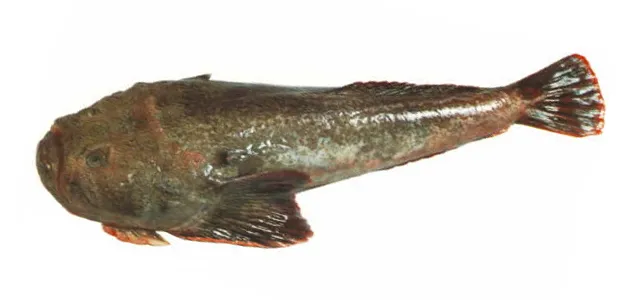
Stargazer (monkfish, pūwhara) is a heavy, flattened fish found only in New Zealand, most plentiful around the South Island and on the Chatham Rise. Its eyes sit on top of a broad, bony head and point upwards. Almost all are caught by trawlers, and the firm, pearly white flesh is excellent eating.
How to identify stargazer
A heavy, flattened fish with a broad, bony head and a large, almost vertical mouth. The eyes sit on top of the head and point upwards, which gives the stargazer its name. There are several prominent spines around the head. The back is mottled olive-green, grey or brown and speckled, the underside is white, and there are no scales. NZ monkfish is not related to the anglerfish sold as monkfish in the Northern Hemisphere. Te Aka Māori Dictionary records kourepoua and moamoa for both the giant stargazer and its smaller relative, the spotted stargazer; pūwhara is the giant stargazer only.
Size and daily limits
Daily limitNo species limitExcept Fiordland: 5 a day. Elsewhere it counts towards the combined finfish limit (20–30 a day).Limits for each area
| Area | Min. size | Daily limit |
|---|---|---|
| Auckland and Kermadec area | None | No species limit (combined 20 a day) |
| Central area | None | No species limit (combined 20 a day) |
| Challenger area | None | No species limit (combined 20 a day) |
| Kaikōura area | None | No species limit (combined 30 a day) |
| South-East area | None | No species limit (combined 30 a day) |
| Fiordland area (Fiordland Marine Area) | None | 5 Inside the Fiords: 2 per day. |
| Southland area | None | No species limit (combined 30 a day) |
Within combined finfish daily limit.
Checked 22 October 2026 · Source: MPI. Rules change, so check the NZ Fishing Rules app before you keep a fish.
Where it lives in New Zealand
Giant stargazer are endemic to New Zealand and found on the continental shelf throughout the country. They are most plentiful around the South Island and on the Chatham Rise. They live on sandy and muddy seabeds, usually at 50 to 300 m but from shallow coastal water to more than 500 m. Stargazers bury themselves in the sediment with only the eyes showing and ambush passing fish and crustaceans.
How to catch it
Almost all stargazer are caught commercially by bottom trawl, mainly around the South Island. Recreational catches are very small: national surveys have recorded only a few fishers catching them, and none in 2022 to 2023. Anglers occasionally hook one when bottom fishing with bait over sand or mud.
Eating
Stargazer has firm, pearly white flesh with a low oil content that holds together well when cooked. It suits baking, barbecuing, poaching, steaming, frying, soups and curries, and can be eaten as sashimi. When cooked the texture is sometimes compared to crayfish.
Recipes
- Coconut monkfish curry (Seafood New Zealand)
- Zak and Tamar's Sri Lankan Stargazer Curry (Seafood New Zealand)
Good to know
Endemic to New Zealand and managed under the Quota Management System. Giant stargazer mature at about 40 to 55 cm total length and 5 to 7 years of age, and some live to at least 25 years. They spawn in winter.
Questions
Is stargazer the same as monkfish?
Yes, in New Zealand. Monkfish is a common name for the giant stargazer here. It is not related to the anglerfish sold as monkfish in the Northern Hemisphere, so overseas recipes for monkfish refer to a different fish.
Why is it called a stargazer?
Because its eyes sit on top of the head and point upwards. The stargazer buries itself in sand or mud with only the eyes showing, then ambushes fish and crustaceans that pass by.
Is stargazer good eating?
Yes. Stargazer has firm, pearly white flesh with a low oil content that holds together when cooked. It suits baking, steaming, frying, soups and curries, and can be eaten as sashimi. The cooked texture is sometimes compared to crayfish.
Related species
 Saltwater
 Saltwater
 EndemicSaltwater
 Saltwater
More guides
All guides- ArticlesNZ fishing rigs and knots: diagrams and when to use eachClear diagrams of the main NZ fishing rigs (ledger, running sinker, strayline, surfcasting, live bait) and the knots to tie them, with which fish each catches.
- ArticlesHow to fillet a fish: snapper, gurnard, kahawai and moreStep-by-step filleting for NZ fish, with photos: the basic method, skinning and pin bones, and what is different about snapper, gurnard, kahawai and blue cod.
- ArticlesBest time to fish in New ZealandWhen to catch snapper, kingfish, kahawai, tuna, trout and salmon in New Zealand, with a month-by-month calendar and what bites in each season.