
Albacore
Thunnus alalungaAlso known as Albacore tuna, longfin tuna, albie
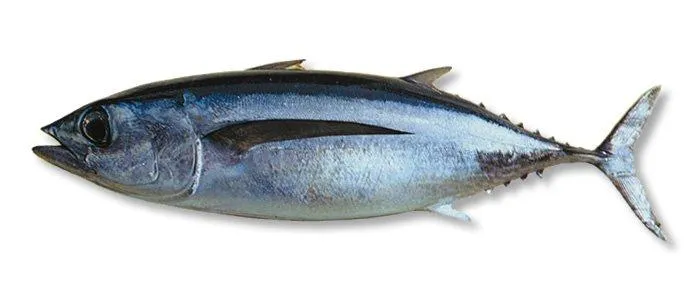
Albacore is a small tuna that reaches New Zealand in summer, found from the Bay of Plenty to Cook Strait and down the South Island west coast. Its very long pectoral fins, reaching well back along the body, set it apart. Anglers troll for it from trailer boats, and its pinkish, oily flesh suits sashimi and smoking.
How to identify albacore
A small, streamlined tuna with very long pectoral fins. In fish over about 50 cm the pectoral fins are roughly 30% of the fork length or longer, and they reach well back along the body. The front spines of the first dorsal fin are much taller than the rear ones, giving the fin a strongly concave outline. The back is dark metallic blue and the sides and belly are silvery. Juvenile bigeye tuna also have long pectoral fins, but theirs have rounded tips.
Size and daily limits
Daily limitVaries by area10 a day in Fiordland. A shared or split limit applies in Kaikōura. No species limit in Auckland and Kermadec, Central, Challenger, South-East, and Southland.Limits for each area
| Area | Min. size | Daily limit |
|---|---|---|
| Auckland and Kermadec area | None | No species limit (combined 20 a day) |
| Central area | None | No species limit (combined 20 a day) |
| Challenger area | None | No species limit (combined 20 a day) |
| Kaikōura area | None | Varies, see note Albacore tuna, bluenose, groper (hāpuku)/bass, kingfish and ling share a combined daily limit of 5 per person, with a maximum of 3 of any one species. |
| South-East area | None | No species limit (combined 30 a day) |
| Fiordland area (Fiordland Marine Area) | None | 10 Inside the Fiords: 3 per day. |
| Southland area | None | No species limit (combined 30 a day) |
Within combined finfish daily limit. Kaikōura: shares combined 5 with bluenose, hāpuku/bass, kingfish and ling.
Checked 22 October 2026 · Source: MPI. Rules change, so check the NZ Fishing Rules app before you keep a fish.
Where it lives in New Zealand
Albacore live in warm tropical waters north of New Zealand and arrive here in summer. Smaller surface-schooling juveniles turn up from the Bay of Plenty to Cook Strait and down the west coast of the South Island. Deeper-swimming adults can be found as far south as 45°S. They are most common in surface water of about 16 to 19°C and often school with skipjack and other tunas. Recreational catches are highest off the west coast.
- Jan: good
- Feb: good
- Mar: good
- Apr: good
- May: quieter
- Jun: quieter
- Jul: quieter
- Aug: quieter
- Sep: quieter
- Oct: quieter
- Nov: quieter
- Dec: good
How to catch it
Almost all recreational albacore are taken on rod and reel from trailer boats. Many are caught while trolling for other gamefish. The commercial troll fleet tows unbaited lures behind the boat, and recreational fishers use the same approach. Fish caught on the troll are mostly juveniles of 5 to 8 kg.
Eating
The flesh is pinkish and oily. It suits baking, barbecuing, marinating, smoking and frying, and it can be eaten raw as sashimi. Like other tunas it is a good source of omega-3 fatty acids, vitamin D and selenium. New Zealand Food Safety's pregnancy food list puts albacore at 3 to 4 servings a week for pregnant women, because of mercury. Most commercially caught albacore from New Zealand is frozen and canned overseas.
Good to know
New Zealand albacore are part of a single South Pacific stock that ranges from the equator to about 50°S. The New Zealand troll fishery holds Marine Stewardship Council certification.
Questions
Is albacore tuna good eating?
Yes. Albacore has pinkish, oily flesh that can be eaten raw as sashimi or baked, barbecued, marinated, smoked or fried. Like other tunas it is a good source of omega-3 fatty acids, vitamin D and selenium. Most commercially caught New Zealand albacore is frozen and canned overseas.
When and where can you catch albacore in NZ?
In summer, from about December to April. Juvenile albacore school near the surface from the Bay of Plenty to Cook Strait and down the South Island west coast, mostly in water of about 16 to 19°C. Recreational catches are highest off the west coast, mainly by trolling lures from trailer boats.
How do you tell albacore from yellowfin tuna?
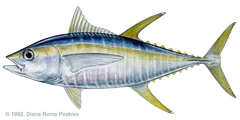
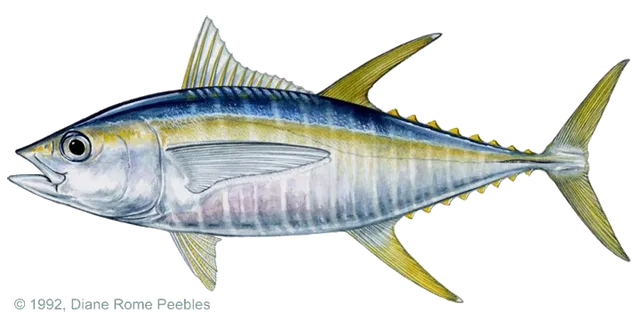
Check the pectoral fins. Albacore have very long pectoral fins that reach well back along the body. Yellowfin have shorter pectoral fins that do not reach past the end of the second dorsal fin base, and bright yellow finlets.
Related species
 Saltwater
 Saltwater
 Saltwater
 EndemicSaltwater
More guides
All guides- ArticlesHow to fillet a fish: snapper, gurnard, kahawai and moreStep-by-step filleting for NZ fish, with photos: the basic method, skinning and pin bones, and what is different about snapper, gurnard, kahawai and blue cod.
- ArticlesBest time to fish in New ZealandWhen to catch snapper, kingfish, kahawai, tuna, trout and salmon in New Zealand, with a month-by-month calendar and what bites in each season.