
Tarakihi
Nemadactylus macropterusAlso known as Jackass morwong (Australia), Morwong, terakihi (common misspelling), teraki (common misspelling)
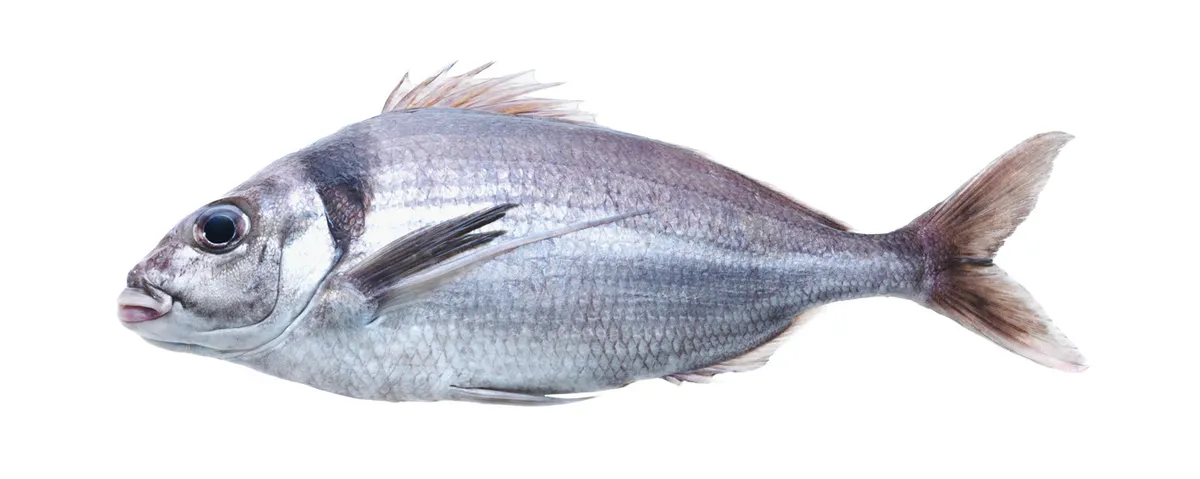
Tarakihi is a silver-grey schooling fish caught right around New Zealand, mostly at 50–250 m. Look for the broad black saddle across the back of the head and one very long ray on each pectoral fin. It is the fifth most kept fish by recreational fishers, prized for its firm, mild white flesh.
How to identify tarakihi
- A broad black band, or saddle, across the nape just behind the head, running down towards the base of the pectoral fin.
- One greatly lengthened upper ray on each pectoral fin, much longer than the rest of the fin.
- Silver to silver-grey body that is deep and strongly flattened from side to side.
- One long dorsal fin, spiny at the front and soft at the back, and a forked tail.
Tarakihi are deep-bodied, strongly compressed fish, silver to silver-grey all over and paler on the belly. The mark to look for is the broad black band, or saddle, that runs across the nape just behind the head and down towards the base of the pectoral fin. The other giveaway is the pectoral fin itself: one of its upper rays is greatly lengthened, so it trails well past the rest of the fin. The dorsal fin is long and continuous, with 17–18 spines at the front and 25–28 soft rays behind, and the tail is forked.
A second, larger species, the king tarakihi, is caught mainly around the top of the North Island, the Three Kings Islands and the East Cape region. It has not yet been formally described by scientists, and commercial catches of both species are reported together as tarakihi. King tarakihi have the same nape saddle, so look at the pectoral fins instead: on a king tarakihi they are pale with a broad black edge.
Often confused with
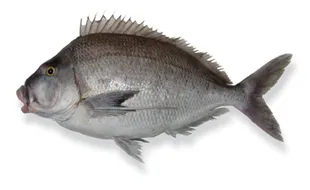
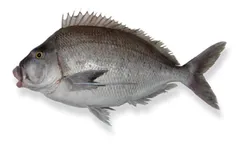 PōraeNemadactylus douglasiiPōrae belong to the same genus but have thick, rubbery lips, silvery blue to blue-green colouring with blue fins, and no black saddle behind the head.
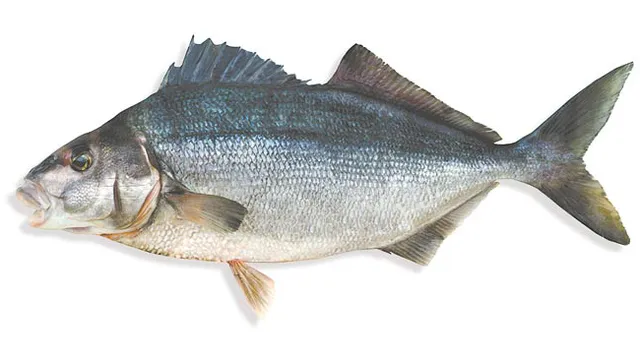
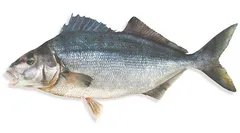 Blue MokiLatridopsis ciliarisBlue moki have no black band behind the head and no lengthened pectoral fin ray, and are often marked with brownish blotches below the dorsal fins.
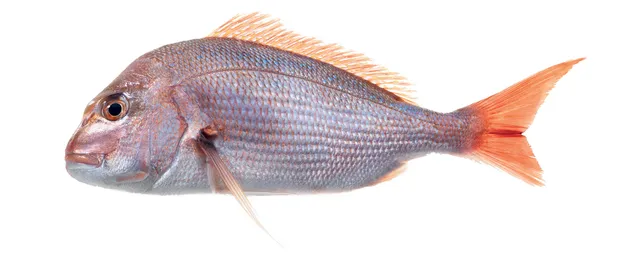
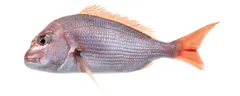 SnapperChrysophrys auratusSnapper are pink to copper with bright blue spots on the upper body and a blunt head with strong teeth. They have no black saddle and no long pectoral fin ray.
- King tarakihi
King tarakihi also have a black nape saddle, but their pectoral fins are pale with a broad black edge, and they grow larger. They are mostly found in northern waters.
Size and daily limits
Minimum size25 cmDaily limit10–15 a dayLimits for each area
| Area | Min. size | Daily limit |
|---|---|---|
| Auckland and Kermadec area | 25 cm | 10 |
| Central area | 25 cm | 10 |
| Challenger area | 25 cm | 10 |
| Kaikōura area | 25 cm | 10 |
| South-East area | 25 cm | 10 |
| Fiordland area (Fiordland Marine Area) | 25 cm | 10 Inside the Fiords: 1 per day. |
| Southland area | 25 cm | 15 |
Within combined finfish daily limit.
Checked 22 October 2026 · Source: MPI. Rules change, so check the NZ Fishing Rules app before you keep a fish.
Where it lives in New Zealand
Tarakihi live in coastal waters around the North Island, South Island, Stewart Island and the Chatham Islands. They have been recorded from 3 m down to about 450 m, but most adults school over open sand and mud bottoms and around reefs at 100–250 m, on the continental shelf and upper slope. In winter they move shallower, to about 50–100 m. They are most numerous south of East Cape, around Cook Strait and along both coasts of the South Island.
Tarakihi spawn in summer and autumn. The main spawning grounds are from Cape Runaway to East Cape, from Cape Campbell to Pegasus Bay, and along the west coast of the South Island, with smaller amounts of spawning probably happening right around the country. The larvae drift offshore for 8–10 months or more before settling as juveniles 7–9 cm long.
Young fish grow up in shallower inshore nursery areas, including the southwest coast of the North Island, Tasman and Golden Bays, Kaikōura, Pegasus Bay, the Canterbury Bight, Otago and the Chatham Islands. Divers also see small tarakihi in shallow harbours and around rocky reefs. At about 25 cm and 3–4 years old they move out to deeper water. Tagging and age studies show that east coast fish move progressively north as they grow, from the Canterbury Bight towards East Northland, and fish tagged off Kaikōura have turned up as far away as the Kaipara Harbour.
- Jan: good
- Feb: good
- Mar: good
- Apr: good
- May: good
- Jun: good
- Jul: good
- Aug: good
- Sep: good
- Oct: good
- Nov: good
- Dec: good
How to catch it
Go a bit deeper than you would for snapper and use small baits on small hooks. Tarakihi have tiny mouths, and big hooks just feed them.
Anchored over reef edges: tarakihi feed on the bottom around structure, so look for pinnacles, boulder patches and especially the edge where reef gives way to sand or mud. Anchor up-current so your baits settle just in front of or behind the structure, and send a berley pot down so it sits just off the bottom at the depth the school is feeding. A ledger or paternoster rig with two or three hooks on short droppers suits them well, and because they school, double and triple hook-ups are common. The bite usually picks up when the tide starts running and fades at slack water, so try a good spot again on a different tide.
Drifting deeper ground: in deeper water, or where there is a lot of scattered structure, drift with a dropper or flasher rig and a sinker just heavy enough to hold the bottom. Mark the fish on the sounder, note where the bites come, and set up each drift to pass back over the same ground. Bait the hooks lightly, as tarakihi pick at baits rather than engulf them.
Small hooks and small baits: tarakihi have small mouths and bite gently, so a light, sensitive rod and braid help you feel the bites. Use small hooks, around 1/0 to 3/0 circle or recurve hooks, and small strips of bait no more than about 1.5 cm wide and 7 cm long. Squid is the standard because it stays on the hook through several pecks. Fresh mackerel, barracouta and shellfish such as tuatua also work. See the bait guide for more on berley and rigging baits.
Tarakihi have a closed swim bladder, so fish brought up from deep water can suffer barotrauma. Fisheries New Zealand notes it seems to affect tarakihi less than snapper, but undersized fish should still go back quickly and with as little handling as possible.
Eating
Tarakihi is one of New Zealand's most versatile eating fish. The flesh is white, moist and firm, with a mild, delicate flavour that suits simple cooking as well as stronger flavours and spices. It bakes, barbecues, pan-fries and poaches well, holds together in curries, soups and chowders, and very fresh fillets can be eaten raw as sushi or sashimi. It was once New Zealand's second most important commercial fish by catch volume, and it is still a fish-shop favourite.
Bleed and ice your catch as soon as it comes aboard to keep the flesh firm and white. Tarakihi are deep-bodied and thin, so take care when you fillet them: run the knife close to the frame to get the most from a fish that averages about a kilo.
Recipes
- Grilled tarakihi with spicy kumara salad (Seafood New Zealand)
Good to know
Tarakihi is the fifth most kept fish by New Zealand's recreational fishers. The National Panel Survey estimated 126,682 tarakihi (about 127 tonnes) were kept in the year to September 2023, down 58% from 302,990 in 2017–18. Almost all of them were caught on rod and line from trailer boats or launches, and about 70% came from the upper North Island and the North Island's lower east coast. Commercially, tarakihi is the third most valuable inshore finfish fishery after snapper and blue cod, and more than 80% of the total catch is commercial, mostly by bottom trawl. It has been fished commercially since steam trawlers arrived in the 1890s and has been managed under the Quota Management System since 1986.
The eastern stock, which runs from North Cape down the east coast to Southland, is in poor shape. The 2026 Fisheries New Zealand assessment estimated its spawning biomass at about 8% of the unfished level, well below the 20% soft limit and about as likely as not to be below the 10% hard limit, with overfishing almost certainly still happening. The western stock was estimated at 29%. In mid-2026 Fisheries New Zealand consulted on cutting catch limits for both stocks, so check the rules table on this page for the current limits.
Tarakihi grow fast when young, reaching about 25 cm by 3 years old, then slow down once they mature at 33–37 cm and 6–7 years. They can live for more than 40 years. They feed on the seabed, mainly on worms and small crustaceans, plus brittle stars, sea cucumbers and shellfish, and sometimes on krill in midwater.
Questions
What is the Māori name for tarakihi, and how do you spell it?
Tarakihi is the Māori name, and it is also the everyday name in New Zealand English, so there is no separate English name here. In Australia the same species is called jackass morwong. It is often misspelt terakihi or teraki, but tarakihi is the correct spelling.
How many tarakihi can I take, and how big do they have to be?
The daily limit and minimum size depend on where you fish, and tarakihi limits were under review in 2026. Check the table on this page, which shows the current limits for every MPI fishing area and when we last checked them.
What's the difference between tarakihi and pōrae?
Check the head and lips. Tarakihi have a broad black saddle across the nape, just behind the head, and thin lips. Pōrae have thick, rubbery lips, silvery blue to blue-green colouring and no black saddle. Both have one very long pectoral fin ray, because they belong to the same genus.
How big do tarakihi get?
Most are 30–40 cm long and weigh 0.9–2.5 kg, and the average fish kept by recreational fishers weighs about 1 kg. The largest recorded are about 70 cm long. Tarakihi can live for more than 40 years.
What do tarakihi eat?
Tarakihi feed on the seabed, mostly on polychaete worms and small crustaceans such as amphipods and crabs, with some brittle stars, sea cucumbers and shellfish. Young fish eat more crustaceans and older fish more worms. That diet is why small strips of squid and shellfish fished close to the bottom work so well.
Are tarakihi overfished?
The eastern stock is. The 2026 Fisheries New Zealand assessment put its spawning biomass at about 8% of unfished levels, below the soft limit, and found overfishing almost certainly still happening. The western stock, off the west coasts of both main islands, was in better shape at about 29%.
Related species
 Saltwater
 Saltwater
 Saltwater
 Saltwater
More guides
All guides- ArticlesBest bait for fishing in NZ: a species-by-species guideWhat bait to use for snapper, kahawai, gurnard, kingfish and more in NZ: a species-by-species table, how to rig each bait, and how to use burley.
- ArticlesThe best eating fish in New ZealandThe best New Zealand fish to eat, grouped by how to cook them: snapper and blue cod for frying, kingfish for sashimi, kahawai for smoking and more.
- ToolsFish weight calculatorWork out what your fish weighs from its length, or how long a fish of a given weight is, for snapper, kingfish, kahawai and 25 more NZ species, from Fisheries NZ data.