
John Dory
Kuparu, Pukeru
Zeus faberAlso known as Dory, jon dory, jon dore, JD
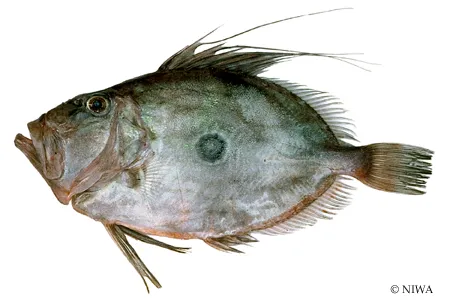
John dory (kuparu) is a thin, deep-bodied fish of New Zealand's northern inshore waters, most common north of the Bay of Plenty. Look for the large dark spot ringed in pale colour on each side and a body so narrow it almost disappears head-on. An ambush hunter, it is usually caught on live bait and is prized eating.
How to identify john dory
- A large dark spot ringed in pale colour on the middle of each side.
- A deep, plate-like body that is extremely thin seen head-on.
- Olive-brown to silvery colour, with no obvious scales.
- A row of long spines on the front of the dorsal fin.
- Big forward-facing eyes and a huge mouth that shoots forward to grab prey.
John dory are easy to recognise once you've seen one. The body is deep and oval from the side but so thin that the fish almost vanishes when it faces you, which is exactly how it sneaks up on prey. The colour runs from olive-brown to silvery, and on the middle of each side is a large dark spot ringed with pale colour, often called the thumbprint. The scales are so small that the skin looks smooth.
The front of the dorsal fin carries a row of long, strong spines. The eyes are large and sit well forward on the head, giving the fish good judgement of distance, and the mouth is huge. When a small fish comes close, the jaws shoot forward like a tube and suck it in.
No other common inshore fish in New Zealand has the same combination of a flat, plate-like body and a single ringed side spot. The other New Zealand dories and oreos live much deeper and are rarely seen by recreational anglers.
Often confused with
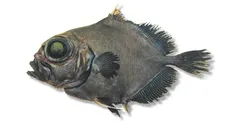
- Mirror dory
Mirror dory (Zenopsis nebulosa) is a relative that lives deeper, usually 50–600 m on the continental shelf and slope, so it turns up in trawls rather than on inshore rod and line. Check for John dory's olive-brown body and pale-ringed side spot.
- Lookdown dory
Lookdown dory is an offshore fish of 200 m and deeper. Adults are plain silvery grey, and the soft parts of the dorsal and anal fins are much longer, with about 35–38 rays against John dory's 20–24.
Size and daily limits
Daily limitNo species limitCounts towards the combined finfish limit (20–30 a day). A shared limit applies in Fiordland.Limits for each area
| Area | Min. size | Daily limit |
|---|---|---|
| Auckland and Kermadec area | None | No species limit (combined 20 a day) |
| Central area | None | No species limit (combined 20 a day) |
| Challenger area | None | No species limit (combined 20 a day) |
| Kaikōura area | None | No species limit (combined 30 a day) |
| South-East area | None | No species limit (combined 30 a day) |
| Fiordland area (Fiordland Marine Area) | None | Varies, see note No species limit: counts towards Fiordland's 'any other finfish' limit of 10 a day, or 4 inside the Fiords. |
| Southland area | None | No species limit (combined 30 a day) |
Not named on any regional page; combined finfish limit only.
Checked 22 October 2026 · Source: MPI. Rules change, so check the NZ Fishing Rules app before you keep a fish.
Where it lives in New Zealand
John dory live in inshore coastal waters, mostly in the warmer north of New Zealand. They are most common north of the Bay of Plenty, with smaller numbers around Tasman Bay and the top of the South Island, which is about the southern edge of their range. Very few are found south of Hawke's Bay on the east coast. Most live shallower than 50 m.
They use a wide range of habitats, from sand and mud bottoms to reefs, and they hold around wharf piles and weed edges where small fish gather. They are usually solitary. In the Hauraki Gulf, adults move into deeper water in summer, and feeding groups sometimes form in winter.
Fisheries New Zealand recognises five likely stocks: the Hauraki Gulf and east Northland, the Bay of Plenty, the west coast of the North Island, the southeast North Island and the northern South Island. Unusually large John dory are found off the northern South Island.
- Jan: good
- Feb: good
- Mar: good
- Apr: good
- May: good
- Jun: good
- Jul: good
- Aug: good
- Sep: good
- Oct: good
- Nov: good
- Dec: good
How to catch it
Live bait: this is the standard way to target John dory. They are ambush hunters that feed mainly on small fish, so a lively jack mackerel, piper or small kahawai is hard for them to ignore. Catch bait on a sabiki or bait jig, keep it in a bucket or tank of fresh seawater, and fish it on a live bait rig with a single hook, smaller than you would use for kingfish. Drop it near reef edges, weed lines, channel markers and wharf piles, and wherever you see schools of baitfish. See the bait guide for catching and keeping live bait.
Taking the bite: a John dory often mouths and follows the bait rather than running with it. Give it time to take the bait properly before you lift. Then wind slowly and steadily, because the mouth is soft and pulls free easily, and have a net ready. Lift the fish into the net as soon as it reaches the surface rather than swinging it in.
From wharves and as by-catch: many John dory come from wharves and breakwalls in harbours, where they sit among the piles waiting for small fish. A live bait dropped beside the piles and left to swim is the usual approach. They are also taken on soft baits worked slowly near the bottom, and as a bonus fish on snapper baits and rigs.
Eating
John dory is one of the most prized eating fish in New Zealand. The flesh is white when cooked, with medium flakes and a medium to firm texture, and the thin fillets bone out easily. It suits baking, pan-frying, poaching and marinating, and very fresh fish can be eaten raw as sashimi. Crispy-skin pan-frying is the classic way to cook it.
The fish is thin and has a big head, so the fillets are small for its size. A sharp, flexible knife helps when filleting a thin fish like this. Bleed it and put it in an ice slurry as soon as it is landed to keep the delicate flesh at its best.
If a John Dory turns up, treat it as the prize it is. Ice it straight away and keep the cooking simple: crispy skin in a hot pan is hard to beat.
Recipes
- Crispy Skin John Dory (Seafood New Zealand)
Good to know
John dory entered the Quota Management System on 1 October 1986. Commercially, most are caught as by-catch in trawl and Danish seine fisheries for other inshore fish such as snapper, tarakihi and red gurnard. The latest assessments rate the Hauraki Gulf and east Northland and the Bay of Plenty stocks as about as likely as not to be at or above their target levels, and unlikely to be below the soft limit. The southeast North Island stock is rated unlikely to be at its target.
Recreational fishers kept an estimated 6,262 John dory in the year to September 2023, weighing about 8 tonnes, with an average fish of about 1.3 kg. That is 76% fewer than the 26,064 estimated in 2017–18, though the 2022–23 figure rests on a small number of fishers and is less certain. About 80% came from the top third of the North Island, almost all were caught on rod and line, and in about 4 out of every 5 catches where a John dory was kept, it was the only one.
John dory grow quickly at first, reaching 12 to 18 cm in their first year. From the second year, females grow faster and larger than males. Females mature at 29 to 35 cm and males at 23 to 29 cm. They spawn several times in a season, the eggs drift in open water and take 12 to 14 days to hatch, and the oldest recorded fish was 12 years old.
According to a European legend, the thumbprint on each side was left by St Peter when he took a coin from the fish's mouth. John dory also make curious grunting noises when they are caught.
Questions
Is John dory good eating?
Yes. John dory is one of the most prized eating fish in New Zealand. The flesh is white when cooked, with medium flakes and a medium to firm texture, and the thin fillets bone out easily. Pan-fry the fillets skin on until crisp, bake or poach them, or eat very fresh fish raw as sashimi.
What is the Māori name for John dory?
Kuparu. Te Aka Māori Dictionary lists both kuparu and pukeru for John dory (Zeus faber), and Fisheries New Zealand uses kuparu in its stock reports. The English name is often misspelt as jon dory or jon dore.
How do you catch John dory?
With live bait. John dory are ambush hunters that eat small fish, so a lively jack mackerel, piper or small kahawai fished near baitfish schools, reef edges or wharf piles works best. Give the fish time to take the bait, wind in slowly and net it as soon as it reaches the surface.
Is there a size limit for John dory?
In most areas John dory has no minimum size or daily limit of its own, but it counts towards the combined daily limit for finfish. The rules table on this page shows the current rules for every area and when we last checked them.
How big do John dory get?
Most are 30 to 40 cm long and weigh 0.8 to 1.5 kg, and the average John dory kept by recreational fishers in 2022–23 weighed about 1.3 kg. The largest reach about 3.5 kg, which by the Fisheries New Zealand length-to-weight formula is a fish of about 63 cm. Females grow larger than males.
Where are John dory found in New Zealand?
Mostly in the warmer north, especially north of the Bay of Plenty, with smaller numbers around Tasman Bay and the top of the South Island. They live shallower than about 50 m over sand, mud and reef, and around wharves and breakwalls where baitfish gather.
Related species
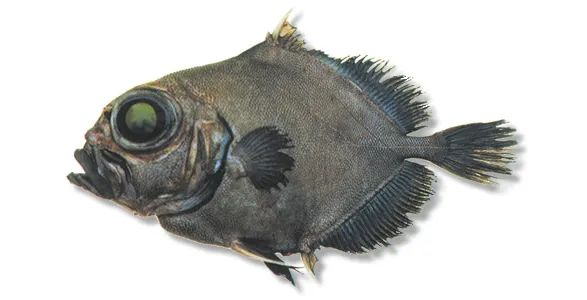 Saltwater
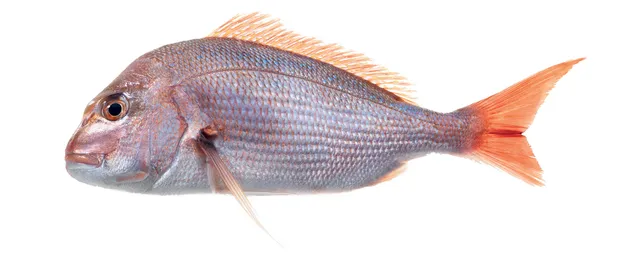 Saltwater
 Saltwater
 EndemicSaltwater
More guides
All guides- ArticlesBest bait for fishing in NZ: a species-by-species guideWhat bait to use for snapper, kahawai, gurnard, kingfish and more in NZ: a species-by-species table, how to rig each bait, and how to use burley.
- ArticlesThe best eating fish in New ZealandThe best New Zealand fish to eat, grouped by how to cook them: snapper and blue cod for frying, kingfish for sashimi, kahawai for smoking and more.
- ArticlesHow to bleed and ice your catch (and why it matters)Iki jime, bleeding and an ice slurry make your catch taste better and keep longer. How to do each, with diagrams and notes for kahawai, kingfish and snapper.