Whale Shark
Rhincodon typus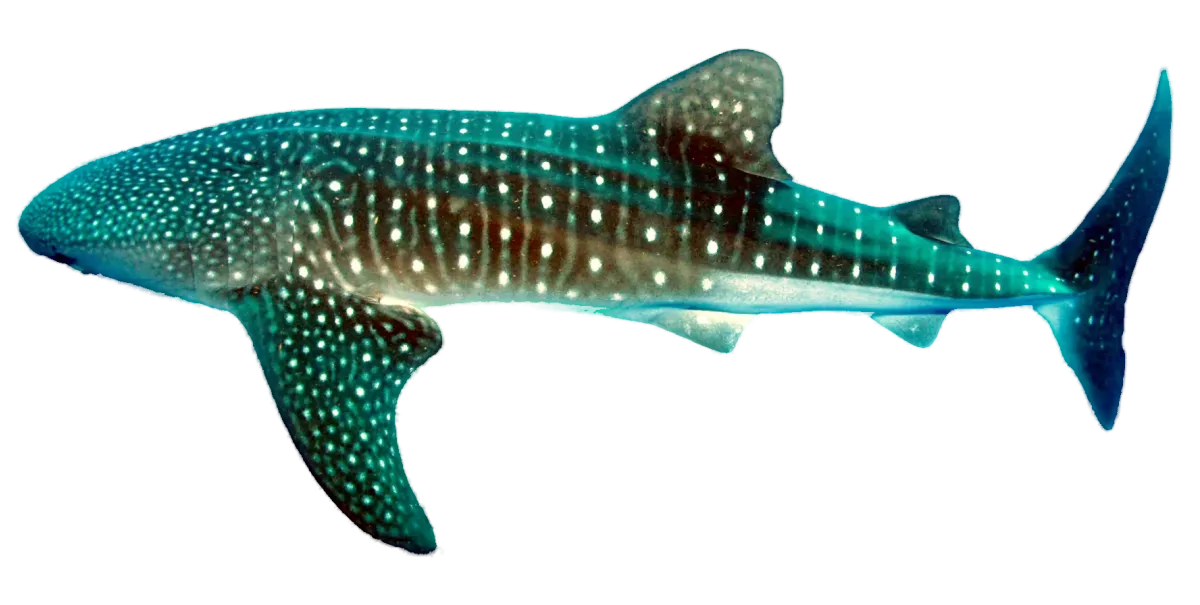
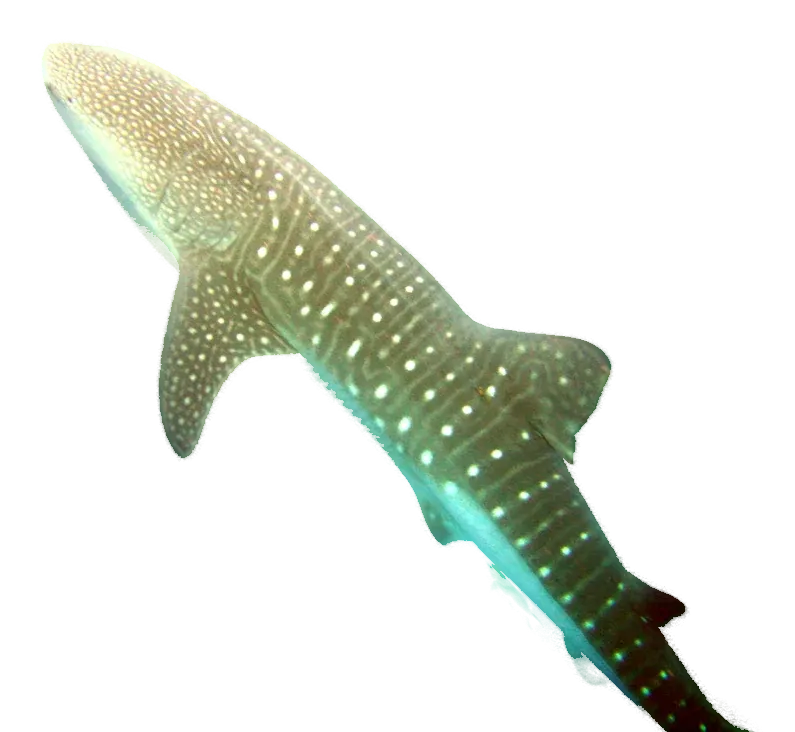
The whale shark is the largest fish in the world, a slow, harmless filter-feeder with a broad, flat head and a checkerboard of pale spots and stripes on its back. It lives in tropical and warm seas and visits northern New Zealand in summer, following the East Auckland Current. It has been protected here since 2010.
How to identify whale shark
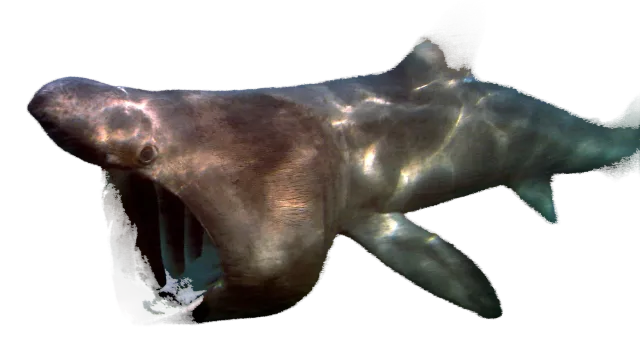
Unmistakable once you see it up close. The whale shark is enormous, with a broad, flat head, a short snout and a huge mouth right at the front of the head rather than underneath. The back is grey, bluish or brownish with a checkerboard of pale yellow or white spots between pale horizontal and vertical stripes. The belly is white or yellowish. Prominent ridges run along the back and sides, the lowest ending in a keel on the tail stock. The eyes are small, and the five gill slits are very large.
Te Ara describes the colour as blue-grey or red-brown with grid-like white spots and stripes. Whale sharks seen in New Zealand waters have been 3 to 15 m long.

Protection
Protected: no take anywhere in New Zealand. Whale sharks have been absolutely protected since 8 July 2010. Hunting, killing, harming or keeping one, or any part of one, is an offence (up to 2 years in prison, a fine of up to $250,000, or both). If you catch one by accident, release it alive and report it to DOC on 0800 DOC HOT (0800 362 468) or sharks@doc.govt.nz.
Checked 22 October 2026 · Source: Wildlife Act 1953, Schedule 7A
Where it lives in New Zealand
Whale sharks live in tropical and warm temperate seas around the world, except the Mediterranean. They travel long distances and gather seasonally where food is plentiful, such as Ningaloo Reef in Western Australia.
In New Zealand they are regular summer visitors to the north-east of the North Island. They seem to arrive with the East Auckland Current, which flows south past Northland to East Cape, when sea temperatures are around 21–23 °C. Te Ara records 36 whale sharks reported between 1980 and 2001, from the Three Kings Islands south to the Bay of Plenty. Sightings have been confirmed as far south as about 38° S on the east coast of the North Island. Unconfirmed reports from off Timaru and Milford Sound date from the unusually long, warm summers of the mid to late 1970s.
Recent sightings include five whale sharks spread over 5 nautical miles near the Poor Knights Islands in February 2024, reported by a yachtie. The next month, one was filmed for about 10 minutes swimming under a recreational boat, also at the Poor Knights.
There is no evidence that whale sharks breed in New Zealand waters, and nobody knows where the ones seen here come from.
- Jan: more often seen
- Feb: more often seen
- Mar: more often seen
- Apr: less often seen
- May: less often seen
- Jun: less often seen
- Jul: less often seen
- Aug: less often seen
- Sep: less often seen
- Oct: less often seen
- Nov: more often seen
- Dec: more often seen
If you hook one
Whale sharks are absolutely protected under the Wildlife Act 1953. It is illegal to hunt, kill, harm or keep one, or any part of one, anywhere in New Zealand waters.
There are no confirmed captures in New Zealand fisheries, but if you hook or tangle one by accident, it is not an offence as long as you release it alive and unharmed and report it. DOC's handling guide says to leave a shark in the water, and if you can't remove the hook safely, cut the line as close to the hook as you can, keeping a safe distance. Don't gaff it, don't lift it by the tail, head or gill slits, and never cut off fins to free it.
Report every catch and every sighting to DOC straight away: call 0800 DOC HOT (0800 362 468), email sharks@doc.govt.nz, or use the Protected Species Catch app. If a whale shark dies or is found dead, DOC may ask for it to be brought ashore for research. Note the location and depth.
If you see one while boating, slow down and keep noise down. Whale sharks swim slowly at the surface when feeding, and boat strikes are one of the main threats to them worldwide. Don't get in their way, and avoid sudden movements or loud noises that might startle them. If you are in the water with one, swim slowly and quietly, don't swim straight at it, don't block its path, and never touch or try to ride it.
Photos are valuable: full-length shots and close-ups of the fins and the spot pattern, plus the exact location. Individual whale sharks can often be recognised from their markings and scars.
Good to know
Whale sharks have been absolutely protected in New Zealand since 8 July 2010, when the Wildlife Order 2010 added them to Schedule 7A of the Wildlife Act 1953. Hunting, killing or possessing one is an offence carrying up to 2 years in prison, a fine of up to $250,000, or both. They are on Appendix II of CITES, so all trade in whale shark products within New Zealand is illegal. They are also on Appendices I and II of the Convention on Migratory Species. Overseas, whale shark meat is often sold as "tofu shark"; DOC asks travellers not to buy it.
In the New Zealand Threat Classification System they are listed as Migrant (Non-resident Native): they visit regularly, but there is no evidence they breed here (Duffy et al. 2025). The IUCN lists them as Endangered worldwide.
Whale sharks filter-feed on zooplankton, squid, fish eggs and small fish such as sardines, anchovies, mackerels and small tunas. They combine ram feeding, swimming with the mouth open, and suction feeding, gulping water in. They are sometimes seen hanging upright with the head at the surface, sucking in bait fish that tuna have herded around them. Off northern New Zealand they feed on anchovies and other small fish.
Little is known about their life history. Males mature at 8–9 m; the size at which females mature is unknown. Pups are 55–64 cm at birth. A 10.6 m female caught off Taiwan in 1995 carried 304 embryos, all fathered by the same male, which suggests females may store sperm. Newborn whale sharks are very rarely recorded, and all records come from the open ocean.
Despite the name and size, whale sharks are carpet sharks (order Orectolobiformes), related to wobbegongs and bamboo sharks. They are not closely related to the basking shark.
Worldwide, the main threats are targeted fisheries and boat strikes. Their slow surface swimming makes them easy to harpoon, gaff or net. About 1000 were taken off Gujarat, India, between 1990 and 2001 before India protected them. They are still fished in parts of Asia, and illegal fishing continues in some countries where they are protected.
Questions
Are there whale sharks in New Zealand?
Yes. They are regular summer visitors to the north-east of the North Island, from November to March, with most sightings in February. They arrive with warm water carried by the East Auckland Current. In 2024 several were seen near the Poor Knights Islands.
Are whale sharks dangerous?
No. FishBase describes them as harmless to humans. They feed on plankton and small fish. The risk runs the other way. Boats can hit them while they feed at the surface, so slow down and keep clear.
How big do whale sharks get?
They are the biggest fish in the world. The largest measured was 13.7 m, and there are reliable reports of sharks up to 18 m. Most are under 12 m. Those seen in New Zealand have been 3 to 15 m long.
What do whale sharks eat?
Plankton, squid, fish eggs and small fish such as anchovies, sardines and small tunas. They swim through food with the mouth open or suck it in, and sometimes hang upright at the surface to gulp down bait fish.
Are whale sharks protected in New Zealand?
Yes. They have been absolutely protected under the Wildlife Act 1953 since 8 July 2010. Killing, harming or keeping one, or any part of one, can mean up to 2 years in prison, a fine of up to $250,000, or both. If you catch one by accident, release it and report it to DOC.
Can you swim with whale sharks in New Zealand?
Whale sharks are seen here most summers, but you can't count on meeting one. If you do end up in the water with one, DOC's advice is to swim slowly and quietly, not to swim straight at it or block its path, and never to touch or ride it. Then report the sighting to DOC.
Where can I see a whale shark in New Zealand?
Your best chance is off Northland and the north-east North Island from November to March, particularly February. Several were seen around the Poor Knights Islands in 2024. DOC would like to hear about every sighting, with photos and the exact location, on 0800 DOC HOT (0800 362 468) or sharks@doc.govt.nz.