School Shark
Kapetā, Tupere, Makohuarau (Also recorded for spiny dogfish.)
Galeorhinus galeusAlso known as Tope, Grey shark, Tope shark
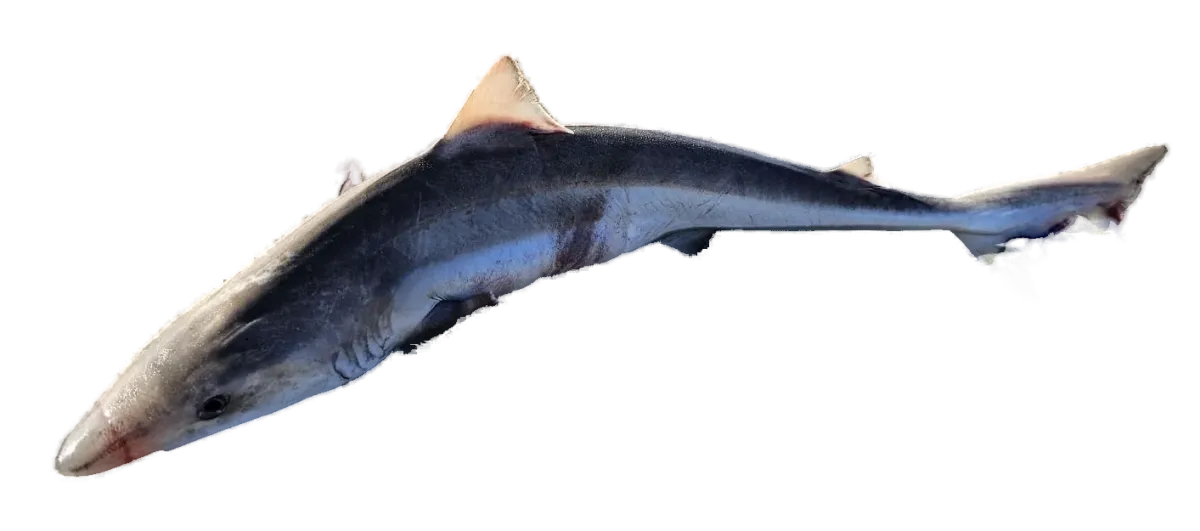
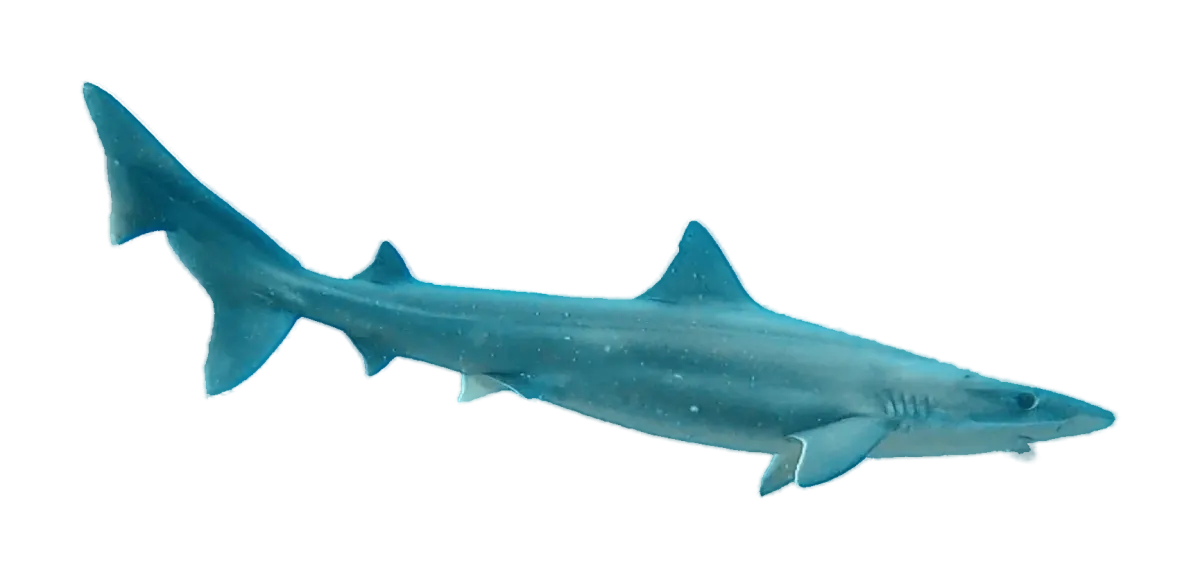
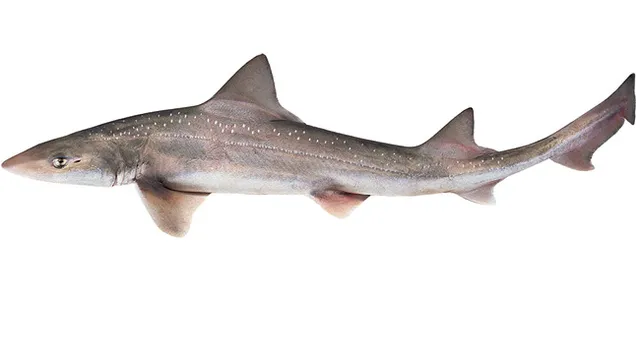
School shark is a slim, plain grey shark with a long pointed snout and a big flag-like tip on the top of the tail. It lives right around New Zealand, coming inshore in summer and moving offshore in winter. It has no spots and no fin spines, which separates it from rig and spiny dogfish.
How to identify school shark
A slender, plain shark, grey above and white below, with no spots. The snout is long and pointed, and looks see-through from underneath. The tip of the upper tail lobe is large and flag-like, and the lower tail lobe is also large.
The second dorsal fin is much smaller than the first and about the same size as the anal fin. There are no spines in front of the dorsal fins. The teeth are small, sharp and blade-like, not flat like a rig's. Young school sharks have black markings on the fins.
Often confused with
 RigMustelus lenticulatusRig have many small white spots on the upper body, flat crushing teeth and a second dorsal fin almost as big as the first. School shark are plain grey with sharp teeth and a small second dorsal fin.
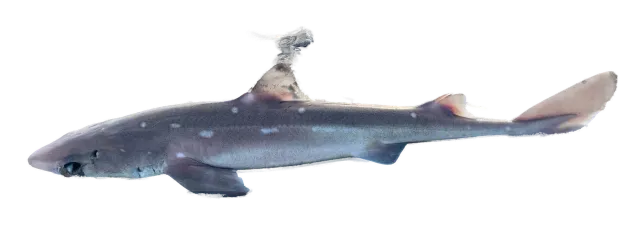
 Spiny DogfishSqualus acanthiasSpiny dogfish have a sharp spine in front of each dorsal fin, scattered white spots and no anal fin. School shark have no spines, no spots and an anal fin.
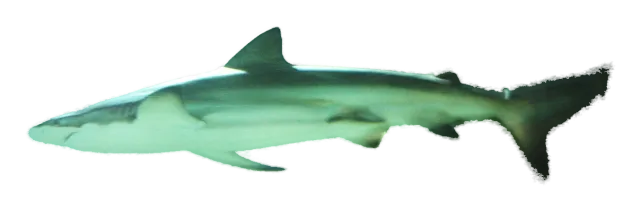
 Bronze WhalerCarcharhinus brachyurusBronze whalers are stouter and coppery-brown above, with longer pectoral fins, a white stripe on the flank and a long upper tail lobe with only a small flag-like tip.
Size and daily limits
Daily limit2–5 a dayNo species limit in Auckland and Kermadec, Central, and Challenger.Limits for each area
| Area | Min. size | Daily limit |
|---|---|---|
| Auckland and Kermadec area | None | No species limit (combined 20 a day) |
| Central area | None | No species limit (combined 20 a day) |
| Challenger area | None | No species limit (combined 20 a day) |
| Kaikōura area | None | 3 |
| South-East area | None | 5 Chatham Rise: 1. |
| Fiordland area (Fiordland Marine Area) | None | 2 2 per day both outside and inside the Fiords. |
| Southland area | None | 5 |
Within combined finfish daily limit.
Checked 22 October 2026 · Source: MPI. Rules change, so check the NZ Fishing Rules app before you keep a fish.
Where it lives in New Zealand
School shark are found right around New Zealand, from the Three Kings Islands to Campbell Island and the Chatham Islands, and out into oceanic waters. They also live in temperate seas off Australia, South Africa, South America and in the Atlantic.
They range across the continental shelf, generally inshore in summer and offshore in winter, from the surface down to at least 600 m. Tuna longliners catch them up to 400 nautical miles off northern New Zealand. Pups are born in spring and early summer, and harbours, shallow bays and sheltered coasts serve as nurseries for their first one or two years.
School shark travel a long way. Tagged New Zealand fish have turned up in southern Australia, and one travelled 4940 km.
- Jan: good
- Feb: good
- Mar: quieter
- Apr: quieter
- May: quieter
- Jun: quieter
- Jul: quieter
- Aug: quieter
- Sep: quieter
- Oct: quieter
- Nov: good
- Dec: good
How to catch it
School shark are a listed gamefish and are regularly caught by recreational fishers, but Fisheries New Zealand notes they are not a particularly sought-after target. Your best chance is a bottom bait in summer, when they move inshore. They feed mainly on small fish, octopus and squid, so fresh fish or squid baits make sense. Their teeth are sharp, so a trace helps.
Eating
School shark has firm, white, boneless flesh that suits most cooking: frying, poaching, grilling, barbecuing and baking. Shark fillets are a fish and chip staple in New Zealand, and shops sell shark meat under names such as lemon fish.
Like all sharks, school shark holds urea in its flesh, which turns to ammonia after death and taints the meat. Bleed it as soon as it is landed, rinse it in seawater and get it on ice. Soaking fillets in a weak acid such as lemon juice or vinegar removes much of what's left. Large, old school sharks can carry high mercury levels, so smaller fish are the better eating choice.
Recipes
- Green fish curry (Seafood New Zealand)
Good to know
School shark grow slowly and live a long time. New Zealand males mature at about 1280 mm and 13 years, and females at about 1375 mm and 14 years. Australian tagging suggests they can live at least 50 years.
Females breed only every second or third year. They have 5–10 pups when small and over 40 when large. Mating probably happens in deep water in winter. Late maturity and few young make the species slow to recover from overfishing.
School shark has been in the Quota Management System since 1986. Commercial fishers may return school shark to the sea if they are alive and likely to survive. Globally, the IUCN lists school shark as Critically Endangered (assessed 2020) because of population declines driven by fishing.
Questions
Can you eat school shark?
Yes. School shark has firm, white, boneless flesh that fries, grills and bakes well. Bleed it straight away, rinse it in seawater and ice it, or the urea in the flesh turns to ammonia and taints the meat.
What's the difference between school shark and rig?
Spots and teeth. Rig have many small white spots and flat teeth for crushing crabs. School shark are plain grey with sharp, blade-like teeth, a long pointed snout and a big flag-like tip on the upper tail lobe.
How do I tell a school shark from a spiny dogfish?
Look in front of the dorsal fins. Spiny dogfish have a sharp spine in front of each one and white spots on the back. School shark have no spines and no spots, and grow much bigger.
Is a school shark dangerous?
No. FishBase lists school shark as harmless to people. Its teeth are sharp, though, so handle it carefully when unhooking.
How many school shark can I take?
It depends on the area. In some areas school shark have their own daily limit, and elsewhere they count toward the combined finfish limit. See the size and daily limits on this page for the rules where you fish.
Where do school sharks go in winter?
Offshore. School shark move onto the outer shelf and slope in winter, down to at least 600 m. Some cross the Tasman: tagged New Zealand school sharks have been caught in southern Australia.