Spiny Dogfish
Pioke (also used for rig), Kāraerae, Koinga, Mangō hapū, Mangō pekepeke, Makohuarau (Also recorded for school shark.)
Squalus acanthiasAlso known as Spotted spiny dogfish, Piked dogfish, Spineback
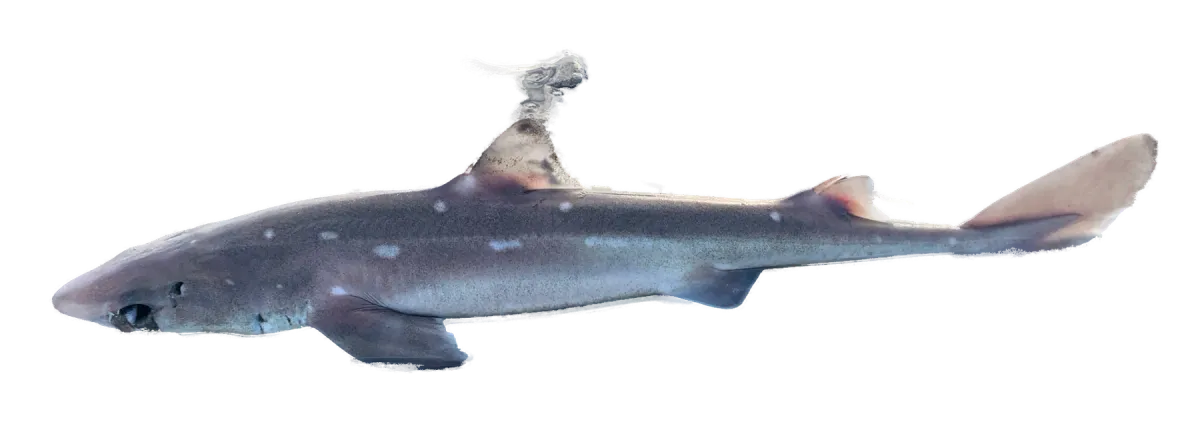
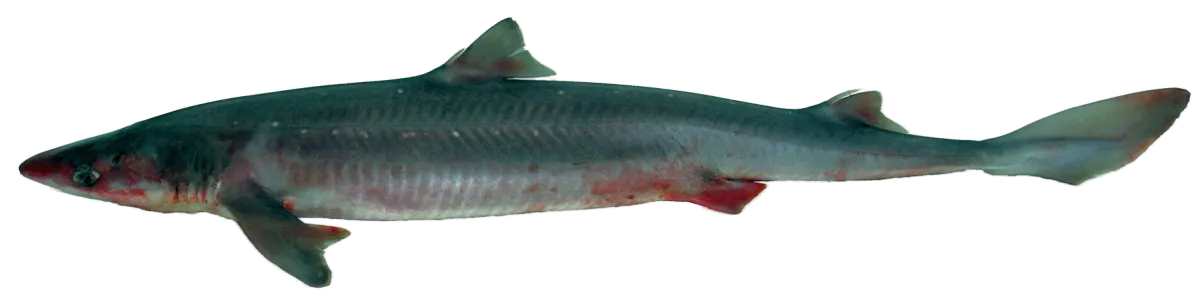
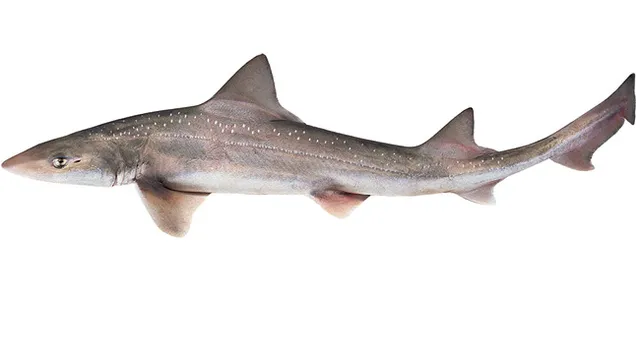
Spiny dogfish is a small, slender shark with a sharp spine in front of each dorsal fin and scattered white spots on a brownish-grey back. It is very common around the South Island and is often a nuisance bait-stealer. A related northern spiny dogfish, with green eyes and no spots, lives mainly off the North Island.
How to identify spiny dogfish
A slender, small shark, brownish-grey above and white below. Large, sparse white spots run along the front of the upper body, though big fish may lose them. There is a slender, sharp spine in front of each of the two dorsal fins, and the front spine is much shorter than the first dorsal fin.
Spiny dogfish have no anal fin. The first dorsal fin starts well behind the rear tip of the pectoral fin. Females grow larger than males.
Northern spiny dogfish (Squalus griffini) is a separate New Zealand species. It has large green eyes, no white spots, stouter spines and a first dorsal fin that starts in front of the pectoral fin tip. It is common off the west coasts of both islands and near the Chatham Islands, and grows to about 1100 mm. Older Fisheries New Zealand reports call it Squalus mitsukurii.
Often confused with
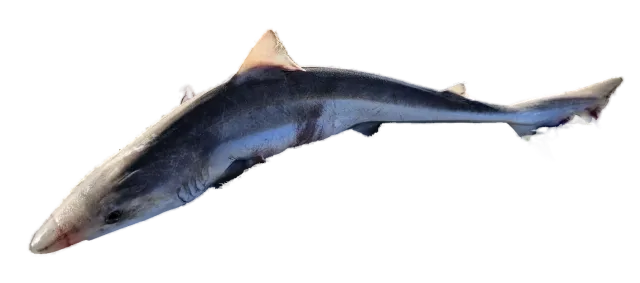
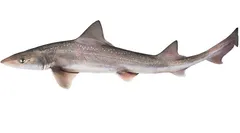 RigMustelus lenticulatusRig have many small white spots and no spines in front of the dorsal fins. Spiny dogfish have fewer, larger spots and a sharp spine in front of each dorsal fin.
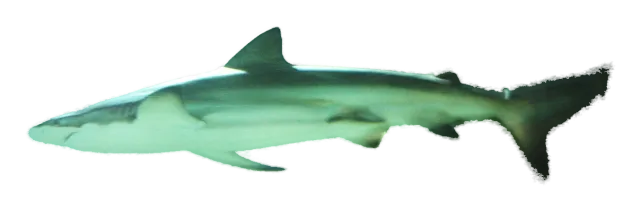
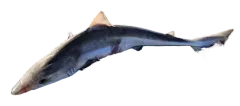 School SharkGaleorhinus galeusSchool shark are plain grey with no spots or spines, have an anal fin and a big flag-like tip on the upper tail lobe, and grow much bigger.
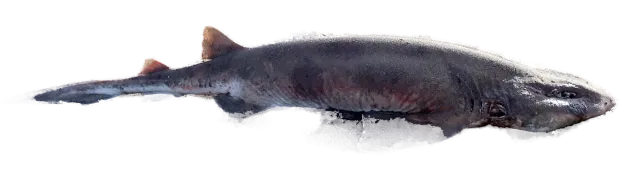
- Northern spiny dogfish
Northern spiny dogfish have large green eyes and no white spots, and the first dorsal fin sits further forward, in front of the pectoral fin tip.
Where it lives in New Zealand
Spiny dogfish are most abundant off the east coast of the South Island, on the Stewart–Snares shelf and on the Chatham Rise. They range north to about Manukau Harbour on the west coast and East Cape on the east coast, and are considered virtually absent from the northeast of the North Island, where most "spiny dogfish" are likely the northern species.
They live on the continental shelf and upper slope to at least 500 m, most commonly at 50–150 m, both on the bottom and in midwater. Schools are strongly split by size and sex. Pregnant females move into water 100 m deep or less, and young of the year move inshore soon after birth.
Good to know
Spiny dogfish have one of the longest pregnancies of any animal, close to 24 months. Females give birth to 1–19 pups between April and September, mainly on the shelf edge at 200–300 m, then mate again and repeat the two-year cycle. Pups are 180–300 mm long at birth.
New Zealand males mature at 580 mm and 6 years, and females at 730 mm and 10 years. East coast South Island fish have been aged to 21 years for males and 26 years for females.
The dorsal spines can inflict a nasty wound, and FishBase lists the species as venomous. Keep your hands clear of both spines when unhooking or cleaning one.
Spiny dogfish has been in the Quota Management System since 2004. Commercial fishers may return it to the sea.
Questions
Are spiny dogfish poisonous?
The spines are the risk. Each dorsal fin has a sharp spine in front of it that can give a nasty wound, and FishBase lists the species as venomous. The flesh is not poisonous and is eaten in many countries.
What's the difference between spiny dogfish and rig?
The spines and the spots. Spiny dogfish have a sharp spine in front of each dorsal fin and a few large white spots. Rig have no spines and many small white spots.
Why is it called a dogfish?
Anglers coined the name after watching them chase smaller fish in large packs, like dogs. Spiny dogfish are probably the most abundant shark in the world.
Is the northern spiny dogfish a different species?
Yes. The northern spiny dogfish (Squalus griffini) is found only in New Zealand waters and nearby ridges. It has large green eyes and no white spots, and is most common off the west coasts and near the Chatham Islands.