Bronze Whaler
Horopekapeka, Tōiki, Ngengero (Te Aka also gives ngengero for the blue shark), Matawhā, Ngerungeru
Carcharhinus brachyurusAlso known as Bronze shark, Bronze whaler shark, Copper shark, bronzie

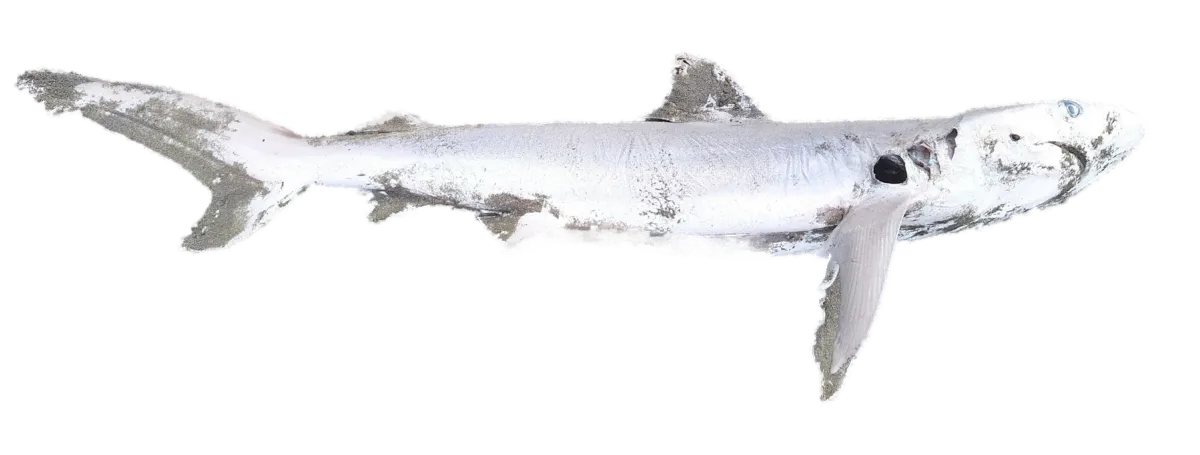
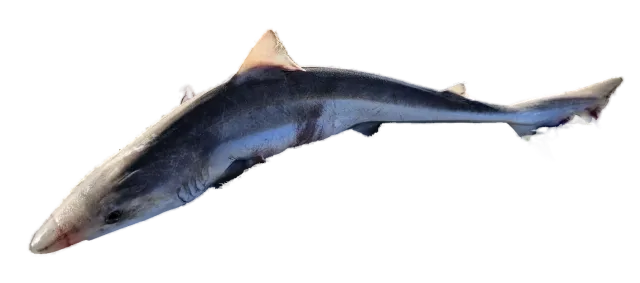
The bronze whaler is a large, heavy-bodied shark with a bronze back, cream belly and a broadly rounded snout. It is one of the most common large sharks in New Zealand coastal waters, moving into harbours, bays and surf beaches of the upper North Island in spring and summer. It is the shark divers see most often.
How to identify bronze whaler
A large, heavy-bodied shark, bronze to grey-brown above and cream to white below. The snout is broadly rounded. The first dorsal fin is much larger than the second, and the upper lobe of the tail is two to three times longer than the lower lobe. There is no ridge of skin along the back between the two dorsal fins. The fins are mostly plain, with dusky tips on the pelvic fins and dusky to black tips and rear edges on the pectoral fins. The upper teeth are narrow, bent and pointed, built for gripping slippery fish rather than cutting chunks of flesh.
Often confused with
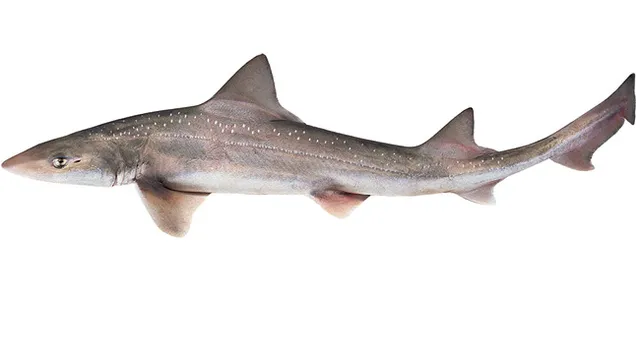
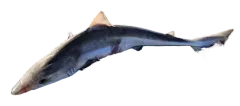 School SharkGaleorhinus galeusSchool sharks are plain grey, smaller (up to about 1.7 m in New Zealand) and have a long, pointed snout that looks translucent from below. Their second dorsal fin is about as big as the anal fin. Bronze whalers are bronze, much heavier and have a broadly rounded snout.
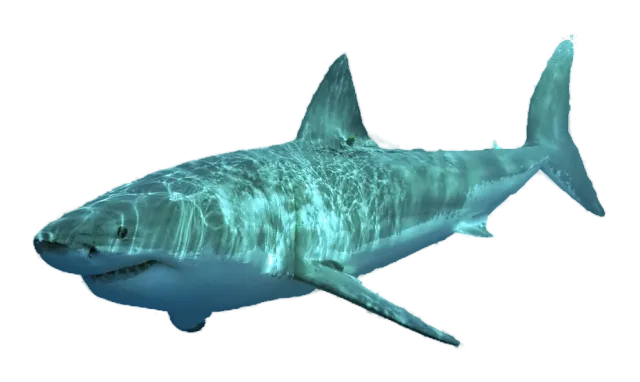
 Great White SharkCarcharodon carchariasGreat whites are bulkier, lead-grey to black above with an abrupt line to the white belly, a black spot where the pectoral fin meets the body, a conical snout and large, triangular, saw-edged teeth. They are protected. Release any great white you hook and report it to DOC.
- Blue shark
Blue sharks are slim with very long, narrow pectoral fins, a long conical snout and a bright blue back and sides. Bronze whalers are stockier, bronze above, with shorter pectoral fins and a rounded snout.
- Other whaler sharks (such as the dusky shark)
Most other whaler sharks, including the dusky shark, have a low ridge of skin along the back between the two dorsal fins. The bronze whaler has no ridge there.
Where it lives in New Zealand
Found in warm temperate and subtropical seas worldwide, close to shore and in the open ocean, from the surface to about 360 m. In New Zealand it is most common around the upper North Island, and some reach Cook Strait and Tasman Bay in summer.
In spring and summer bronze whalers move into shallow coastal water: reefs, bays, estuaries, harbours and surf beaches. In winter they move further offshore. Females give birth close to shore in late spring and early summer. They usually travel alone, in pairs or in small groups.
Tagging shows most stay near where they were caught. Of 29 tagged bronze whalers recaptured to 2025, most were found along the northern coast, but one reached New Caledonia, one Bass Strait, and one was caught near Tuvalu, about 1800 nautical miles north, more than six years after it was tagged.
- Jan: more often seen
- Feb: more often seen
- Mar: more often seen
- Apr: more often seen
- May: less often seen
- Jun: less often seen
- Jul: less often seen
- Aug: less often seen
- Sep: less often seen
- Oct: less often seen
- Nov: more often seen
- Dec: more often seen
Good to know
Bronze whalers grow slowly. They take about 30 years to reach full size and do not breed until they are 15 to 20 years old. Females give birth every other year to litters of about 7 to 24 pups, each 60 to 70 cm long. They may live 30 to 40 years.
The species is listed as Vulnerable on the IUCN Red List (assessed 2020) and is on Appendix II of CITES, which controls international trade. It is not in the Quota Management System and is not protected in New Zealand. Since 1 October 2014 commercial fishers in New Zealand must not fin sharks and must land shark fins naturally attached to the body.
Bronze whalers are not normally aggressive to people, but they feed on live or dead fish and can become excited when food is about. Spearfishers carrying fish have been bitten. Te Ara records at least two attacks by bronze whalers in New Zealand, both non-fatal, and lists bronze whalers among the species known to have caused fatal attacks here. Overall, New Zealand recorded 44 unprovoked shark attacks between 1852 and 2014. If you are spearfishing, get your catch out of the water quickly, and avoid swimming near people fishing or where fish waste is thrown in.
Questions
Are bronze whaler sharks dangerous?
Rarely. NIWA says they are not normally aggressive to people, but they can get excited around food, and spearfishers carrying fish have been bitten. Te Ara records at least two non-fatal attacks by bronze whalers in New Zealand. Get speared fish out of the water quickly and don't swim near people cleaning fish.
Where are bronze whalers found in New Zealand?
Mostly around the upper North Island. In spring and summer they move into shallow water near reefs, bays, estuaries, harbours and surf beaches, and some reach Cook Strait and Tasman Bay. In winter they move offshore.
How big do bronze whalers get?
Most are 1.5 to 2.5 m long. The largest reach about 3 m, and the heaviest recorded weighed about 305 kg.
What's the difference between a bronze whaler and a school shark?
Colour, size and snout. Bronze whalers are bronze above, heavy-bodied and have a broadly rounded snout. School sharks are plain grey, smaller (up to about 1.7 m) and have a long, pointed snout that looks translucent from below.
Are bronze whalers protected in New Zealand?
No. Bronze whalers are not protected and are not managed in the Quota Management System.