Stingrays
Whai (rays and skates in general), Roha (short-tail stingray), Pākaurua (short-tail stingray), Whai repo (also the eagle ray)
Bathytoshia brevicaudata, Bathytoshia lata formerly Dasyatis brevicaudata, Dasyatis thetidisAlso known as Short-tail stingray, Short-tailed stingray, Long-tail stingray, Long-tailed stingray, Whiptail stingray

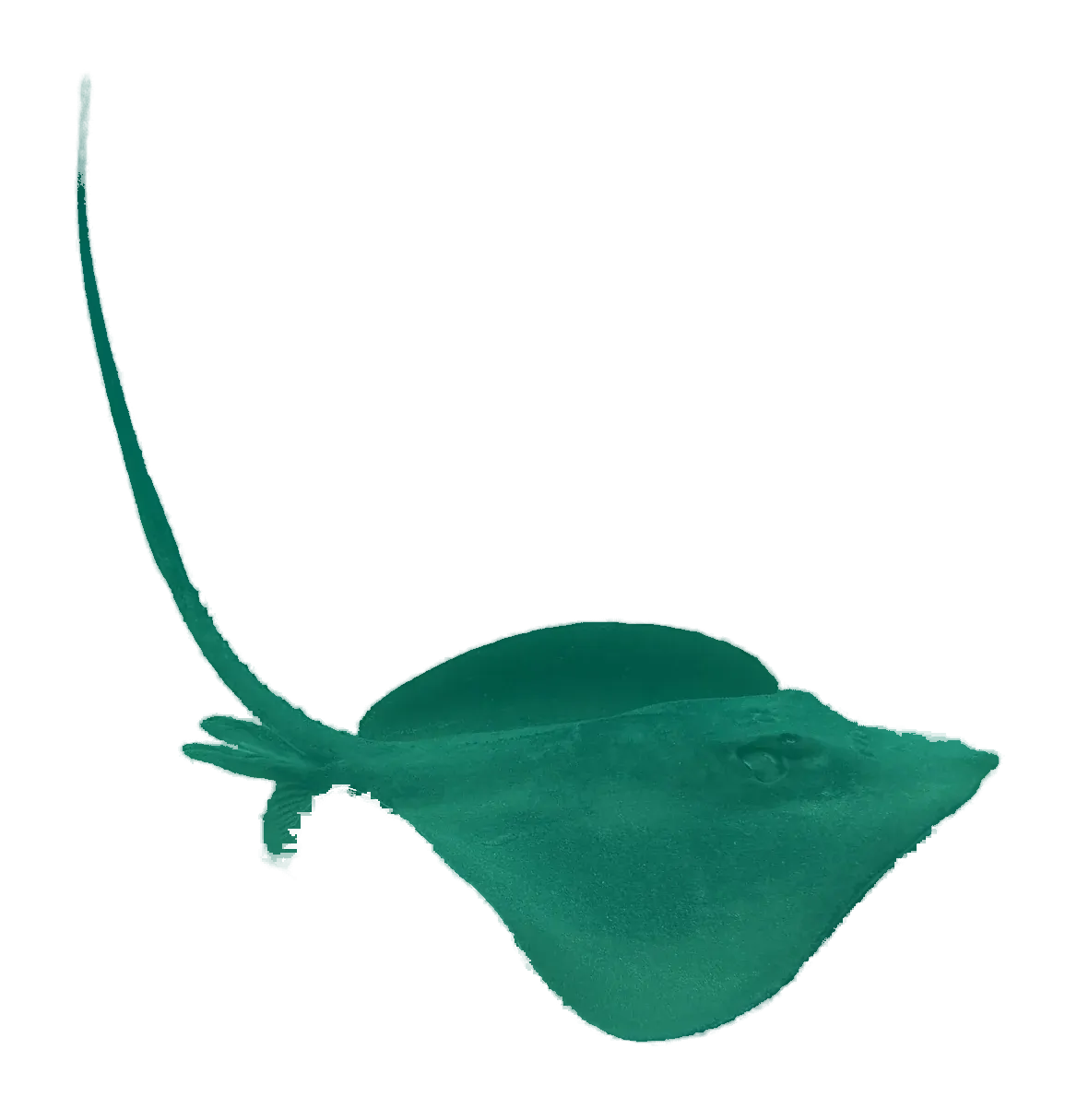
New Zealand has two common stingrays (whai): the short-tail stingray and the long-tail stingray. Both are big, flat, dark rays with a venomous barb on the tail, found on sand and mud in harbours, bays and off beaches, especially in summer. They are not aggressive, but standing on one can cause a painful wound.
How to identify stingrays
- Short-tail stingray: a broad, flat disc slightly wider than long. The tail is thick and flattened at the base and narrows quickly to the barb. Plain grey to light brown above, often with oblique rows of small white spots on the wings, and whitish to cream below.
- Long-tail stingray: a dark olive-green, grey or black disc with no white spots, and a long, slender tail about twice the length of the disc. Adults have sharp thorns over the disc and tail.
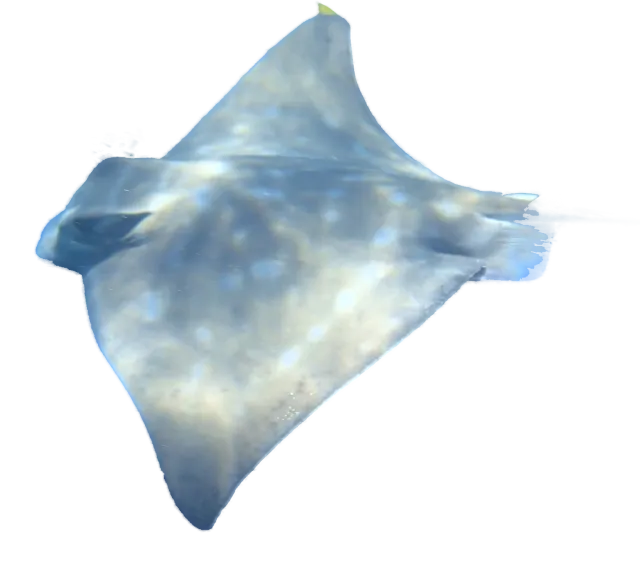
- Both stingrays have rounded wings that ripple as they swim. Eagle rays have pointed wings that flap like a bird's, and a protruding head.
Stingrays are flattened relatives of sharks, with their gills on the underside. Both New Zealand species are large, plain-coloured rays with a broad, roughly diamond-shaped disc and one or more serrated, venomous barbs on the tail.
The short-tail stingray has a disc slightly wider than long and a short, stout tail that is broad and flattened at the base and narrows quickly to the barb. It is plain grey to light brown above, often with oblique rows of small white spots on the wings, and whitish to cream below. It is reputed to be the largest stingray in the world, at more than 350 kg.
The long-tail stingray is dark olive green, grey or black above and white underneath. Its tail is long and slender, about twice the length of the disc, and adults have sharp thorns over the disc and tail. It can grow to 4 m including the tail and 214 kg.
Often confused with

- Rough skate
Skates are smaller (rough skate to about 1.1 m), mottled brown with white and black spots, with a thorny tail, and are essentially harmless. Skates lay eggs in leathery cases; stingrays give birth to live young.
Where it lives in New Zealand
The short-tail stingray lives in coastal waters from southern Africa to New Zealand, and off Japan, on sandy bottoms in bays and harbours and near rocky reefs, usually shallower than 200 m. Adults are common inshore in summer and autumn and often gather in groups. At the Poor Knights Islands they gather in the current at Northern Arch. Genetic work shows the short-tail stingrays of northern New Zealand are a separate population from those around the lower North Island and the Marlborough Sounds.
The long-tail stingray is found in New Zealand, southern Australia and south-eastern Africa, from the shallows to about 400 m. In New Zealand it occurs mainly north of East Cape.
Stingrays are often seen in shallow water around wharves, such as on the Wellington waterfront.
- Jan: more often seen
- Feb: more often seen
- Mar: more often seen
- Apr: more often seen
- May: more often seen
- Jun: less often seen
- Jul: less often seen
- Aug: less often seen
- Sep: less often seen
- Oct: less often seen
- Nov: less often seen
- Dec: more often seen
Good to know
Both stingrays give birth to live young rather than laying eggs. The embryos feed on yolk and then on a fluid made by the mother; young short-tail stingrays are born at about 36 cm across. Short-tail stingrays eat fish, shellfish, squid and crustaceans. Long-tail stingrays eat crabs, mantis shrimps, molluscs, worms and conger eels.
Orca, dolphins and hammerhead sharks hunt rays, and great white sharks in New Zealand have been found with stingrays in their stomachs. NIWA's Malcolm Francis notes that both species were once recorded at up to 4 m long, but these big, old rays are now rarely seen, probably because they have been caught, particularly in nets.
The IUCN lists the short-tail stingray as Least Concern (2020) and the long-tail stingray as Vulnerable (2020). Neither is protected in New Zealand.
Questions
Are stingrays dangerous in New Zealand?
Not if you leave them alone. Stingrays are not aggressive and only use the barb on their tail in self-defence, usually when someone steps on or handles one. A sting is very painful and can leave pieces of barb in the wound, so it always needs medical attention.
What should I do if I'm stung by a stingray?
Soak the wound in hot water, 40–45 °C, for up to 90 minutes. Test the water with an unhurt hand first so it doesn't scald. Then see a doctor or go to an emergency department, because pieces of barb can stay in the wound. If the skin around the wound turns red, go straight to hospital. For first-aid advice, call the National Poisons Centre on 0800 764 766.
How do I avoid stepping on a stingray?
Shuffle your feet along the bottom in shallow, murky water instead of taking steps, so you don't stand on one. Rays only strike with the barb when they feel threatened.
What's the difference between a short-tail and a long-tail stingray?
The tail. The short-tail has a short, thick tail that narrows quickly to the barb, and often rows of small white spots on its wings. The long-tail has a long, slender tail about twice the length of its body, and a plain dark back.
What's the difference between a stingray and an eagle ray?
Eagle rays have pointed wings that they flap like a bird, and a head that sticks out in front. Stingrays have broad, rounded wings that ripple as they swim, and no protruding head.
What is the Māori name for stingray?
Whai is the general name for stingrays and skates. Te Aka Māori Dictionary also lists roha and pākaurua for the short-tail stingray, and whai repo for both stingrays and the eagle ray.