Mako Shark
Mako (means the shark or a shark tooth; the name has been adopted worldwide), Ngutukao
Isurus oxyrinchusAlso known as Shortfin mako, Mako, Blue pointer, Mackerel shark
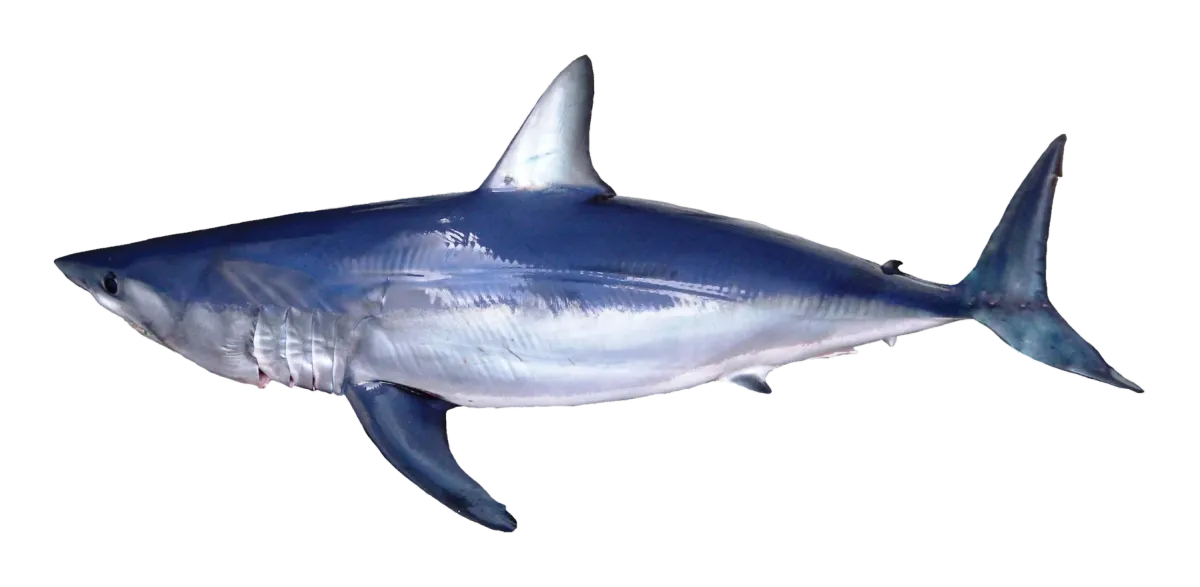
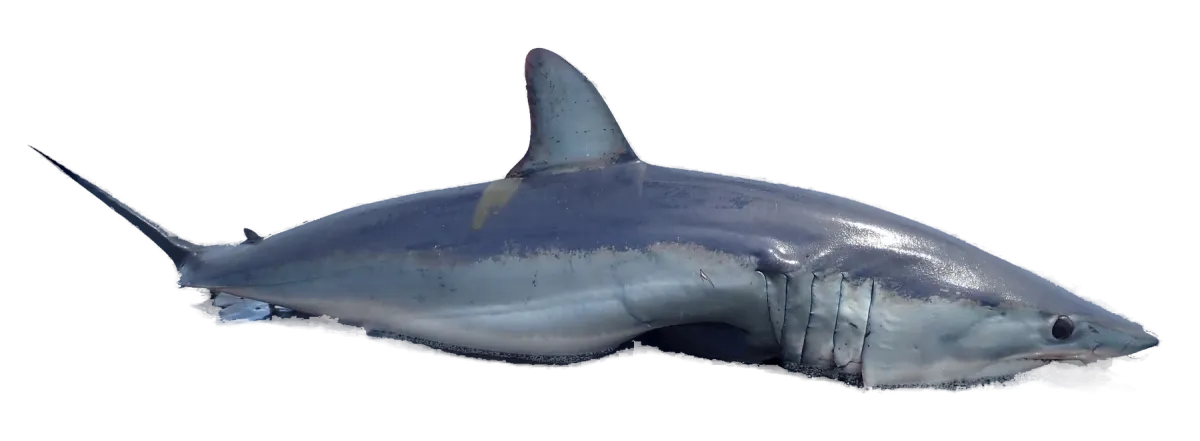
The shortfin mako is a fast, warm-blooded ocean shark with an indigo-blue back, white belly, pointed snout and long, smooth-edged teeth that stick out of the mouth. It lives all around New Zealand but is most common in the north. Mako is a Māori name now used worldwide, and the shark is prized by game fishers.
How to identify mako shark
A long, slender, muscular shark with a relatively long, pointed snout. The back is deep indigo blue and the underside white. The teeth are long, narrow and pointed, with smooth edges, and they stick out of the mouth. The pectoral fins are short. The second dorsal fin and anal fin are tiny. The tail is crescent-shaped, with a strong lower lobe.
Often confused with

- Porbeagle shark
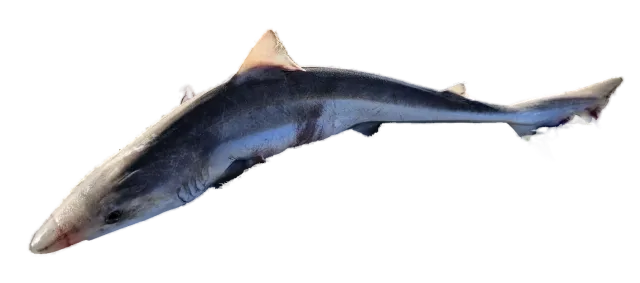
Porbeagles are stouter and dark grey rather than blue, with a bright white patch on the rear tip of the first dorsal fin and a short second keel at the base of the tail. Their teeth are small and have little side points; mako teeth are long and smooth-edged.
- Blue shark
Blue sharks are slimmer, with very long, narrow pectoral fins, a long conical snout, bright blue sides and saw-edged teeth. Mako have short pectoral fins, a crescent-shaped tail with a strong lower lobe, and smooth-edged teeth that stick out of the mouth.
Where it lives in New Zealand
Found in tropical and warm temperate seas worldwide, mainly in the open ocean but sometimes close inshore. In New Zealand mako occur throughout the Exclusive Economic Zone to at least 49° S, and are most abundant in the north, especially in the colder months. Young mako are seen near the Mokohinau Islands, so they probably give birth near the outer Hauraki Gulf.
Most mako caught in New Zealand are juveniles and adult males; mature females are rarely seen. NIWA satellite-tagged 14 mako off the northern North Island. They spent much of their time on the New Zealand shelf, sometimes for months, but most also made ocean crossings of more than 1000 km to Tonga, Fiji, Vanuatu, New Caledonia, Norfolk Island or the Kermadecs, often returning close to where they were tagged. Two of them carried depth sensors: they spent most of their time shallower than 100 m but dived to 515 m and 605 m, mostly by day.
Good to know
Mako are warm-blooded. They keep their core body temperature 6 to 8 °C above the water, which helps make them the fastest of all sharks. Males mature at about 9 to 10 years and 180 cm fork length; females not until 20 to 21 years and 275 to 285 cm. Females give birth to 4 to 18 pups, about 60 cm long, after a pregnancy of about 18 months, and probably breed only every two or three years. The oldest recorded in New Zealand were 28 and 29 years old.
Mako have been in the Quota Management System since 1 October 2004 as a single stock, MAK 1. The catch limits were cut in 2012 because of concern about overfishing: the total allowable catch is 276 t, with 200 t for commercial fishers and 30 t allowed for recreational fishers. Most commercial catch is bycatch on tuna longlines. Since 1 October 2014 commercial fishers have been allowed to return mako to the sea alive or dead, and shark finning has been banned. In 2019–20 to 2021–22 about 93.5% of the commercial catch by weight was discarded or released. The stock status of mako in New Zealand and the south-west Pacific is unknown.
Mako are listed as Endangered on the IUCN Red List (assessed 2018) and on Appendix II of CITES. Te Ara lists mako among the shark species known to have caused fatal attacks in New Zealand, though NIWA notes attacks on people are rare and mako seldom come close inshore. In Māori tradition the northern ocean taniwha Ruamano took the form of a mako, and mako teeth were prized for ear pendants. Māori caught mako from canoes using a ray or skate as bait, then slipped a flax noose over the tail so the teeth were not damaged.
Questions
Are there mako sharks in New Zealand?
Yes. Mako are found throughout New Zealand waters to at least 49° S, and are most common around the North Island. Most are juveniles and adult males. Satellite-tagged mako spent months at a time on the New Zealand shelf, with trips north to the Pacific islands and back.
Are mako sharks dangerous?
Rarely to swimmers. Mako live mostly offshore and NIWA says attacks on people are rare, but Te Ara lists mako among the sharks known to have caused deaths in New Zealand. Hooked mako are a real risk on board: they have been known to attack boats or leap into them.
What's the difference between a mako and a great white?
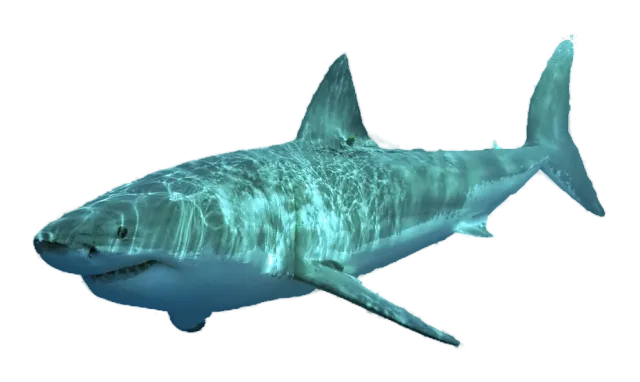
A mako is slimmer and indigo blue on top, with long, smooth-edged teeth that stick out of the mouth. A great white is much bulkier and grey above, with large triangular saw-edged teeth and a black spot at the base of the pectoral fin. Great whites are protected, so release them and report the capture to DOC.
How do you say mako?
NIWA scientist Malcolm Francis says the correct pronunciation is closer to 'mar-kor' than 'may-ko'. Mako is the Māori name for the shark and for a shark tooth.