Orange Roughy
Nihorota
Hoplostethus atlanticusAlso known as Slimehead, roughy
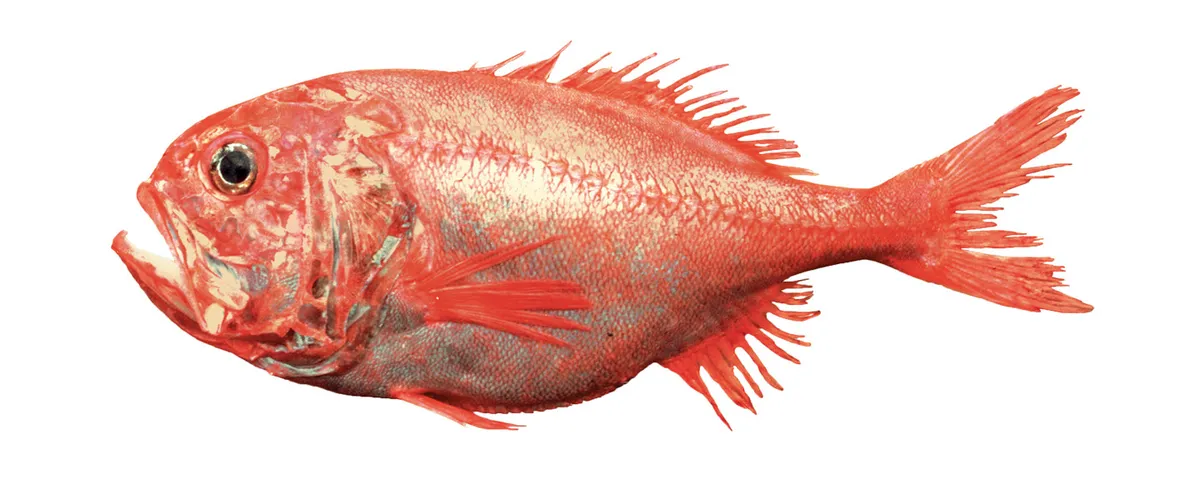
Orange roughy is a deep-sea fish caught by commercial trawlers at about 750 to 1200 m, on grounds such as the Chatham Rise and Challenger Plateau. Whole fish are bright brick-red with a bluish-black mouth and a row of hard scutes along the belly. Most people meet it as skinned white fillets at the fish counter.
How to identify orange roughy
A deep-bodied, rounded fish that is bright brick-red all over when fresh. The inside of the mouth and the gill cavity are bluish-black. The head is large with big eyes and bony ridges, and a row of hard scutes runs along the belly. Fish sold in shops are usually skinned white fillets, so the red colour is only seen on whole fish.
Size and daily limits
Daily limit10 a dayLimits for each area
| Area | Min. size | Daily limit |
|---|---|---|
| Auckland and Kermadec area | None | No species limit |
| Central area | None | No species limit |
| Challenger area | None | No species limit |
| Kaikōura area | None | No species limit |
| South-East area | None | No species limit |
| Fiordland area (Fiordland Marine Area) | None | 10 Fiordland 'any other finfish' limit, shared with other unlisted species. 4 a day inside the fiords. |
| Southland area | None | No species limit |
Not named on any regional page; combined finfish limit only.
Checked 22 October 2026 · Source: MPI. Rules change, so check the NZ Fishing Rules app before you keep a fish.
Where it lives in New Zealand
Orange roughy live close to the seabed in deep, cold water, between about 700 and 1500 m, and are most common at 800 to 1200 m. Main grounds include the Chatham Rise, the Challenger Plateau and waters off the east coasts of both islands. They spawn in dense schools from June to early August, often around pinnacles, canyons and flat seabed. They feed on prawns, small fish and squid.
How to catch it
Orange roughy are caught only by commercial bottom trawlers working at about 750 to 1200 m. Fisheries New Zealand reports no known recreational fishing for them. The depth puts them well out of reach of normal recreational gear, so the only way most people will see one is as a fillet at the fish shop.
Eating
The flesh is white, soft and moist with a mild flavour. Moderate oil content keeps it juicy and helps the fillet hold together. Use skinned fillets only. It suits baking, sautéing, poaching, steaming, barbecuing and smoking, and works in soups and chowders.
Good to know
Orange roughy grow very slowly and can live at least 100 years. They do not mature until somewhere between about 23 and 31 years old. The species is managed under the Quota Management System, and two stocks have held Marine Stewardship Council certification since 2016. The fish was first called slimehead and renamed orange roughy in the 1970s for marketing.
Questions
Is orange roughy good to eat?
Yes. Orange roughy has soft, moist white flesh with a mild flavour, and its moderate oil content keeps it juicy. Use skinned fillets only. It suits baking, sautéing, poaching, steaming, barbecuing and smoking, and works well in soups and chowders.
How long do orange roughy live?
At least 100 years. Orange roughy grow very slowly and do not mature until somewhere between about 23 and 31 years old. The fishery is managed under the Quota Management System, and two stocks have held Marine Stewardship Council certification since 2016.
Why was orange roughy called slimehead?
Slimehead was the fish's original name. It was renamed orange roughy in the 1970s for marketing, to make it more appealing to shoppers. Whole fish are bright brick-red when fresh, but most people only ever see the skinned white fillets.