
Hoki
Macruronus novaezelandiaeAlso known as Blue grenadier, whiptail, blue hake
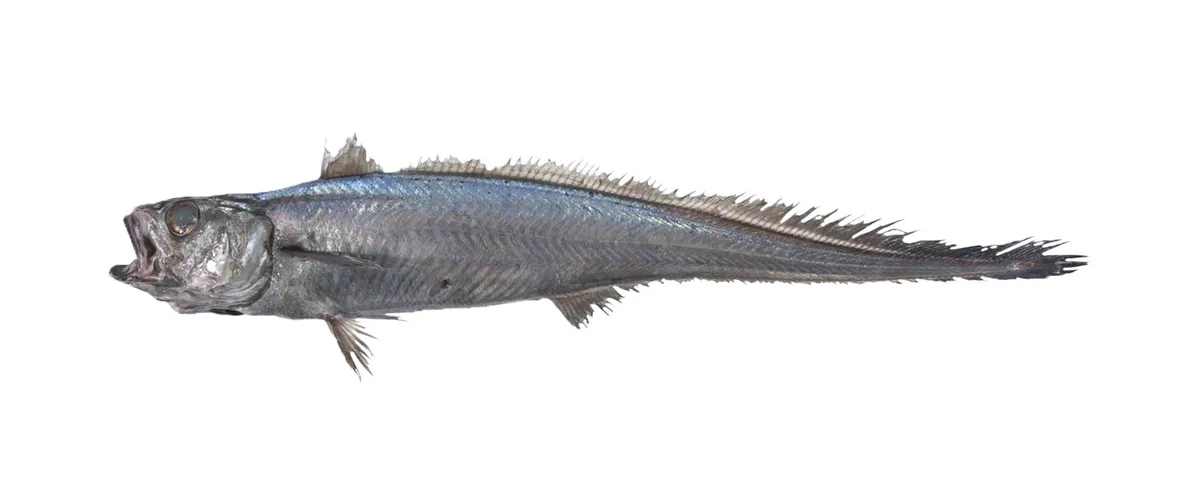
Hoki is a long, silvery deepwater fish found right around New Zealand, most commonly at 200 to 600 m. Its body tapers to a thin, pointed tail with no separate tail fin. Caught almost entirely by trawlers, it is one of New Zealand's largest fisheries and is sold as mild white fillets, fish fingers and burgers.
How to identify hoki
A long, slender, flattened fish with a body that tapers to a thin, pointed tail. The long dorsal and anal fins join the tail fin, so there is no separate tail. The back is silvery with a purple or blue-green tinge, the sides and belly are silver, and the fins are darker. The head is fairly large with big eyes.
Size and daily limits
Daily limitNo species limitExcept Fiordland: 5 a day. Elsewhere it counts towards the combined finfish limit (20–30 a day).Limits for each area
| Area | Min. size | Daily limit |
|---|---|---|
| Auckland and Kermadec area | None | No species limit (combined 20 a day) |
| Central area | None | No species limit (combined 20 a day) |
| Challenger area | None | No species limit (combined 20 a day) |
| Kaikōura area | None | No species limit (combined 30 a day) |
| South-East area | None | No species limit (combined 30 a day) |
| Fiordland area (Fiordland Marine Area) | None | 5 Inside the Fiords: 1 per day. |
| Southland area | None | No species limit (combined 30 a day) |
Within combined finfish daily limit.
Checked 22 October 2026 · Source: MPI. Rules change, so check the NZ Fishing Rules app before you keep a fish.
Where it lives in New Zealand
Hoki are found right around New Zealand from 10 m to over 900 m deep, most commonly at 200 to 600 m. Large adults usually live deeper than 400 m, while juveniles are in shallower water, especially on the Chatham Rise. They live on or near the bottom but move up into mid-water to feed on small fish, crustaceans and squid. In winter they gather to spawn off the West Coast of the South Island, around the Hokitika Canyon, and in Cook Strait.
How to catch it
Hoki are a commercial deepwater species and recreational catch is negligible. Almost all are taken by midwater and bottom trawlers, with the biggest catches on the West Coast spawning grounds from late June to September. Most people will meet hoki as fresh or frozen fillets, not on the end of a line.
Eating
Hoki has delicate white flesh with a mild taste. The fillet flakes easily, which makes it common in fish fingers and fish burgers. It suits most cooking methods except pan-frying crumbed or battered fillets. Fresh fillets work well in fish cakes, fish pie, curry or chowder.
Recipes
- Pan-fried hoki with wholemeal, bacon & herb crumb (Seafood New Zealand)
- Baked hoki fillet with fried bread crumbs, citrus and herb butter (Seafood New Zealand)
Good to know
Hoki is managed under the Quota Management System and is one of New Zealand's largest fisheries. In 2001 it became the first major whitefish fishery in the world to gain Marine Stewardship Council certification. Hoki live 20 to 25 years. Females grow larger than males.
Questions
What kind of fish is hoki?
Hoki is a deepwater whitefish in the hake family, also called blue grenadier or whiptail. It lives around New Zealand from 10 m to over 900 m deep and is caught almost entirely by trawlers, with the biggest catches on the West Coast spawning grounds in winter.
Is hoki good eating?
Yes. Hoki has delicate white flesh with a mild taste that flakes easily. Fresh fillets work well baked or in fish cakes, fish pie, curry or chowder. It is less suited to pan-frying as crumbed or battered fillets.
How is hoki managed?
Under the Quota Management System. Hoki is one of New Zealand's largest fisheries, and in 2001 it became the first major whitefish fishery in the world to gain Marine Stewardship Council certification. Hoki live 20 to 25 years.
Related species
 Saltwater
 Saltwater
 Saltwater
 Saltwater
More guides
All guides- ArticlesNZ fishing rigs and knots: diagrams and when to use eachClear diagrams of the main NZ fishing rigs (ledger, running sinker, strayline, surfcasting, live bait) and the knots to tie them, with which fish each catches.
- ArticlesHow to fillet a fish: snapper, gurnard, kahawai and moreStep-by-step filleting for NZ fish, with photos: the basic method, skinning and pin bones, and what is different about snapper, gurnard, kahawai and blue cod.
- ArticlesBest time to fish in New ZealandWhen to catch snapper, kingfish, kahawai, tuna, trout and salmon in New Zealand, with a month-by-month calendar and what bites in each season.