Yellowbelly Flounder
Pātiki-tōtara, Pātiki (all flounders)
Rhombosolea leporinaAlso known as Yellow-belly flounder, Flounder
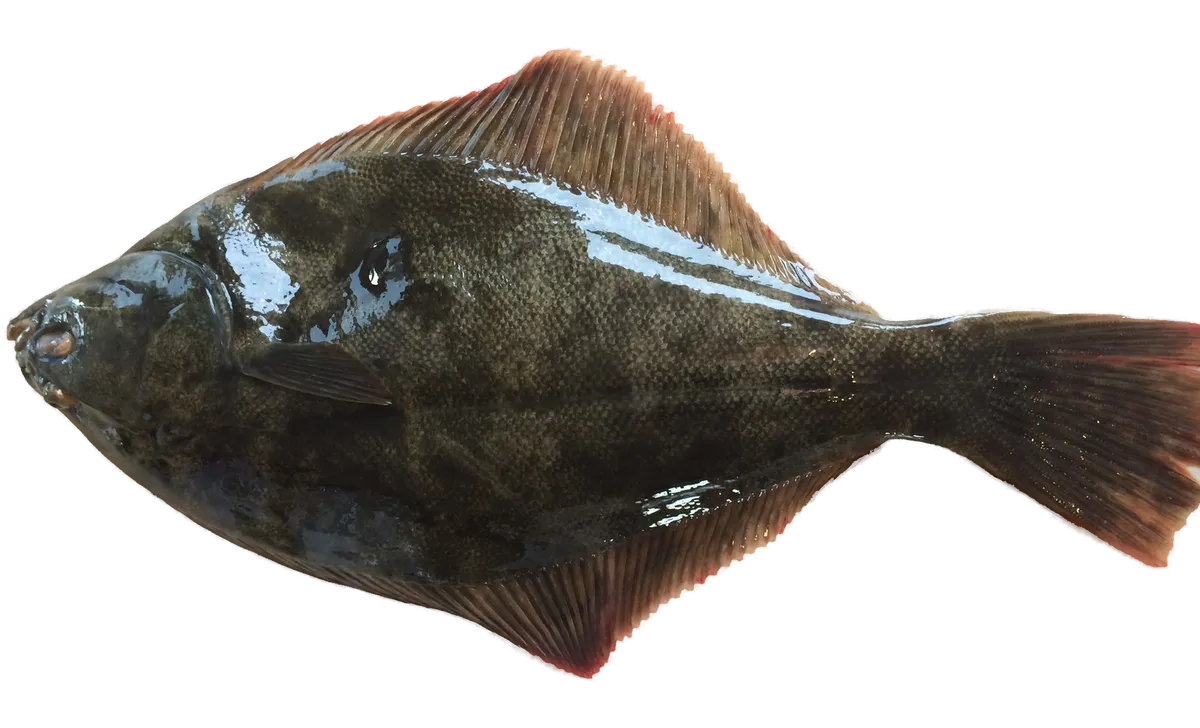
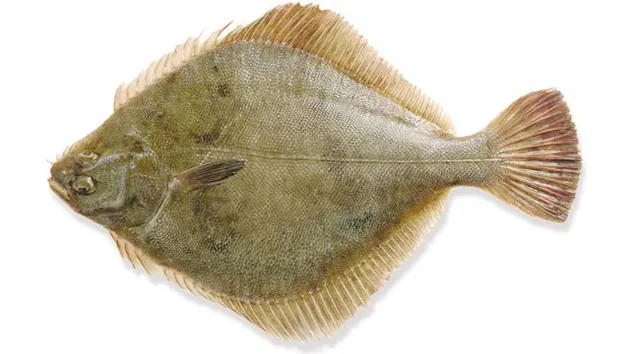
Yellowbelly flounder (Rhombosolea leporina, pātiki-tōtara) is an oval flatfish of muddy harbours and estuaries, and the main flounder in the north. Both eyes are on the right side, which is greenish brown and faces up, and the underside is yellow. Most are taken by netting or spearing in shallow water, and the white flesh is delicate and sweet.
How to identify yellowbelly flounder
- A flatfish with both eyes on the right side, which faces up as it lies on the seabed.
- Oval body, not diamond-shaped.
- Greenish or olive-brown upper side, which can change shade to match the mud.
- Yellow underside. This is the easiest way to tell it from the other flounders.
Yellowbelly flounder are oval flatfish with both eyes on the right side. The upper side is greenish or olive brown and can quickly change shade to blend into mud and sand, and the underside is yellow.
They are easily mixed up with greenback flounder, which is also oval. Greenback is darker green on top, has a white underside, and has a fleshy snout that overhangs the mouth.
Often confused with
- Greenback flounder
Greenback flounder are also oval but dark green on top with a white underside, and have a fleshy snout that overhangs the mouth.
- Black flounder
Black flounder are oval and dark, with brick-orange spots on the back. They are the only flounder that can live in completely fresh water.
Size and daily limits
Minimum size25 cmDaily limitNo species limitExcept Fiordland: 5 a day. Elsewhere it counts towards the combined finfish limit (20–30 a day).Limits for each area
| Area | Min. size | Daily limit |
|---|---|---|
| Auckland and Kermadec area | 25 cm | No species limit (combined 20 a day) MPI groups flounder and sole as 'flatfish'. Flatfish (except sand flounder) min 25 cm; sand flounder min 23 cm. |
| Central area | 25 cm | No species limit (combined 20 a day) MPI groups flounder and sole as 'flatfish'. Flatfish (except sand flounder) min 25 cm; sand flounder min 23 cm. |
| Challenger area | 25 cm | No species limit (combined 20 a day) |
| Kaikōura area | 25 cm | No species limit (combined 30 a day) MPI groups flounder and sole as 'flatfish'. Flatfish (except sand flounder) min 25 cm; sand flounder min 23 cm. |
| South-East area | 25 cm | No species limit (combined 30 a day) MPI groups flounder and sole as 'flatfish'. Flatfish (except sand flounder) min 25 cm; sand flounder min 23 cm. Lyttelton Harbour/Whakaraupō: 5 per day; Rāpaki: no take. Ōpihi, Te Ahi Tarakihi, Waitarakao: 10 per day. Set nets allowed for flounder 1 April to 30 September in Pigeon Bay, Akaroa Harbour, Lyttelton Harbour and Port Levy (exemption to east coast set net ban). |
| Fiordland area (Fiordland Marine Area) | 25 cm | 5 Flatfish (except sand flounder): 5 per day, min 25 cm; sand flounder: 5 per day, min 23 cm. Inside the Fiords: 2 per day each. |
| Southland area | 25 cm | No species limit (combined 30 a day) MPI groups flounder and sole as 'flatfish'. Flatfish (except sand flounder) min 25 cm; sand flounder min 23 cm. Te Whaka ā Te Wera/Paterson Inlet Mātaitai: 10 per day. |
Within combined finfish daily limit.
Checked 22 October 2026 · Source: MPI. Rules change, so check the NZ Fishing Rules app before you keep a fish.
Where it lives in New Zealand
Yellowbelly flounder live in shallow, muddy and sandy water in harbours, estuaries, inlets and sheltered bays, mostly less than 50 m deep, and are also found on surf beaches. They are most common in northern harbours. The main fisheries are in the Firth of Thames and the Kaipara and Manukau harbours.
Young flounder stay on sheltered mudflats and sandflats for up to two years, then move offshore to spawn for the first time at 2–3 years old, in winter and spring. Tagging studies suggest yellowbelly form local populations, especially in enclosed harbours and bays, rather than one large stock.
- Jan: good
- Feb: good
- Mar: quieter
- Apr: quieter
- May: quieter
- Jun: quieter
- Jul: quieter
- Aug: quieter
- Sep: quieter
- Oct: quieter
- Nov: quieter
- Dec: good
How to catch it
Most recreational yellowbelly are taken by set netting or drag netting in harbours and estuaries, or speared at night by torchlight in shallow water over mud and sand flats. Some are caught on small baited hooks fished on the bottom.
Netting rules vary by area, and set nets are banned in some harbours and along parts of the coast, including the Manukau Harbour entrance. Check the rules for your area before you set or drag a net.
Eating
Yellowbelly flounder has delicate, moist white flesh with a mild, sweet flavour that flakes easily when cooked. Cook it simply, whole on the bone or as thin fillets, by baking, grilling, barbecuing or pan-frying, with butter, lemon and fresh herbs.
Recipes
- Spiced flounder with barley salad and pickled onion (Seafood New Zealand)
Good to know
Endemic to New Zealand. Yellowbelly is one of eight flatfish species managed together in the Quota Management System, and it makes up most of the flatfish catch around Auckland and Northland (the FLA 1 stock). Flounder are fast-growing and short-lived, mostly surviving only 3–4 years, and many spawn only once.
The west coast harbour fisheries have shrunk. Catch rates in the Manukau and Kaipara harbours fell from 1990 to about 2010 and have been stable since, but they are 54% and 67% below their early to mid-1990s peaks. Research in the Manukau has linked the fall to eutrophication (nutrient pollution), not just fishing. Recreational fishers in FLA 1 kept an estimated 65,000 flatfish in 2011–12, but only about 14,000 in 2022–23.
Questions
How do you tell yellowbelly flounder from sand flounder?
Turn it over. Yellowbelly flounder have a yellow underside and an oval body, while sand flounder have a white underside and a diamond shape with rounded corners. Yellowbelly prefer muddier water, and sand flounder sandier ground.
What is the size limit for yellowbelly flounder?
In most areas the minimum size for flatfish, including yellowbelly flounder, is 25 cm, and they count toward the combined finfish daily limit. Sand flounder has a smaller minimum of 23 cm. Check the table above for the current rules in your area.
How much does a yellowbelly flounder weigh?
Using the Fisheries New Zealand length-to-weight formula for female yellowbelly flounder, a 25 cm fish weighs about 230 g, a 30 cm fish about 370 g, a 35 cm fish about 540 g and a 40 cm fish about 760 g.
What is the Māori name for yellowbelly flounder?
Yellowbelly flounder is pātiki-tōtara. Pātiki is the general name for flounder, and the other species have their own names, such as pātiki-mohoao for black flounder.
Where are the best places to find yellowbelly flounder?
Shallow, muddy harbours and estuaries, especially in the north. The Firth of Thames and the Kaipara and Manukau harbours hold the main fisheries. Look over mud and sand flats in summer, when adults come back into the harbours to feed.