
Jack Mackerel
Trachurus novaezelandiaeAlso known as Pacific jack mackerel (Trachurus murphyi), Chilean jack mackerel (Trachurus murphyi), jurel, jack mackeral, jack macks, yellowtail

Jack mackerel are small, silvery schooling fish with a row of hard, scute-like scales along each side. New Zealand has three species; the one anglers usually catch is Trachurus novaezelandiae, common in northern harbours and coastal waters shallower than 150 m. Caught on sabiki rigs from wharves and boats, they are mostly used as bait but are good eating fresh.
How to identify jack mackerel
A slender, slightly compressed fish with a blue-green to dark blue back and silver sides and belly. A row of enlarged, scute-like scales runs along the lateral line, and a second, accessory lateral line runs along the back. There is a black spot on the upper rear edge of the gill cover, and the eye has a well-developed fatty eyelid.
New Zealand's three jack mackerels look very alike. The length of the accessory lateral line differs between species: in the Pacific jack mackerel (Trachurus murphyi) it ends early, below the 2nd to 5th soft ray of the dorsal fin.
Often confused with
- Other jack mackerels (Trachurus declivis, T. murphyi)
Very alike, and not separated in commercial catch records. T. declivis lives deeper (to about 300 m) and T. murphyi deeper and further south; check the length of the accessory lateral line along the back.
- Slimy (blue) mackerel
Slimy mackerel are related to tuna: they have wavy dark bars on the back, small finlets behind the dorsal and anal fins, and no row of scutes along the side.
Size and daily limits
Daily limit50 a dayLimits for each area
| Area | Min. size | Daily limit |
|---|---|---|
| Auckland and Kermadec area | None | 50 Baitfish limit: 50 a day of any mix of baitfish, on top of the combined finfish limit. |
| Central area | None | 50 Baitfish limit: 50 a day of any mix of baitfish, on top of the combined finfish limit. |
| Challenger area | None | 50 Baitfish limit: 50 a day of any mix of baitfish, on top of the combined finfish limit. |
| Kaikōura area | None | 50 Baitfish limit: 50 a day of any mix of baitfish, on top of the combined finfish limit. |
| South-East area | None | 50 Baitfish limit: 50 a day of any mix of baitfish, on top of the combined finfish limit. |
| Fiordland area (Fiordland Marine Area) | None | 50 Baitfish limit: 50 a day of any mix of baitfish, on top of the combined finfish limit. |
| Southland area | None | 50 Baitfish limit: 50 a day of any mix of baitfish, on top of the combined finfish limit. |
Baitfish (listed as 'Jack/Horse/Chilean mackerel'): 50 per day across all listed baitfish species, additional to the combined finfish limit.
Checked 22 October 2026 · Source: MPI. Rules change, so check the NZ Fishing Rules app before you keep a fish.
Where it lives in New Zealand
Trachurus novaezelandiae is the common inshore jack mackerel. It schools in water shallower than 150 m and warmer than 13°C, and is uncommon south of 42°S, so it is mainly a North Island fish. T. declivis generally lives deeper, to about 300 m. The Pacific jack mackerel (T. murphyi) reached New Zealand from the South Pacific in the mid-1980s; it lives deeper and further south, centred around 220 m, and has been only sporadic north of Cook Strait since the late 1990s.
How to catch it
Jack mackerel are caught from wharves, especially at night when they gather under lights, and from boats over bait schools. The usual method is a sabiki rig of small flies or bait hooks. Most anglers use them as live or dead bait for kingfish, John Dory and snapper. Commercially, the three species are caught together by purse seine and trawl.
Eating
Oily, dark flesh that lightens when cooked and is high in omega-3. It suits most methods, including baking, barbecuing, poaching, smoking and steaming, and works well marinated or in curries. Jack mackerel is a good source of vitamin D, vitamin B12 and selenium.
Good to know
The three jack mackerels are managed together under the Quota Management System. The Pacific jack mackerel was first recorded in New Zealand waters in 1987, and fish here have been aged to 38 years.
Questions
Is jack mackerel good eating?
It is edible, but most anglers use jack mackerel as bait. The flesh is oily and dark, lightens when cooked and is high in omega-3. It suits baking, barbecuing, poaching, smoking and steaming, and works well marinated or in curries.
What jack mackerel species are in New Zealand?
Three: Trachurus novaezelandiae, T. declivis and the Pacific jack mackerel, T. murphyi. They look very alike. The one most anglers catch in harbours and from wharves is T. novaezelandiae; T. declivis lives deeper, and T. murphyi deeper and further south.
Why are jack mackerel called yellowtail?
Many New Zealand anglers call small jack mackerel 'yellowtail' or 'jack macks'. It's a local name only. Elsewhere, and on most menus, yellowtail means yellowtail kingfish (Seriola lalandi), a much larger fish.
Related species
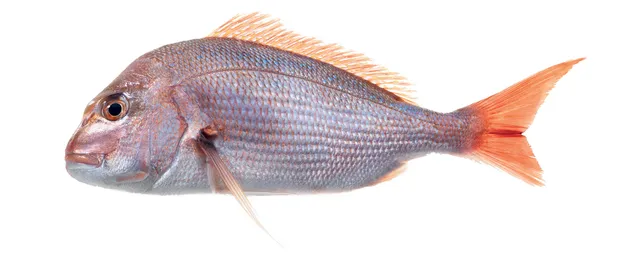 Saltwater
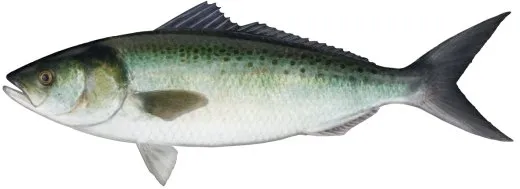 Saltwater
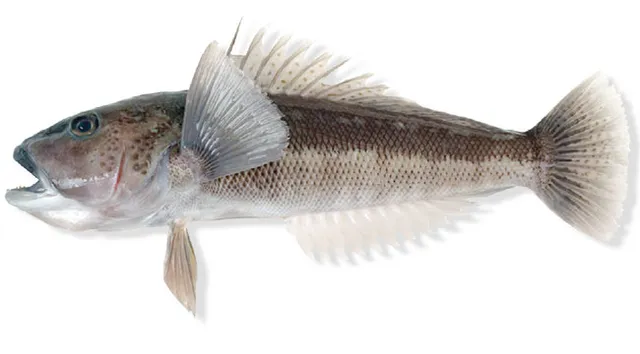 EndemicSaltwater
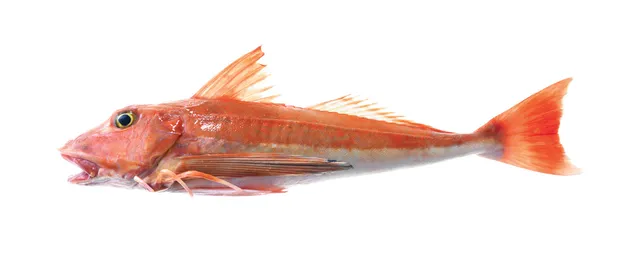 Saltwater
More guides
All guides- ArticlesBest bait for fishing in NZ: a species-by-species guideWhat bait to use for snapper, kahawai, gurnard, kingfish and more in NZ: a species-by-species table, how to rig each bait, and how to use burley.
- ArticlesNZ fishing rigs and knots: diagrams and when to use eachClear diagrams of the main NZ fishing rigs (ledger, running sinker, strayline, surfcasting, live bait) and the knots to tie them, with which fish each catches.
- ArticlesHow to fillet a fish: snapper, gurnard, kahawai and moreStep-by-step filleting for NZ fish, with photos: the basic method, skinning and pin bones, and what is different about snapper, gurnard, kahawai and blue cod.