
Hake
Tīkati, Kehe
Merluccius australisAlso known as Southern hake, whiting
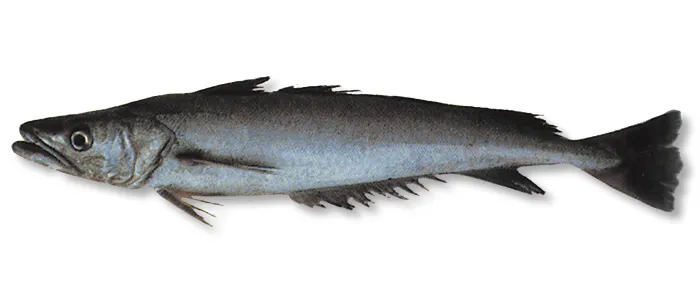
Hake (tīkati) is a long, slender deepwater fish caught mostly by trawlers off the South Island west coast, on the Chatham Rise and on the Campbell Plateau. A protruding lower jaw that shows some of its teeth is the key feature. Recreational catches are negligible, so most people meet hake at the fish counter as soft, moist white fillets.
How to identify hake
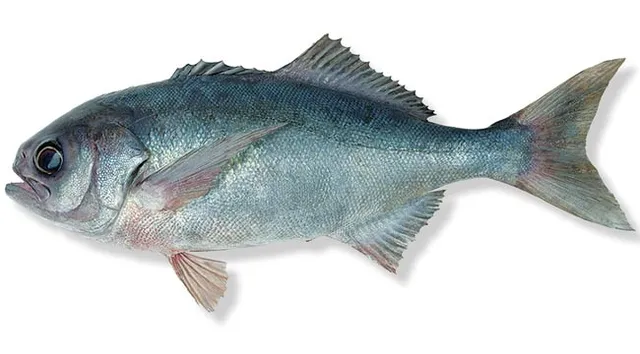
A long, slender fish with a short head and a protruding lower jaw that shows some of its teeth. Colour is steel grey to purple-grey or brown-grey on the back, paler on the sides and silvery white on the belly, with dark fins. There are two dorsal fins: a short first fin and a long second fin with 39 to 45 rays, matched by a long anal fin. The pectoral fins are long and thin, and the tail edge is usually straight.
Size and daily limits
Daily limitNo species limitCounts towards the combined finfish limit (20–30 a day). A shared limit applies in Fiordland.Limits for each area
| Area | Min. size | Daily limit |
|---|---|---|
| Auckland and Kermadec area | None | No species limit (combined 20 a day) |
| Central area | None | No species limit (combined 20 a day) |
| Challenger area | None | No species limit (combined 20 a day) |
| Kaikōura area | None | No species limit (combined 30 a day) |
| South-East area | None | No species limit (combined 30 a day) |
| Fiordland area (Fiordland Marine Area) | None | Varies, see note No species limit: counts towards Fiordland's 'any other finfish' limit of 10 a day, or 4 inside the Fiords. |
| Southland area | None | No species limit (combined 30 a day) |
Not named on any regional page; combined finfish limit only.
Checked 22 October 2026 · Source: MPI. Rules change, so check the NZ Fishing Rules app before you keep a fish.
Where it lives in New Zealand
Found through the middle depths of New Zealand's waters, mostly south of 40°S. Adults live mainly in 250 to 800 m, occasionally to 1200 m, while young fish are found inshore in less than 250 m. Main areas are the west coast of the South Island, the Chatham Rise and the Campbell Plateau. Spawning grounds lie off the west coast of the South Island, west of the Chatham Islands and on the Campbell Plateau.
How to catch it
Hake are a commercial deepwater species, taken mainly by large trawlers, often as a bycatch when fishing for hoki. Fisheries New Zealand describes the recreational catch as negligible, so few recreational fishers will ever see one outside a fish shop.
Eating
Moist white flesh with a soft, delicate texture and few bones. It suits baking, poaching, grilling and steaming, and works well marinated or in curries, soups and chowders. Like hoki, it is often used for fish fingers and other processed products.
Recipes
- Hake escabeche with avocado oil (Seafood New Zealand)
Good to know
Hake live to at least 25 years. Males rarely grow beyond 100 cm, while females can reach 120 cm or more. Hake were brought into the Quota Management System in 1986. The species also lives off southern South America.
Questions
Is hake good eating?
Yes. Hake has moist white flesh with a soft, delicate texture and few bones. It suits baking, poaching, grilling and steaming, and works well marinated or in curries, soups and chowders. Like hoki, it is often used for fish fingers and other processed products.
Where does NZ hake come from?
Hake are caught mainly by large trawlers in 250 to 800 m off the South Island west coast, on the Chatham Rise and on the Campbell Plateau, often as bycatch when fishing for hoki. Recreational catches are negligible, so most people only see hake at the fish shop.
Is hake the same as hoki?
No. Hake (Merluccius australis) and hoki (Macruronus novaezelandiae) are different fish, but they share deepwater grounds and hake are often caught as bycatch by trawlers fishing for hoki. Both have soft white flesh and both are used for fish fingers and other processed products.
Related species
 Saltwater
 Saltwater
 Saltwater
 Saltwater
More guides
All guides- ArticlesHow to fillet a fish: snapper, gurnard, kahawai and moreStep-by-step filleting for NZ fish, with photos: the basic method, skinning and pin bones, and what is different about snapper, gurnard, kahawai and blue cod.
- ArticlesBest time to fish in New ZealandWhen to catch snapper, kingfish, kahawai, tuna, trout and salmon in New Zealand, with a month-by-month calendar and what bites in each season.