
Blue Moki
Moki
Latridopsis ciliarisAlso known as Moki

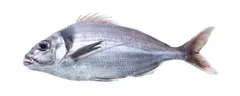
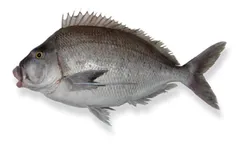
Blue moki is a deep-bodied, blue-grey and silver reef fish with a small, thick-lipped mouth, most common from the Bay of Plenty south. Unlike tarakihi and pōrae, it has no long pectoral fin ray. Anglers catch it from rocks, beaches and boats on shellfish and crab baits, and spearfishers take it too. The firm pink flesh cooks and smokes well.
How to identify blue moki
Blue moki are deep-bodied, blue-grey and silver fish, often with shades of brown and one or two large brownish blotches below the dorsal fins. The mouth is small with thick lips and small teeth. Unlike tarakihi and pōrae, they have no lengthened pectoral fin ray. They belong to the trumpeter family but lack the trumpeter's dark lengthwise stripes.
Size and daily limits
Minimum size40 cmDaily limit5–15 a dayNo species limit in Auckland and Kermadec, Central, and Challenger.Limits for each area
| Area | Min. size | Daily limit |
|---|---|---|
| Auckland and Kermadec area | 40 cm | No species limit (combined 20 a day) |
| Central area | 40 cm | No species limit (combined 20 a day) |
| Challenger area | 40 cm | No species limit (combined 20 a day) |
| Kaikōura area | 40 cm | 10 |
| South-East area | 40 cm | 15 Closed (no take) in Lyttelton Harbour/Whakaraupō mātaitai. Akaroa Taiāpure: 3 per day. |
| Fiordland area (Fiordland Marine Area) | 40 cm | 5 Inside the Fiords: 1 per day. |
| Southland area | 40 cm | 15 |
Within combined finfish daily limit.
Checked 22 October 2026 · Source: MPI. Rules change, so check the NZ Fishing Rules app before you keep a fish.
Where it lives in New Zealand
Blue moki are most common from the Bay of Plenty south, around rocky reefs, kelp and the sand or mud next to them. Juveniles live on shallow reefs. Most adults school offshore over open bottom down to about 150 m, though some stay on reefs. Many adults migrate north from Kaikōura in April and May to spawn between Mahia and East Cape in August and September, then return south.
How to catch it
Blue moki feed on crabs, shellfish and worms sucked from the seabed, so shellfish and crustacean baits work best. Crayfish pieces, mussels, tuatua and crabs are good choices, kept small and tied on with bait elastic. Use 3/0 to 5/0 hooks near rock and kelp, from the beach, rocks or a boat. They bite best at change of light and after dark. Spearfishers and set netters also take them.
Eating
Blue moki has firm pink flesh with fine dark veins and some fat close to the skin. The flesh holds its shape when cooked, so suits chowders, curries, casseroles, baking, steaming, poaching and pan-frying. It also smokes well and makes good fish tacos or goujons.
Recipes
- Moki goujon tacos (Seafood New Zealand)
Good to know
Blue moki is managed under the Quota Management System. It matures at about 40 cm and 5 to 6 years old, and fish over 80 cm and 43 years old have been recorded. The only known spawning ground is between Mahia Peninsula and East Cape.
Questions
Is blue moki good to eat?
Yes. Blue moki has firm pink flesh with fine dark veins and some fat close to the skin. It holds its shape when cooked, so suits chowders, curries, casseroles, baking and pan-frying. It also smokes well and makes good fish tacos or goujons.
What is the best bait for blue moki?
Shellfish and crustacean baits. Blue moki suck crabs, shellfish and worms from the seabed, so crayfish pieces, mussels, tuatua and crabs work well. Keep baits small, tie them on with bait elastic and fish near rock and kelp, especially at change of light and after dark.
How do you tell blue moki from tarakihi?
Check the head and pectoral fin. Tarakihi have a black band behind the head and one long pectoral fin ray, which blue moki lack. Blue moki are blue-grey and silver, often with one or two large brownish blotches below the dorsal fins, and have a small, thick-lipped mouth.
Related species
 Saltwater
 Saltwater
 Saltwater
 Saltwater
More guides
All guides- ArticlesHow to fillet a fish: snapper, gurnard, kahawai and moreStep-by-step filleting for NZ fish, with photos: the basic method, skinning and pin bones, and what is different about snapper, gurnard, kahawai and blue cod.
- ArticlesBest time to fish in New ZealandWhen to catch snapper, kingfish, kahawai, tuna, trout and salmon in New Zealand, with a month-by-month calendar and what bites in each season.